
What's next for Red Sox after losing Alex Bregman? Boston's options dwindle as team flounders in free agency
Alex Bregman is on the Cubs, and the Red Sox have not signed a single major-league free agent this offseason

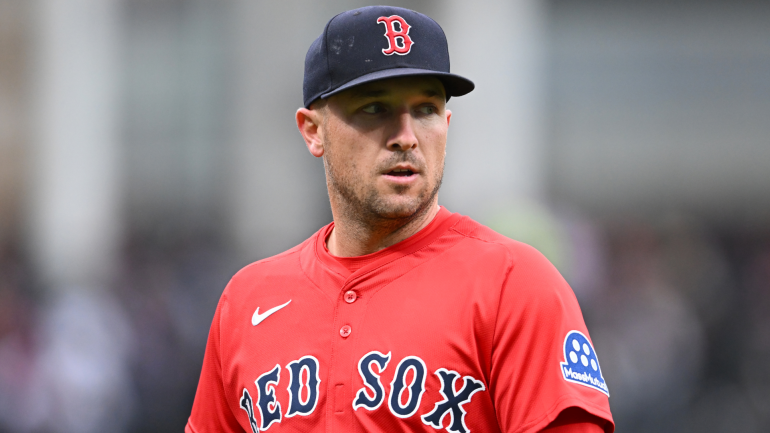
When Alex Bregman signed with the Red Sox at the start of spring training last season, it was widely viewed as a signal that Boston was serious about contending again. Having Bregman and Rafael Devers in the heart of the order would immediately make the pairing one of the best lineup punches in baseball. Additionally, the club traded for -- and extended -- left-hander Garrett Crochet, giving the Sox one of the best starters in the game.
Optimism was on the horizon.
Then, tension surfaced. Devers was unhappy with a shift to designated hitter to make room for Bregman, a stronger defender at third base. Ultimately, Devers was shockingly traded in mid-June. What was left of his $300 million contract was now off the books. The Red Sox still made the playoffs, with Bregman -- though he missed some time with injury -- as their leader and anchor. Despite a wild card loss to the Yankees, the superior opponent, the future looked bright at Fenway. There was hope that Bregman, who opted out of his three-year $120 million contract, would be back. The seamless fit in Boston was too obvious to ignore.
During the day on Saturday, the Red Sox held Fenway Fest, an event meant to mark the countdown to the season. That evening, Bregman delivered a massive blow to the enthusiasm surrounding the club, agreeing to sign with the Cubs on a five-year, $175 million deal with $70 million deferred. The Sox, meanwhile, came in at five years, $165 million, with deferrals spread over a longer period.
"I thought it was close," one league executive said. "Five years over $160 million had to be close. Turns out it was close and the players took the most money. That's how this works."
Still, this has become an all too familiar reality for the Red Sox and their fan base, failing to finish the job with a coveted free agent.
They have made a habit of finishing second, with much of the blame directed at owner John Henry, who over the last half decade has been widely viewed as prioritizing cost savings over winning.
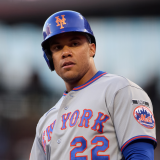
This offseason alone, they lost out on the Pete Alonso sweepstakes to the Orioles, who signed the slugger to a five-year, $155 million deal -- a figure the Sox never came close to matching. And while Kyle Schwarber was widely expected to remain in Philadelphia (and did sign a $150 million deal with the Phillies), the Red Sox offered little that would have been enough to pique his interest even if the door had cracked open.
The Devers trade, which also served as a salary dump, was expected to make way for Bregman and his voice -- an infectious one that helped guide Roman Anthony through his rookie season, and also helped Carlos Narvaez become a fixture on a big-league roster.
Now, the Sox must turn the page once again. Not only without Devers, but also without his replacement that was expected to help Boston reclaim its old heights. So, where do the Sox go from here?
The Red Sox have kept an eye on Bo Bichette since the end of his Toronto Blue Jays World Series run, but a deal, as it stands, remains unlikely.
One source said Bichette's asking price is believed to be in the $300 million range, a figure the Red Sox -- and the league -- view as an overpay. There are also questions about Bichette's long-term defensive fit, with some evaluators projecting him more as a second baseman than a shortstop, where he has struggled throughout his career.
Durability is another concern. Bichette has had trouble staying on the field in recent seasons, prompting internal questions about how he will age despite entering his age-28 season.
However, as his free agency drags on with spring training approaching, Bichette's number could come down, which might reengage the Red Sox.
As currently constructed, the Sox could open the season with Marcelo Mayer at third base and a platoon of Romy Gonzalez and David Hamilton at second. The club understands that won't be enough and is expected to explore creative alternatives.
For what it's worth, the Red Sox have prepared for a possible Bregman exodus dating back to the end of last season. The club has been careful not to disrupt its young core and has discussed concepts such as prioritizing an infielder who leans more toward defense, contact and plate discipline.
A name like Cubs third baseman Nico Hoerner, who could be on the trade block after the Bregman signing, fits that bill.
In fairness, the Red Sox have made some improvements via trade this winter, adding first baseman Willson Contreras and starter Sonny Gray.
Yet they are the only team in baseball that hasn't signed a single major-league free agent this winter, making fans, again, question just how serious they are about winning.
"I think we came into the offseason with a few specific things that we wanted to do," Breslow said Saturday at Fenway Fest before the Bregman news broke. "We wanted to add some pop to the lineup. We wanted to add to the starting rotation, at the front of a rotation. We feel like we've done those things, but also recognize that there's still an offseason ahead of us."
The clock is ticking.