Big money, mixed results: Grading college basketball's transfer portal spending
Newcomers from other schools have had wide-ranging impacts on their new teams

Can you win in college basketball strictly using the transfer portal to build a team? It depends on what you're trying to do.
The portal has proved to be a source of quick pain relief for teams who want to be competent right away and a money pit for programs who tried to build a National Championship-level team strictly using the most expensive avenue of free agency. That's the fascinating part of all of this. Every staff hits free agency with different objectives and sometimes, vastly different budgets.
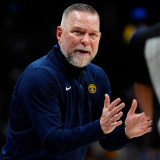
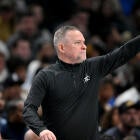
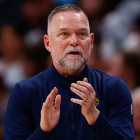
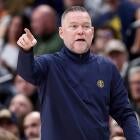
"There's haves and have-nots in the money world," UCLA coach Mick Cronin said Tuesday after UCLA waxed Rutgers, 98-66. "Coach (Steve) Pikiell is really a great coach. It's just a shame we don't have a salary cap, and everyone was playing even. But this is baseball, not the NFL. This is MLB."
Using that context, what programs are happy with their transfer portal hauls now three months into the season and deep into conference play? Some teams are reaping the rewards of decisions made -- or not made -- last spring, and the fallout of those moves will loom large when portal combat begins. Make no mistake, roster-building decisions -- who to pay and how much of the cap to allocate -- are already being discussed and debated in war rooms as we speak. Remember, the 2026 transfer portal window opens on April 7, the day after the NCAA Tournament title game. That's just over two months away.
Let's dive into what we've learned about each high-major transfer class for the 2025-26 season with teams in no particular order.
Big Ten: Newcomers fitting in at Michigan

Maryland: There are no glimmers of hope during the Terrapins' 8-13 season in Buzz Williams first season in College Park. Spending up for dominant big man Pharrel Payne was a no-brainer move, but his season-ending leg injury changed the complexion of this roster in a hurry and highlighted the numerous whiffs on the margins. Williams' built-from-scratch backcourt simply hasn't been good enough on either end of the floor. Conclusion: Oooof.

Indiana: It's OK. If Indiana can scratch and claw its way into the NCAA Tournament, the money spent will be worth it. Out-bidding Kentucky for Lamar Wilkerson was an A+ move, but IU needs more from Tucker DeVries. Thankfully, both Reed Bailey and Nick Dorn have shown real glimpses lately after slow starts, but it's hard to shake the Mid-Major All-Star allegations here, which limit how high the Hoosiers can fly. Conclusion: It's fine, but more athletes are needed quickly.
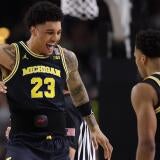
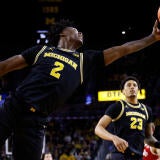
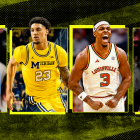
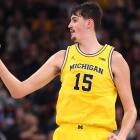
Michigan: Dusty May unloaded the clip in the portal, and it was worth it. Yaxel Lendeborg has earned his multi-million dollar deal. Morez Johnson Jr. has predictably turned into a two-way monster. Aday Mara and Elliot Cadeau aren't flawless, but their best attributes have been accentuated here. Both have been instrumental in the Wolverines' 20-1 start. Michigan went 4 for 4 in the portal. Conclusion: Winner, winner, chicken dinner.

Wisconsin: The Badgers connected on their biggest swing (Nick Boyd), which covers up everything else. The San Diego State transfer has been a menace, and Tulsa transfer Braeden Carrington has been a revelation. But Wisconsin had a bit higher hopes for both Andrew Rohde and Austin Rapp. They're both still in the rotation, but they haven't been game-changers. Conclusion: Nailing the PG1 addition makes this a triumph.

Ohio State: Santa Clara transfer big man Christoph Tilly is not a star, but he's been a helpful, connect-the-dots role player. But Ohio State needed to accumulate more quality depth from the portal, and a few swings-and-misses on the margins have been painful. Ohio State can still make the Big Dance, but it won't be because of this portal class. Conclusion: Not a disaster, but not ideal.

Michigan State: The Spartans feel one guard short because the transfers just haven't become serious needle-movers. Divine Ugochukwu has hit a couple big shots, but that's about it. The season-ending injury for FAU transfer wing Kaleb Glenn is still so gut-wrenching. He would help a ton. Conclusion: Tom Izzo trusts his returners more.

Iowa: So many problems disappear when Bennett Stirtz is on your basketball team. He's been one of the best point guards in the country, and fellow Drake transfer Tavion Banks is the second-best player on this club. Iowa made a big bet on prized Robert Morris transfer Alvaro Folgueiras, who has been sort of a mixed bag. Iowa's most dangerous when he's playing well, but coach Ben McCollum needs more consistency and better decision-making out of his skilled big fella. Conclusion: Good haul; could be great if the Alvaro Arrival appears.

Purdue: Matt Painter couldn't ask for anything else from Oscar Cluff. The South Dakota State transfer has been awesome on the glass, an excellent interior finisher and does what he's asked defensively. He's not an All-Big Ten game-wrecker, but Cluff has aced the role that Purdue has asked him to play. Conclusion: Good evaluation = good result.

Nebraska: Few transfers fit into their new scheme quite as snugly as Pryce Sandfort has in Fred Hoiberg's gorgeous offense. The Huskers' investment in the unproven Iowa transfer has transformed into one of the best values on the market. Kendall Blue can't crack this rotation, and injuries have sidelined Ugnius Jarusevicius, but Sandfort is a future NBA player, and Jamarques Lawrence, who boomeranged from Rhode Island back for a second stint at Nebraska, is a vital two-way starter. Nebraska's sterling spring has led to a winter to remember. Conclusion: Scheme conviction matters.

Illinois: Brad Underwood paid Andrej Stojakovic big bucks to be a featured star, but Keaton Wagler's remarkable rise to the top of the pecking order has shifted Stojakovic to a secondary role. He's playing the best all-around basketball of his career, even if it can be a rollercoaster ride. Meanwhile, Arkansas transfer Zvonimir Ivisic is one of the top backup centers in the game. Conclusion: Made sense in the moment; still makes sense now, even if it was pricey.

Minnesota: The buy-low on much-maligned, UNC transfer Cade Tyson has worked swimmingly. He's up to a whopping 20.1 points per game after being stapled to the Tar Heels' bench a year ago. Minnesota is a feisty, hard-playing bunch, but issues at the 5-spot are too hard to overcome. Conclusion: Minnesota has to get its bigs' situation shored up to compete at the upper echelon of the gargantuan Big Ten.
Northwestern: Arrinten Page, Jayden Reid and Max Green have all shown promising flashes and areas where they need to grow. If this group sticks around and grows together, a jump could be in store. Conclusion: Year 2 transfer jump would be ideal.

Penn State: Cincinnati transfer Josh Reed has had a career-best year, but UIC transfer Saša Ciani fell out of Penn State's starting lineup awfully quickly. One of the youngest teams in all of college basketball is predictably a Big Ten cellar-dweller. Conclusion: Send help.
Rutgers: Even without a ton of money, Steve Pikiell actually did pretty well in this last portal cycle. NJIT transfer Tariq Francis is a flat-out bucket-getter, and George Washington transfer Darren Buchanan Jr. hasn't been overwhelmed physically in the Big Ten. But that's about all the positives you can say about Rutgers amid a lost 9-14 season. Conclusion: It was over before it started.

Washington: UW is not tracking to make the tournament, even though it was one of the top spring spenders. That's a problem. Danny Sprinkle needs the jewel of his portal haul (Wesley Yates) to play like an All-Big Ten player down the stretch if UW wants to flirt with an at-large bid. It's concerning that you can poke holes into a large chunk of these portal additions. Conclusion: It's getting late early.

USC: Chad Baker-Mazara is uber productive for Eric Musselman, and both Ezra Ausar and Jacob Cofie look like hits. But massive injuries to star guard Rodney Rice and key defense-first, sixth man Amarion Dickerson have changed the complexion of this USC club. The Trojans are still tracking to make the Big Dance, but Musselman had much loftier hopes. Conclusion: Season-ending injuries stink.

Oregon: Dana Altman's top-heavy roster needed Jackson Shelstad and Nate Bittle to play up to their All-Big Ten capabilities. When the bookend studs went down with injuries, Oregon had no shot because the portal class was filled with role players, not top options. Conclusion: Depth matters.
UCLA: So-so seasons from point guard Donovan Dent and big man Xavier Booker — UCLA's two biggest free agency additions — have led to a so-so season for the Bruins. UMKC transfer Jamar Brown has been an excellent in-the-trenches discovery, but Dent is the obvious skeleton key to boost a good club into a great one. Conclusion: Have to hit on your stars.
Big 12: Kansas brings in talent

Kansas: Bill Self hit the portal looking for role players. He went two-for-three with a homer, a double and a pop fly to second base. That's a much better hit rate than previous, more-hyped KU portal classes. St. Bonaventure transfer guard Melvin Council Jr. is a total beast, and Illinois transfer wing Tre White has been ridiculously impactful in every facet. Loyola-Chicago transfer sniper Jayden Dawson was expected to be a floor-spacing threat, but he got beat out by Elmarko Jackson and Jamari McDowell. Conclusion: Good things happen when you recruit dawgs.

Cincinnati: Two of Cincinnati's best three players are via the portal, namely Baba Miller and Moustapha Thiam, but Wes Miller didn't land any two-way guards. That's why Miller is staring down the reality of a fifth-straight season without an NCAA Tournament appearance. Conclusion: Just have to be better.
Houston: Kelvin Sampson opted for just one transfer in ex-Sam Houston State big man, Kalifa Sakho, who plays 12-to-15 minutes a night off the bench. Houston instead used its budget to invest in retention and a dazzling recruiting class. Money well spent. Conclusion: Winning is inevitable; portal unneeded.
UCF: This roster-build is one of the rare times where constructing a team solely of transfers is actually working. Each one of UCF's top-eight players in the rotation is from the portal. Point guard Themus Fulks was underrated out of Milwaukee. Riley Kugel slipped out of the spotlight after back-to-back iffy seasons at Florida and Mississippi State. Jordan Burks was not highly coveted after he dipped from an 18-16 Georgetown club. That trio has somehow transformed into an outstanding backcourt for the Knights, who are 19 spots higher than their preseason prediction on KenPom. Conclusion: A nifty outlier?

BYU: The BYU brass would pay for Rob Wright again, and Southern Illinois 3-and-D transfer Kennard Davis has certainly helped buff up this defense. Wright and Davis haven't been perfect, but they're absolutely keepers. But BYU still might be one piece short, although that's exacerbated by the season-ending injury to veteran guard Dawson Baker, who would've helped significantly. Conclusion: Focusing on transfers to fill specific roles makes a lot of sense when you have AJ Dybantsa and Richie Saunders on the roster.

Iowa State: The Cyclones are one of the Big 12's best without getting much from their portal class. Mason Williams was hurt. Eric Mulder and Dom Nelson have fallen out of the rotation. Only Virginia transfer big man Blake Buchanan is left, and he's been rock-solid … as the fifth option offensively. They aren't bad players, but the Cyclones have better options in tow. T.J. Otzelberger didn't need the portal to build a dominant club. It's impressive work all the way around. Conclusion: Otzelberger will win in any way he can; this time, the portal was not vital.

Baylor: There's always risk when you tear things down to the studs, and Baylor is proof that change is not always a good thing. Tennessee transfer Cameron Carr slipped through the cracks and has re-emerged as a legitimate NBA prospect, but there's not a ton of other high-major difference-makers on this roster. The frontcourt hasn't worked out, the backcourt doesn't have a true organizer and the defense is a mess. Baylor is catapulting towards its worst finish in 15 years. Conclusion: Rebuilding at the same time as six National Title contenders emerge in the Big 12 ain't fun.
West Virginia: You'll take 14-8 and 5-4 in the Big 12 if you are first-year coach Ross Hodge. WVU doesn't have insane talent, but North Texas transfer Brenen Lorient is a beast. This veteran, transfer-heavy team plays hard and gives itself a chance almost every night, but the ceiling is limited. WVU is facing the reality of a full rebuild in less than eight weeks because all five starters are out of eligibility. Conclusion: Solid work across the board, but now you have to do it again.
TCU: Few predicted that JUCO transfer Xavier Edmonds would become Jamie Dixon's most trusted newcomer. Overall, TCU's transfer class hasn't been bad. Brock Harding, Jayden Pierre and Liutauras Lelevicius have been starting lineup staples whenever healthy, but this group doesn't jump off the page, either. Conclusion: It's fine. Nothing more, nothing less.

Texas Tech: It's a bit of a mixed bag for this Texas Tech transfer haul that was filled with role players. LeJuan Watts has been really good in the Darrion Williams' role, and somehow also super frustrating. Donovan Atwell's 3-and-D game has been outstanding, but it's kicked Tyeree Bryan out of the rotation in some games. The jury is still out on frontcourt pieces like Josiah Moseley and Luke Bamgboye, who are just working their way back. Texas Tech is so clearly a sharp portal-scouting staff, but it's been more turbulent for this portal group than many expected. Conclusion: Plenty of good scheme fits.

Kansas State: There is no joy when you are 10-12 with one of the highest budgets in the sport. Injuries parlayed with poor roster-building decisions in the frontcourt have sent this Kansas State train careening off the tracks. Paying up for Abdi Bashir Jr. (a great shooter who can't guard) and Andrej Kostic (a great shooter who can't guard), parlayed with Tyreek Smith not getting a waiver to play, is just too much to overcome. PJ Haggerty can create 33 points a game for the rest of the season, and it still might not matter. Conclusion: Yikes.

Oklahoma State: Steve Lutz took a calculated risk by bringing in the mercurial Anthony Roy, but the Green Bay transfer has been fantastic. The 6-5 guard has drained 60 treys at a 44% clip. Vyctorius Miller? Good get. Parsa Fallah? Good get. Christian Coleman? Good get. Even Kanye Clary hasn't drifted out to sea and is a serviceable high-major lead guard. Lutz unquestionably raised the talent level here with his portal class. Is it enough to put on those dancing shoes? I'm hesitant. Conclusion: Get back to me after the Pokes play BYU and Arizona this week. A good showing could change the complexion of how this retool is viewed.

Utah: First-year Utah coach Alex Jensen has an eye for guard play. Terrence Brown (from FDU) and Don McHenry (from Western Kentucky) are legitimately good Big 12 guards. But the rest of the portal cabinet is barren. Upside bets like Syracuse transfer Elijah Moore and Auburn transfer Jahki Howard have both left the team already (it will save them a year of eligibility). Conclusion: Not great, but not a disaster, either.

Arizona: Tommy Lloyd made a wager that paying freshmen like Brayden Burries, Ivan Kharchenkov and Koa Peat was more important than any transfer on the open market. He also made a bet that paying a returner like Motiejus Krivas to replace Henri Veesaar, who transferred to UNC, was smarter than getting into a bidding contest for a mediocre portal big man. Lloyd was right on all fronts. Conclusion: Portal not needed this year.

Arizona State: Point guard Moe Odom is a dazzling maestro who just eviscerates drop coverage, but there's not a lot here in this portal haul. The writing is on the wall for Bobby Hurley. Arizona State has far more misses than hits in this portal haul. Conclusion: Even a great point guard can't cover everything else up.

Colorado: The Buffs didn't have much in the coffers to make a dent in the portal, but UC Riverside transfer Barrington Hargress has been sneaky excellent, averaging over 13 points and shooting north of 51% from 3-point range. Conclusion: No dough.
SEC: Kentucky spends big bucks
Kentucky: It's hard to fairly judge this portal class when Jaland Lowe, Jayden Quaintance and Kam Williams could all very well be done for the rest of the year with injuries, but Kentucky clearly made some rash decisions in the portal. If given truth serum, Mark Pope would probably admit that investing in a high-risk, high-reward player like Quaintance, who had just torn his ACL in February, was not the safest decision. Could Kentucky have prioritized more proven commodities? None of the transfers were All-SEC locks.
Lowe, Williams and Aberdeen all had mediocre offensive ratings against top-100 teams the year before charting to Lexington. Pope was banking on his system creating higher-quality looks, but Lowe got hurt in the preseason, which sent everything out of whack. Maybe some of this $22 million could have been spent on another on-ball creator? Moral of the story, Kentucky had a lot of eggs in the Jaland Lowe basket. I understood it, but it was still so risky. Conclusion: Please consult your financial adviser about the risk in your portfolio.
LSU: On the margins, LSU actually has gotten plenty of production out of this portal haul, but when your star is hurt, everything is blown to smithereens. Star UNLV transfer Dedan Thomas inked a big deal with LSU to be a major difference-maker. He showed flashes of his set-the-table brilliance in LSU's 12-1 start in non-conference play, but a left foot injury has sidelined him for multiple chunks of conference play. Mike Nwoko, Marquel Sutton and Max Mackinnon were clearly good evaluations, but Thomas' injury is a killer for a LSU team that is 2-7 in SEC play. Conclusion: Injuries stink.
Arkansas: John Calipari only chased bigs in the portal. Malique Ewin makes Arkansas' offense explosive when he's on the floor, but the defense drops significantly. Nick Pringle is the better defender at the 5-spot, but the offense drops significantly when he's on the floor. They're not the most trustworthy duo, but it's serviceable. Conclusion: It made sense, but these bigs also scare me.
Texas A&M: Outrageously good work by Bucky McMillan to put this team together so late in the process and find success. There are plenty of useful SEC players all over this roster, and they've quickly bought into Bucky Ball. Pop Isaacs has thrived as a second-unit jolt of offense, and Rylan Griffen is shooting 44% from 3-point range in this run-and-gun scheme. Mackenzie Mgbako's season-ending injury is a shame, but it's Rashaun Agee, who is the star here. The well-traveled big man is having a monster senior season, averaging 13.9 points, 9.0 rebounds and 2.3 dimes as a small-ball 5. Conclusion: Winning the SEC title with a transfer-heavy roster feels impossible, but Texas A&M is certainly going to try.
Ole Miss: Willingly choosing to get into the AJ Storr business looked shaky in December, but the former St. John's, Wisconsin and Kansas wing has started to percolate as of late. Ole Miss' real problem is mostly the guard play. Chris Beard doesn't seem to trust Koren Johnson, Kezza Giffa or Travis Perry for long stretches at all. Ole Miss is down 43 spots on KenPom from its preseason rank and is not going to make the NCAA Tournament. Another mass retool seems imminent because this portal haul hasn't popped. Conclusion: Ole Miss' best players are not better than most other teams' best players.
Florida: The Gators paid up for Xaivian Lee, and the shot-making just hasn't been there. Florida also paid up for Boogie Fland. The defense and playmaking have been there, but he's shooting 19% from 3-point range this season. Florida didn't just become bad at scouting the portal, but this backcourt just has to play better down the stretch for the Gators to repeat. There's no other alternative. Conclusion: Jumpers going in would be appreciated.

Georgia: Three straight losses have taken the wind out of Georgia's sails a bit, but this portal class is absolutely outplaying its preseason projection. Cal transfer Jeremiah Wilkinson has become a legitimate dude. UTSA transfer Smurf Millender is a handful. Toolsy BYU transfer Kanon Catchings is the ultimate X-Factor down the stretch, but UGA clearly did way more good than bad in the portal. Conclusion: UGA doesn't miss Silas Demary Jr. as much as I anticipated (yet).

Missouri: Sneakily snagging injured West Virginia transfer Jayden Stone into the mix has proven to be Dennis Gates' best offseason move. The 6-foot-4 guard is instant offense, but the rest of Missouri's portal class has been extremely disappointing. Missouri clearly did not add enough shooting to maximize All-SEC returner Mark Mitchell. Conclusion: Too many overlapping skillsets.

Vanderbilt: The rise of the Commodores wouldn't be possible without an outstanding portal class that has been far more effective than its No. 13 standing in the SEC portal ratings. Mark Byington found an excellent, two-way role player in AK Okereke out of Cornell and a star scorer hiding in plain sight in Oklahoma transfer Duke Miles. Those two transfer additions alone changed the complexion of this Vanderbilt outlook. Keep an eye out for the looming return of Frankie Collins. Vanderbilt's vicious on-ball defense gets ramped up to 100 when he's on the floor. Conclusion: Mark Byington is really good at finding gems in the portal.
Alabama: The Crimson Tide's portal class hasn't been good enough, point blank. All of the red flags with big men like Taylor Bol Bowen or Noah Williamson have been exacerbated. It's why Nate Oats was not opposed to trying to get Charles Bediako back in the fold. Conclusion: I will be here for the Keitenn Bristow, Year 2 transfer breakout.
Mississippi State: There were a lot of "ifs" with this portal haul. If Jayden Epps can be efficient. If Amier Ali can find his groove. If Achor Achor can bounce back. If Quincy Ballard can be an interior stabilizer on both ends. None of it has worked. The brilliant Josh Hubbard will not be in the Big Dance this year. Conclusion: Fewer "ifs" next time, por favor.

South Carolina: The Gamecocks had the worst-rated portal haul in the SEC and have the worst rating on KenPom in the SEC. It just is what it is. The talent level has to be raised here to truly compete in this league. Outside of Meechie Johnson, there are not a ton of other guys on this roster who would be no-brainer starters on other teams in this league. That has to change. Conclusion: Had no money and no chance.
Auburn: All four of the Tigers' transfers have stayed in the rotation all year. That is not nothing. Keyshawn Hall is one of the premier scorers in the league. Big man KeShawn Murphy is a major difference-maker when healthy. Elyjah Freeman and Kevin Overton are capable secondary options. It was a good portal haul on paper, and it's been a good class on the floor. Conclusion: Auburn went 4-for-4 with a homer (Hall), a double (Murphy) and two line-drive singles (Overton, Freeman).

Tennessee: Ja'Kobi Gillespie was expected to be one of the top guards in the SEC, and he's lived up to all the hype. Vanderbilt transfer Jaylen Carey has been an interior beast, too. But if Tennessee doesn't make a real run at the Final Four, missing out on some of its top shooting guard targets will loom large. Tennessee feels one more scorer away from being a true problem. Conclusion: The Vols land an awesome guard every year from the portal, and this year is no different.

Texas: The jury is still out if Texas can score its way into the NCAA Tournament, but Sean Miller clearly did a rock-solid job in the portal. Dailyn Swain is playing like a first-round pick. Matas Vokietaitis is so physical. Cam Heide has shot the lights out from 3-point range for the Longhorns. It doesn't count in portal ratings, but Miller should earn some kudos for convincing Tramon Mark, Jordan Pope and Chendall Weaver to stay on with a new staff. All three have been instrumental in keeping Texas afloat under a fresh regime. Conclusion: Swain is way better than a lot of transfers who were rated higher than him.

Oklahoma: This is arguably the most disappointing transfer haul in the SEC. Xzayvier Brown, Nijel Pack, Tae Davis and Derrion Reid were all talented individual pieces, but it just hasn't melded together for OU. The defense, predictably, is a sieve with two small guards at the point of attack, and the offense just doesn't have that special gear. It's shaping up to be a lost season in Norman, and a portal haul that was rated inside the top-four in the SEC is a huge reason why. Conclusion: The Cubs' pitchers and catchers report in six days, so at least Porter Moser can be happy about that.
Big East: Villanova makes right calls

Villanova: Devin Askew? Better than expected. Duke Brennan? Better than expected. Bryce Lindsay? Better than expected. It's all added up to Villanova asserting itself as the third-best team in the Big East in Kevin Willard's first season. Villanova doesn't have the starpower to be a top dawg, but its transfer class has clearly outperformed. Conclusion: Second year in a row that Willard has pressed the right buttons in the portal. Might not be a coincidence, although Villanova wasn't suffering in the money department.

Xavier: Richard Pitino found a gem in FAU transfer Tre Carroll, and although he was ranked a smidge too high (hand up), Malik Messina-Moore has been productive. But a talent influx is needed this spring at multiple positions, most notably in the backcourt. Conclusion: The inability to reel in a dynamic point guard has hamstrung this Xavier club.

UConn: Specifically filling one void is exactly how Dan Hurley wants to use the portal. UConn did that swimmingly. Silas Demary Jr. has been one of the best two-way point guards in college basketball, and backup point guard Malachi Smith can be a useful weapon off the bench. UConn's point guard play was not a strength last year. It's a strength this year. Conclusion: Diagnosed the problem; solved the problem.

Providence: Kim English would probably like to redo this transfer haul if possible. Jason Edwards is unquestionably talented, but he's clashed with English for the world to see. Providence's frontcourt depth is nonexistent because of portal miscalculations. UCF transfer Jaylin Sellers has been outstanding — he's the best all-around player on the team — but there are not enough two-way players in this program right now. Conclusion: Too much talent here to be 9-13.

Butler: Buying in on the potential bounce-back for Michael Ajayi was smart. He's instantly become one of the most athletic, dominant players in the Big East. He's so violent in all the best ways. But Butler (13-7 overall, 4-7 in Big East play) still just hasn't been able to get over the hump. Jalen Jackson was primed to be a major difference-maker for this club, but he went down in November with a season-ending ankle injury. Butler sorely misses his ability to guard and touch the paint offensively. I think Drayton Jones and Jamie Kaiser have shown enough to be keepers, but the clock is ticking for Thad Matta. Conclusion: I liked the idea of this class, but winning more basketball games would be nice.

Georgetown: The Hoyas have the personnel to be a pretty nasty defense, but it just hasn't worked. It's hard to fully blame the portal class, though. Arizona transfer guard KJ Lewis and St. John's transfer big Vince Iwuchukwu are both hits. Ed Cooley was just banking on returning junior point guard Malik Mack taking that step into becoming one of the Big East's best guards. That hasn't happened. It's a lost season for the Hoyas, but the portal class shouldn't shoulder too much of the blame. Conclusion: "We're blessed."

Creighton: Every single transfer that Creighton brought in was part of a really porous defense the year before. Sure enough, this unit is on pace to be the worst Creighton defense in the KenPom era, dating back to 1996-97. That's a tough pill to swallow, but you can't say you were not warned. Conclusion: Defense matters.


Seton Hall: The Pirates have seven transfers in the rotation, and just one (Adam 'Budd' Clark) earned a four-star grade. The fact that Seton Hall is on the bubble is a testament to Shaheen Holloway's eye for under-the-radar talent. Seton Hall is tough, hard-nosed and connected. Jacksonville transfer big man Stephon Payne has been a sharp evaluation, too. Conclusion: Coaching matters.

St. John's: The consternation around St. John's transfer class has died down because this newcomer-heavy group has settled in on both sides of the floor. All six of Rick Pitino's top transfers are still in this rotation, and St. John's has six capable players who have dropped 15 points at least twice this year. None of them are stars — that's Zuby Ejiofor's job description — but the role allocation is starting to show and the depth can be overwhelming. St. John's probably can't win a national championship because the guard play can be a bit too shaky, but this isn't a disaster by any means. It's impossible to bottom out with this much athleticism and this head coach, even if the talent hasn't meshed quite as snugly. Conclusion: This is a B grade anyway you slice it.
DePaul: Chris Holtmann's returners were always going to carry this group, but it feels like the Blue Demons were a good transfer portal class away from flirting with a .500 record in the Big East. Kaleb Banks, DePaul's biggest-ticket add, has struggled for long stretches this year, but Radford transfer Brandon Maclin has been a jolt of energy and Colorado transfer guard RJ Smith has been serviceable. Conclusion: DePaul has obviously taken a step forward, but it equally feels like a bit of a missed opportunity to really make a program-defining surge in a Big East that's just begging for someone to be competent.
ACC: Virginia's transfers fit system
Duke: Prized Washington State transfer Cedric Coward was supposed to be the jewel of Duke's portal haul until he blew up at the NBA Draft Combine and became a lottery pick. Duke is still terrific, but can you imagine how good it would've been with Coward? He's averaging 13.8 points and 6.2 rebounds for the Grizzlies. Conclusion: Portal not needed, but oh baby, what could have been!?

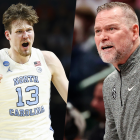
North Carolina: Big man Henri Veesaar is even better than UNC could have hoped for, but that's offset a tad by Kyan Evans' predictable struggles in Chapel Hill. UNC did use the portal to find useful role players like Jarin Stevenson, Jonathan Powell and Jaydon Young. Conclusion: UNC could be a legitimate Final Four threat if it had a game-changing dude in this backcourt.
Notre Dame: Notre Dame has a low transfer acceptance rate, so Micah Shrewsberry is usually forced to comb the graduate-transfer market. Northern Arizona transfer Carson Towt has been a warrior on the glass, but Notre Dame isn't shaping up to ever be a transfer-heavy roster. So when star guard Markus Burton goes down with an injury, there aren't many quality depth options. Notre Dame has nine underclassmen in this rotation. Keeping them is paramount because the portal won't ever be a major resource. Conclusion: Portal not allowed.

Virginia: UVa's transfer class looked super solid on paper, and it's lived up to the billing. All six of Ryan Odom's top transfer targets were upperclassmen. The five guys in the backcourt could all pass, dribble and shoot. That was no coincidence. San Francisco transfer Malik Thomas has been really good. Toledo transfer Sam Lewis is a sneaky stud. Dallin Hall, Jacari White and Devin Tillis are all veterans who know how to hoop. Virginia is 19-3 because of its success in the spring. Conclusion: Stacking vets who can pass, dribble and shoot is meaningful.
Miami: Jai Lucas' vision in the portal made sense, and 17-5 Miami is reaping the rewards. Lucas targeted two excellent defenders at their respective positions in TCU's Ernest Udeh Jr. and New Mexico's Tru Washington to surround the potent point guard-big man duo of Tre Donaldson and Malik Reneau. That core portal quartet has delivered. Conclusion: Pairing two defense-first transfers with two offense-first transfers makes too much sense.

NC State: The defensive personnel on this roster was overrated in the preseason (hand up, part two!), but Will Wade has some real-deal firepower. NC State would invest in Darrion Williams again if given a second shot, and bringing Quadir Copeland along from McNeese was wise. Those two just make the rest of the cast better. Ex-UNC big man Ven-Allen Lubin has been serviceable in his role, even if there are defensive limitations. MSU transfer Tre Holloman has been just fine. Keeping Paul McNeil, who was recruited by a previous regime, doesn't show up in transfer rankings, but it certainly shows up on the floor. The sophomore has been one of the ACC's top snipers. NC State's brass would probably like a mulligan on its frontcourt defensive options, but everything else is more than serviceable, and the Pack is zooming toward a tourney appearance. Conclusion: This ain't a rebuild.

Syracuse: The Orange weren't scared off by William Kyle being buried at UCLA. The pogo-stick-leaping big man has been very effective for Syracuse. It needed more shooting, and it got it from transfers like Nate Kingz and Tyler Betsey. But the guard play on this roster hasn't been good enough, and there aren't enough connect-the-dots players who walk on the floor trying to get others better. There was hope that Nait George could fix some of the point guard woes, but that hasn't happened. Syracuse is 13-10 overall and 4-6 in ACC play because the sum isn't greater than the individual parts. Conclusion: Not tough enough.

Louisville: Any coach who was presented with the opportunity to bring in Ryan Conwell, Isaac McKneely and Adrian Wooley would have done it in a heartbeat. Conwell is ridiculous. McKneely and Wooley are very good players, who have accepted smaller roles because they are sharing minutes with potential lottery pick Mikel Brown Jr. and Conwell. Maybe some of the budget should've been allocated to finding another two-way forward instead of adding to the surplus of big-time guards, but that's easy to say now after we've seen the Cardinals struggle with the most athletic teams they have faced this season. Louisville seemed to willingly back its way into the corner where it had to play three guards next to a 6-foot-6 power forward. Conclusion: Very good, but more roster flexibility would be needed to hang a banner.
Florida State: It's about what you'd expect from FSU in Year 1 under Luke Loucks. He was able to reel in a bunch of mid-major veteran transfers. FSU was rated at No. 96 in the preseason, and the 'Noles are still at No. 96 three months later. This transfer class has not been a disappointment, but it hasn't been a needle-mover, either. Conclusion: Hard to be very good in the new-and-improved ACC with a mid-major roster.

Georgia Tech: The Yellowjackets' transfer haul was rated 13th in the ACC alone, and that's proven to be on point. Georgia Tech doesn't have any transfers who can drive winning at the highest level. Conclusion: Woof.

Wake Forest: You saw Steve Forbes' vision for this portal haul with switchable, shot-making wings like Myles Colvin and Mekhi Mason surrounding a jet-quick point guard like Nate Calmese and a potential stretch 5 in Cooper Schwieger. It makes sense on the spreadsheet. It just hasn't worked as well as Forbes' anticipated. Conclusion: There is no magical fairy dust in portal scouting.

Virginia Tech: The Amani Hansberry breakout is here. The junior forward has been outstanding for Virginia Tech and brings a ton of grit, fire and relentlessness to the floor. UNLV transfer sniper Jailen Bedford has become a very reliable starter, too. Conclusion: Virginia Tech's talent level has skyrocketed from a year ago, and getting two starters via the portal is good work. The jury is still out whether this club can earn an at-large bid, though.
Pitt: The Panthers are outside the top-100 nationally and are at the bottom of the barrel in the ACC because its top portal signee (Iowa State transfer Dishon Jackson) was not able to suit up this season due to a lingering medical condition. Part of that is bad luck for Pitt, but it was a risky proposition in the first place. This roster just doesn't have enough juice. Conclusion: Send help.
Boston College: The Eagles' four-man transfer haul has scored in double figures in just 16 games. It's a dire outlook for this program in the NIL era. Conclusion: It was over before it started.

Clemson: Brad Brownell just keeps winning games even after replacing all five starters from last year's team that earned a No. 5 seed. The Tigers really have built a proof of concept with portal bigs. Carter Welling, Jake Wahlin, RJ Godfrey and Nick Davidson have all been serviceable on both ends of the floor. This guard room doesn't blow you away — and could be the Achilles heel in March — but MTSU transfer Jestin Porter has outplayed most projections. Clemson hit on all six of its transfer additions. That's pretty remarkable in this era. Conclusion: Outstanding work with just so-so money.

Stanford: Kyle Smith has done admirable work keeping Stanford pesky without landing a single Division I transfer on the roster last spring. Division III transfer AJ Rohosy has been rock solid, and Division II transfer Jeremy Dent-Smith has been Stanford's second-best 3-point sniper. This is a really, really tough job these days. Conclusion: Getting more Ebuka Okorie's would be good. Analysis.
Cal: Mark Madsen is pretty darn good at this portal stuff. Six of Cal's top-seven players are transfers from the 2025 cycle. Cal is 16-6 and 4-5 in the ACC even though his best two players (Jeremiah Wilkinson and Andrej Stojakovic) were poached by Georgia and Illinois, respectively. Cal is surging thanks to some undervalued guards finally breaking through. Michigan transfer Justin Pippen and Virginia transfer Dai Dai Ames have meshed into a dangerous 1-2 punch, who can shift on or off the ball at will. Cal smartly surrounded those guards with jumbo wing shooters like Chris Bell and John Camden, who have been reliable and efficient. It's sterling work by this Cal staff. Conclusion: Cal is a big winner for the money it had.

SMU: The Ponies ponied up serious dough for ballyhooed Jacksonville State transfer Jaron Pierre. The 6-foot-5, 210-pound guard has been in double figures in 21 of 22 games. No complaints there. Corey Washington (from Wichita State) has also turned into a rock-solid transfer addition. The senior wing has started all 22 games for the 15-7 Mustangs. SMU should make the tournament with that sweet mix of retention, freshmen and a dash of portal. That feels like the most ideal recipe year after year. Conclusion: SMU would pay up for Pierre and Washington again if given the chance.
WCC: Zags find role players

Gonzaga: The Zags needed shooting, and they got it with veteran Arizona State transfer Adam Miller. It needed elite wing defense and transition bucket-getting, and it got it with Grand Canyon transfer Tyon Grant-Foster. Gonzaga's transfers aren't superstars, but they've both quickly bought into being hard-hat role players. Conclusion: Patience is a virtue.