

Several SEC teams have named starting quarterbacks this week, finally putting the league's pecking order into focus ahead of the 2026 season.
Alabama, Arkansas, Florida, Tennessee and Vanderbilt have named their starters after competitive fall camps, clearing up several of the league's most important position battles before Week 1. Those decisions also require a refresh of our preseason quarterback rankings, where proven production, upside and supporting casts all matter.
Several established veterans enter the fall with championship expectations, while a collection of first-year starters will determine whether their teams rise or stumble in a league with little room for error.
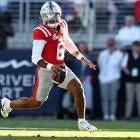
1. Trinidad Chambliss, Ole Miss
No one else in this conference combines Chambliss' proven production, play-making ability and command of an offense. He has already shown he can create outside structure, punish defenses with his legs and deliver in high-pressure moments. That experience matters in a league featuring several new starters and talented passers still searching for consistency.
Chambliss may not have the biggest recruiting profile or the strongest arm in the conference, but he enters 2026 with the fewest questions. His confidence, toughness and late-game poise give Ole Miss a proven difference-maker at the most important position on the field.

2. Arch Manning, Texas
Manning's ceiling remains elite, even if reviews from Texas' fall camp have been mixed. There were flashes of the quarterback many expected to become a Heisman frontrunner last season down the stretch, but there's enough inconsistency over the last couple of weeks to create some hesitation.
Still, Manning's finish to last season matters. Over his final half-dozen starts, he was one of college football's best players, operating with confidence, extending plays and showing command of the offense. Texas does not need perfection from the former five-star, but it needs Manning to rediscover that late-season rhythm.
3. Sam Leavitt, LSU
Lane Kiffin's scheme should do wonders for Leavitt, the top-rated portal quarterback this cycle. Few coaches are better at creating favorable matchups, simplifying reads and putting talented passers in position to produce immediately.
Leavitt brings the mobility and competitive edge needed to unlock the entire playbook. Behind an expensive offensive line, perhaps Leavitt will have time back there for the first time in his career.
Durability remains the obvious concern, but if Leavitt stays upright, Kiffin has a proven playmaker.

4. Gunner Stockton, Georgia
Stockton taking the next step starts with becoming more consistent as a deep-threat passer. Georgia already trusts his toughness and willingness to attack defenses, but the Bulldogs need greater command when explosive opportunities arise.
Bobo can help by leaning into play-action, designed movement and quicker decisions that keep Stockton comfortable.
The physical tools are there, and another offseason as the unquestioned starter should matter.

5. LaNorris Sellers, South Carolina
Too often last fall, Sellers was tentative from the pocket, much of that due to a faulty offensive front. So the Gamecocks brought in offensive coordinator Kendal Briles in an attempt to cater to the potential first-rounder's expansive skill set.
This quarterback-friendly system should maximize Sellers' rare combination of size, arm strength and open-field power as a runner.
Expect South Carolina to create more designed rushing opportunities while giving him clearer reads and chances to attack defenses vertically. Sellers has already flashed game-changing ability, but consistency and protection remain critical.

6. John Mateer, Oklahoma
The biggest offseason riser, Mateer looks the part after working on his body in his return to full strength. The Sooners saw enough last season before his hand injury to know his ability changes the offense.
Mateer plays with confidence, creates when protection breaks down and gives Oklahoma a legitimate playmaker in critical situations.
The biggest question is whether he can regain his explosiveness and stay healthy against a punishing SEC schedule. If the answer is yes, Mateer has the experience, toughness and talent to climb these rankings quickly for a playoff threat.
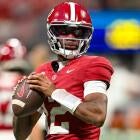
7. Keelon Russell, Alabama
Kalen DeBoer's proven ability to develop quarterbacks should help produce sizable numbers from Russell, who beat out Austin Mack this month for the job.
The former five-star signee played sparingly last season behind Ty Simpson and Mack but has shown better command of the offense this offseason, with execution at a higher clip, per DeBoer.
A true dual-threat, Russell should be able to ease some of the pressure off the Crimson Tide's offensive line, which includes four new starters. As always with a first-year starter, there are going to be some decisions that make Alabama's staff scratch their collective heads, too.
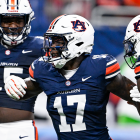
8. Byrum Brown, Auburn
Briown has already proven he can produce in Alex Golesh's offense during their time together at USF. He is dangerous with his legs, can create outside structure and should give the Tigers a reliable veteran presence.
The question is how his game translates against deeper, faster SEC defenses every week. Brown will climb these rankings quickly if his deep ball becomes more catchable.
9. Marcel Reed, Texas A&M
Reed enters the season in the middle of the pack, largely because Texas A&M is resetting under a new coordinator and with four new offensive linemen.
Reed has the athleticism to stress defenses and enough experience to become a difference-maker, but he must improve his consistency as a passer.
He only made five turnover-free starts in 2025 and threw six of his 12 interceptions over Texas A&M's final four games. Growing pains are possible against a schedule far more difficult than last season's.

10. Faizon Brandon, Tennessee
The former five-star will be the first true freshman to start a season opener for Tennessee since Brent Schaeffer in 2004.
The Vols will accept early mistakes, but Brandon must process quickly in a tempo-driven offense that demands confidence and decisive throws. His ability to stretch the field should create immediate excitement, especially if Tennessee's offensive line keeps him comfortable. The challenge is handling SEC pressure.

11. Kamario Taylor, Mississippi State
Few quarterbacks in the back half of the SEC have drawn as much offseason buzz as Taylor, who looks the part from the pocket and is dynamic on the move.
Mississippi State threw him into the SEC pressure cooker early with mixed results. The next step requires improved accuracy, faster decisions and greater command of Jeff Lebby's offense. Taylor needs to be the team's best player on offense to give the Bulldogs a chance this fall.
12. Aaron Philo, Florida
Jon Sumrall assured everyone this week that he's confident the Gators can win with Philo or Tramell Jones this season, but talked glowingly about the Georgia Tech transfer's grasp of the offense.
That's no surprise considering Philo's experience with new Gators OC Buster Faulkner. The leash could be short for Philo, given Jones' ability and how often Sumrall has used multiple signal callers in his coaching career.
13. Kenny Minchey, Kentucky
Now, SEC quarterback faces a schedule as treacherous as Minchey's.
His skill set is an ideal fit for first-year coach Will Stein's aggressive system, which worked beautifully at Oregon.
The Wildcats need Minchey to create explosive plays without forcing throws against SEC defenses built to punish mistakes. Minchey's a spark that Kentucky hopes makes this offense more dangerous than preseason expectations suggest.
14. KJ Jackson, Arkansas
For a team projected near the bottom of the SEC, quarterback play can change everything.
Jackson has the potential to become a superstar that the program desperately needs. If he protects the football, makes timely plays and handles pressure, Arkansas could become a difficult weekly matchup and outperform its preseason billing.

15. Austin Simmons, Missouri
This Ole Miss transfer arrives at Missouri with considerable upside and an opportunity to flourish.
The Tigers will lean on their ground game to ease his transition, stay ahead of the chains and open opportunities through play-action -- at least that's the plan.
Simmons' arm talent gives Missouri a needed vertical threat, but efficiency matters more than volume. Drinkwitz does not need his new quarterback forcing heroics with Ahmad Hardy and Jamal Roberts in the backfield.

16. Blaze Berlowitz, Vanderbilt
Berlowitz beat out five-star freshman Jared Curtis for the job as the safer, more experienced pick coming out of the Diego Pavia era in Nashville.
Berlowitz understands the speed of the college game, has spent more time in the program and should have better command of the offense early on.
Curtis has the higher long-term ceiling, but asking a freshman to manage protections, avoid turnovers and handle weekly pressure is a considerable risk. Vanderbilt needs stability immediately, and Berlowitz offers the safer option -- at least for now.