2026 Fantasy Baseball: Stud or sleeper at starting pitcher, a strategy guide for how to draft each position
Pitching is half the game -- and as it turns out, the easier half this year

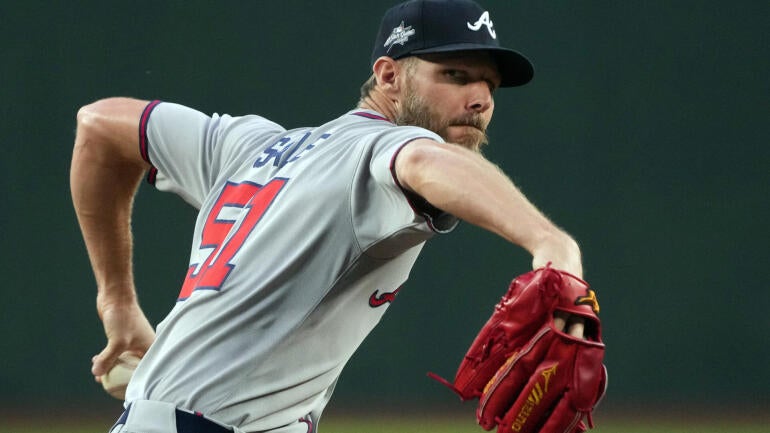
While starting pitcher is only one position, it's basically half the game, so your approach there requires greater care than everywhere else.
And yet ... I couldn't be less stressed about it this year.
That's not my default setting. Longtime followers will remember my early-round insistence in 2020 and 2021 and fixation with The Glob in 2024. Yes, my approach at starting pitcher, while adapting to the latest trends, is usually crystal clear.
But this year, I'm having a hard time caring. It feels like yet another position where there are more than enough similar options to satisfy me. It's deep at the top. It's deep in the middle. It's deep at the bottom. And when I say deep, I don't just mean similar. The middle ranks especially are so packed with upside that the draft is likely to end before my enthusiasm does. Even as someone who prefers not to invest heavily at the position, I can't tell you how many times in a Rotisserie draft I've found myself saying, "I wish I still had a spot for that guy."
- Position Strategies: C | 1B | 2B | 3B | SS | OF | SP | RP
- Position Tiers (v. 2.0): C | 1B | 2B | 3B | SS | OF | SP | RP
Now, attrition is sure to wreak havoc on that depth, as is always true at this position. By the end of April, I may not view starting pitcher as so deep anymore. But the thing about attrition is you never know who it's coming for. The best you can do now is give yourself some cushion.
That's the approach I'm taking this year: quantity over quality. To me, it's easy to justify because the quantity is of such high quality, as I've already mentioned. Unless I'm just in the right spot to take Tarik Skubal, Garrett Crochet or Paul Skenes, I'm not even looking at starting pitcher until Round 5 or 6, which is about the point when all the elite hitters are off the board. The kind of pitchers that go in between aren't substantively better, in my eyes, while the kind of hitters that do most certainly are. At times, I've pushed the envelope further, waiting to draft someone like Kyle Bradish as my ace, and am rarely dissatisfied with the outcome. Again, there's so much upside to be found in the middle of drafts that I'm not so worried about falling behind in strikeouts -- or any other category, for that matter.
What about points leagues? Well, they're even easier. When you don't have to safeguard ratios, which aren't directly scored in points leagues, the spectrum of usable options is nearly endless. There are better and worse ones, of course, but the gap between them narrows. The greater differentiators are found within the hitter ranks, so when in doubt, you'll want to go with one of them. I'm not saying you should wait to draft a pitcher until all nine of your starting hitter spots are filled -- the drop-off within the hitter ranks will likely come sooner than that -- but I am saying that it wouldn't be the worst thing if you did.
But I've said enough for now. Let me get to the showing.
| 2026 ADP | 2025 PPG | 2025 ERA | 2025 K/9 | |
|---|---|---|---|---|

Tarik Skubal
DET SP
| 6 | 19.47 | 2.21 | 11.1 |

Paul Skenes
PIT P
| 9 | 16.44 | 1.97 | 10.4 |

Garrett Crochet
BOS RP
| 12 | 19.92 | 2.59 | 11.2 |

Yoshinobu Yamamoto
LAD SP
| 24 | 16.55 | 2.49 | 10.4 |

Cristopher Sanchez
PHI SP
| 28 | 17.72 | 2.50 | 9.5 |

Hunter Brown
HOU SP
| 34 | 16.58 | 2.43 | 10.0 |

Bryan Woo
SEA SP
| 36 | 18.47 | 2.94 | 9.6 |

Logan Gilbert
SEA SP
| 38 | 12.94 | 3.44 | 11.9 |

Chris Sale
ATL SP
| 39 | 15.98 | 2.58 | 11.8 |

Hunter Greene
CIN SP
| 42 | 16.58 | 2.76 | 11.0 |

Max Fried
NYY SP
| 44 | 17.55 | 2.86 | 8.7 |

Logan Webb
SF SP
| 47 | 15.09 | 3.22 | 9.74 |

Jacob deGrom
TEX SP
| 49 | 15.92 | 2.97 | 9.6 |

Cole Ragans
KC RP
| 51 | 10.69 | 4.67 | 14.3 |
More than likely, I'm taking just one of these guys, with zero being preferable to two. I'm more open than usual, though, to taking one of the very top guys -- as in Tarik Skubal, Paul Skenes or Garrett Crochet -- because I think they represent a clearer advantage than usual over the rest of the pitcher ranks. Granted, my ranking for both Skubal (eighth) and Skenes (12th) is a little below the consensus, with Crochet (ninth) slotting directly between the two, but the thought of drafting one takes so much of the pressure off at starting pitcher that I'm willing to accept the added risk that comes with investing so much draft capital in one.
Otherwise, it's just a matter of who's most likely to be there when I finally turn my attention to starting pitcher in Round 5 or 6. I'm not going to be choosy about it because I don't think there's enough separation to be. Most any of these pitchers has a case to be No. 4. The actual No. 4, Yoshinobu Yamamoto, feels like more of a floor play than a ceiling play, but he took on such a big workload in the World Series that I wouldn't say even he is worry-free. Max Fried may not quite measure up to the others in terms of upside because he's not the same level of bat-misser, but he's so reliable for everything else that I'm happy to include him. I'm most likely to draft either him or Cole Ragans, whose incredible strikeout numbers in an injury-shortened season say a lot more than his ERA. If I'm lucky, someone like Chris Sale slides over durability concerns.
The two I'm most squeamish about, to the point of almost excluding them from this group, are Logan Webb and Jacob deGrom. The former seems predisposed to a high WHIP that hurts all the more because of the number of innings he throws. The latter remains an extreme injury risk who was forced to sacrifice some effectiveness in the name of staying healthy last year. Both excel in a particular format -- Head-to-Head points for Webb and 5x5 Rotisserie for deGrom -- which is why I've relented to ADP and included them here, but I think you could say the same for some in the next group.
| 2026 ADP | 2025 PPG | 2025 ERA | 2025 K/9 | |
|---|---|---|---|---|

Freddy Peralta
NYM SP
| 56 | 15.39 | 2.70 | 10.4 |

Joe Ryan
MIN SP
| 65 | 14.16 | 3.42 | 10.2 |

George Kirby
SEA SP
| 69 | 12.89 | 4.21 | 9.8 |
Dylan Cease
TOR SP
| 73 | 9.95 | 4.55 | 11.5 |

Jesus Luzardo
PHI SP
| 76 | 14.88 | 3.92 | 10.6 |

Kyle Bradish
BAL SP
| 78 | 14.58 | 2.53 | 13.2 |

Framber Valdez
DET SP
| 79 | 14.24 | 3.66 | 8.8 |

Nick Pivetta
SD RP
| 85 | 16.87 | 2.87 | 9.4 |

Shohei Ohtani
LAD DH
| 87 | 8.07 | 2.87 | 11.9 |
Eury Perez
MIA SP
| 98 | 11.08 | 4.25 | 9.9 |

Tyler Glasnow
LAD SP
| 109 | 12.44 | 3.19 | 10.6 |
Why, for instance, wouldn't Framber Valdez join with Logan Webb when both are workload darlings whose ratios tend to run a little high? Why wouldn't Tyler Glasnow join with Jacob deGrom when both are dominant inning-for-inning guys with little hope of remaining healthy for a full season? The loose distinctions within this range of the pitcher ranks (and even further, actually) are why I opt for a quantity-over-quality approach to the position.
They're also why I'm still not particularly choosy at this point. Sure, I have subtle preferences. I think Freddy Peralta is overpriced, for instance, believing that he's less the 2.70 ERA guy he was last year and more the 3.70 ERA guy he was in the three years prior. I've identified Nick Pivetta as a bust candidate for this year and would prefer not to be the one who comes away with Glasnow, seeing as he's never thrown even 135 innings in a season before.
Conversely, I think Kyle Bradish is a true ace who already proved late last year that he's back to form after Tommy John surgery. I think George Kirby still has ace potential and simply fell victim to a drooping arm angle after an early shoulder injury last year. I've also identified Eury Perez as a breakout candidate.
But for this range of the starting pitcher rankings, it's less about the target than the cost for me. As long as I grab two of them -- or perhaps just one if I've already invested in a higher-end pitcher -- I'm satisfied.
| 2026 ADP | 2025 PPG | 2025 ERA | 2025 K/9 | |
|---|---|---|---|---|

Blake Snell
LAD SP
| 95 | 14.27 | 2.35 | 10.6 |

Nolan McLean
NYM SP
| 101 | 18.94 | 2.06 | 10.7 |

Spencer Strider
ATL SP
| 102 | 9.07 | 4.45 | 9.4 |

Kevin Gausman
TOR SP
| 103 | 14.11 | 3.59 | 8.8 |

Brandon Woodruff
MIL SP
| 114 | 17.29 | 3.20 | 11.6 |

Jacob Misiorowski
MIL SP
| 117 | 10.23 | 4.36 | 11.9 |

Chase Burns
CIN P
| 120 | 5.81 | 4.57 | 13.9 |

Cameron Schlittler
NYY SP
| 124 | 12.21 | 2.96 | 10.4 |

Trey Yesavage
TOR SP
| 126 | 10.67 | 3.21 | 10.3 |

Nick Lodolo
CIN SP
| 131 | 12.86 | 3.33 | 9.0 |

Zack Wheeler
PHI SP
| 133 | 18.60 | 2.71 | 11.7 |

Michael King
SD SP
| 136 | 10.93 | 3.44 | 9.3 |

Nathan Eovaldi
TEX SP
| 137 | 18.89 | 1.73 | 8.9 |

Gavin Williams
CLE SP
| 139 | 13.47 | 3.06 | 9.3 |

Trevor Rogers
BAL SP
| 142 | 19.14 | 1.81 | 8.5 |

Emmet Sheehan
LAD SP
| 145 | 13.63 | 2.82 | 10.9 |

Robbie Ray
SF SP
| 155 | 13.31 | 3.65 | 9.2 |

Bubba Chandler
PIT P
| 156 | 13.79 | 4.02 | 8.9 |

Tatsuya Imai
HOU SP
| 181 | ----- | 1.92^ | 9.8^ |

Carlos Rodon
NYY SP
| 192 | 16.41 | 3.09 | 9.4 |

Kris Bubic
KC SP
| 207 | 14.40 | 2.55 | 9.0 |

Gerrit Cole
NYY SP
| 208 | 14.15† | 3.41† | 9.4† |

Joe Musgrove
SD SP
| 249 | 11.92† | 3.88† | 9.1† |
^foreign stats
†2024 stats
This is where the position really stands out from years past. The number of unprovens and questionables with genuine ace upside is staggering, such that I'm happy to form the bulk of my staff here. Granted, unprovens and questionables are more volatile, as those designations would suggest, but volatility is the nature of the job. The next injury for any pitcher is just a matter of time, and each has so little margin for error with his mechanics that a wayward season shouldn't be unexpected either. So rather than put yourself at the mercy of volatility, why not embrace it? Why not hope for an ace outcome from Nolan McLean, Chase Burns, Cameron Schlittler, Trey Yesavage, or Bubba Chandler, all of whom showed that kind of potential in their first major league season?
Some would say Jacob Misiorowski did, too, but that's embracing volatility a little too much given his longstanding control issues, which came to the forefront in the second half. He's a clear avoid for me. Others in that category include Spencer Strider, who still has ace upside but is too much of a reclamation project for the cost, and Blake Snell, just because I think the Dodgers will be in no hurry to bring him back from his minor shoulder issue. Zack Wheeler, Carlos Rodon, and Gerrit Cole also have questionable timetables due to injury, which make them pretty easy to avoid unless the cost is just unbelievable. We're approaching that point with Rodon, who could be back the soonest of all of them.
I'm not sure Robbie Ray has much in the tank after his late-season collapse, and I think Michael King may be getting too much benefit of the doubt for an injury-plagued season. Those objections aside, I'm just looking to load up here, going with the ADP flow so that I have a chance to secure as many of these arms as possible.
Again, I like all the second-year pitchers other than Misiorowski, with Yesavage and Chandler being more likely targets for me than McLean because of price. Nick Lodolo, Emmet Sheehan and Gavin Williams are all among my breakout picks for 2026. Tatsuya Imai is a worthy speculative pickup after the success he had in Japan. Trevor Rogers is a regression candidate for sure, but I find him irresistible at his going rate. Kris Bubic and Joe Musgrove might be the best bang-for-buck picks of all. Sure, both ended last year on the IL (with Musgrove missing the entire season), but both looked like aces the last time we saw them fully healthy (Musgrove was basically Max Fried from 2021 through 2023). You can read more about them in my Sleepers 1.0.
| 2026 ADP | 2025 PPG | 2025 ERA | 2025 K/9 | |
|---|---|---|---|---|

Sonny Gray
BOS SP
| 118 | 13.45 | 4.28 | 10.0 |

Luis Castillo
SEA SP
| 138 | 13.19 | 3.54 | 8.1 |

Ryan Pepiot
TB RP
| 140 | 12.02 | 3.87 | 9.0 |

Sandy Alcantara
MIA SP
| 147 | 10.10 | 5.36 | 7.3 |

MacKenzie Gore
TEX SP
| 160 | 9.28 | 4.17 | 10.4 |
Ranger Suarez
BOS SP
| 164 | 14.94 | 3.20 | 1.22 |

Shota Imanaga
CHC RP
| 173 | 13.90 | 3.73 | 7.3 |

Drew Rasmussen
TB SP
| 175 | 12.21 | 2.76 | 7.6 |

Tanner Bibee
CLE SP
| 176 | 12.03 | 4.25 | 8.0 |

Cade Horton
CHC P
| 182 | 13.28 | 2.67 | 7.4 |

Shane Bieber
TOR SP
| 185 | 15.50 | 3.57 | 8.3 |

Andrew Abbott
CIN SP
| 191 | 13.60 | 2.87 | 8.1 |

Aaron Nola
PHI SP
| 198 | 8.27 | 6.01 | 9.3 |

Zac Gallen
ARI SP
| 202 | 11.38 | 4.83 | 8.2 |

Edward Cabrera
CHC SP
| 204 | 11.42 | 3.53 | 9.8 |

Matthew Boyd
CHC SP
| 205 | 14.71 | 3.21 | 7.7 |

Merrill Kelly
ARI SP
| 224 | 14.05 | 3.52 | 8.2 |

Shane Baz
BAL SP
| 228 | 9.97 | 4.87 | 9.5 |

Quinn Priester
MIL SP
| 248 | 13.17 | 3.32 | 7.6 |

Noah Cameron
KC P
| 251 | 13.71 | 2.99 | 7.4 |

Ryne Nelson
ARI SP
| 252 | 11.36 | 3.39 | 7.7 |
You'll notice that many of these pitchers are being drafted in the same range as the previous group. The distinction here is less cost than sizzle. I'm more often looking for sizzle at this stage of the draft, hoping to score big to make up for my shortfall at starting pitcher earlier, but there's a time and place for everything. Ranger Suarez might be the perfect pick to stabilize my team's ERA, or in the case of a points league, volume may be more important than sizzle anyway, elevating pitchers like Luis Castillo and Zac Gallen. As a general rule, though, I'm not going to draft many of these pitchers, particularly those on the costlier side.
It would feel like a concession. It's not that no upside exists within this group. It's just that it's not as probable as for the last group. Sure, maybe MacKenzie Gore unlocks something with the Rangers finally after years of disappointing with the Nationals, but it's hard for me to remain so hopeful. Judging by his ADP, I may be in the minority there. Edward Cabrera seemingly stabilized with the introduction of a sinker last year, but his ERA and WHIP still ran high. Shane Baz seems like a total shot in the dark. I'm more drawn to someone like Tanner Bibee, who had two great seasons before last year's misstep, but even there, I can't explain what exactly went wrong. Better to treat him as a boring innings eater and hope to get lucky.
Sandy Alcantara's inclusion here might draw the ire of some, seeing as he's a former Cy Young winner who looked like he was rounding into form in the second half with a 3.33 ERA and 1.04 WHIP. But he had only 7.6 K/9 to go with them and pitches for a team that's not likely to provide him much support. That strikes me more as a floor play than a ceiling play.
| 2026 ADP | 2025 PPG | 2025 ERA | 2025 K/9 | |
|---|---|---|---|---|

Jack Flaherty
DET SP
| 201 | 9.48 | 4.64 | 10.5 |

Roki Sasaki
LAD P
| 216 | 5.50 | 4.46 | 6.9 |

Shane McClanahan
TB SP
| 234 | 15.74# | 3.29# | 9.5# |

Connelly Early
BOS SP
| 253 | 10.63 | 2.33 | 13.5 |

Bryce Miller
SEA SP
| 256 | 6.78 | 5.68 | 7.4 |

Jack Leiter
TEX P
| 258 | 10.86 | 3.86 | 8.8 |

Grayson Rodriguez
LAA SP
| 274 | 15.95† | 3.86† | 10.0† |

Shane Smith
CHW RP
| 278 | 10.09 | 3.81 | 8.9 |

Kodai Senga
NYM SP
| 280 | 10.98 | 3.02 | 8.7 |

Logan Henderson
MIL P
| 281 | 17.30 | 1.78 | 11.7 |

Ryan Weathers
NYY SP
| 289 | 8.81 | 3.99 | 8.7 |

Sean Manaea
NYM RP
| 290 | 6.30 | 5.64 | 11.1 |

Braxton Ashcraft
PIT P
| 291 | 5.48 | 2.71 | 9.2 |

Cody Ponce
TOR RP
| 294 | ----- | 1.89^ | 12.6^ |

Joey Cantillo
CLE SP
| 297 | 6.44 | 3.21 | 10.2 |

Parker Messick
CLE P
| 299 | 14.57 | 2.72 | 8.6 |
Luis Gil
NYY SP
| 307 | 11.05 | 3.32 | 6.5 |

Andrew Painter
PHI SP
| 314 | ----- | 5.26* | 9.4* |

Michael Burrows
HOU SP
| 316 | 7.41 | 3.94 | 9.1 |

Reid Detmers
LAA SP
| 318 | 2.61 | 3.96 | 11.3 |

Bailey Ober
MIN SP
| 325 | 8.96 | 5.11 | 7.4 |

Zebby Matthews
MIN P
| 330 | 8.25 | 5.56 | 10.0 |

Justin Steele
CHC SP
| 333 | 14.63 | 4.76 | 8.3 |

Reynaldo Lopez
ATL RP
| 341 | 14.31† | 1.99† | 9.8† |

Robby Snelling
MIA SP
| 345 | ----- | 2.51* | 11.0* |

Jacob Lopez
ATH RP
| 363 | 9.60 | 4.08 | 11.0 |

Jonah Tong
NYM P
| 367 | 3.40 | 1.43* | 14.2* |

Jared Jones
PIT SP
| 389 | 11.82† | 4.14† | 9.8† |
Thomas White
MIA SP
| 400 | ----- | 2.31* | 14.6* |

Dustin May
STL SP
| 409 | 8.38 | 4.96 | 8.4 |
Luis Morales
ATH SP
| 415 | 11.55 | 3.14 | 8.0 |

Taj Bradley
MIN SP
| 428 | 9.69 | 5.05 | 8.0 |

Grant Holmes
ATL RP
| 461 | 9.30 | 3.99 | 9.6 |
*minor-league stats
^foreign stats
#2023 stats
†2024 stats
Throughout this series, "sleepers" has generally meant "anyone available in the middle rounds or later who has a chance to blow away expectations." But if that's how I defined it here, half the position would fit that description. Nobody wants to scroll through a table that long, trust me.
So instead, I'm defining sleepers as late-round targets (Pick 200 or later) with a clear upside case but long odds for meeting it. What this means is that they pretty much have to meet it to be worth rostering at all. Some shallower drafts will end without any of them coming off the board, even. The ones to target are, naturally, the ones with a better chance of meeting that upside, slim though it may be. Opinions will vary as far as that goes, but I'd like to highlight three in particular: Grayson Rodriguez, Shane Smith and Andrew Painter.
Rodriguez was the top pitching prospect three years ago and seemed well on his way to meeting that upside as recently as two years ago. A series of injuries has derailed him since then, but none so severe that you'd expect it to alter his trajectory on its own. He's also suggested that bone spurs in his elbow, which he had removed this offseason, were largely to blame for his lat troubles. Early reports this spring have him throwing at his usual velocity. Painter was trending toward being the top pitching prospect before needing Tommy John surgery in 2023. He wasn't nearly as sharp coming back from the injury last year, but the velocity seemed intact. The Phillies have corrected a mechanical flaw that they think will help him regain his fastball shape and command, and they've all but handed him a rotation spot already. Smith had a strong showing as a Rule 5 pick last year but really turned it on in the second half, riding an elite curveball to Freddy Peralta-like swing-and-miss numbers.
Others I like include Michael Burrows, who the Astros think will make a leap with the adoption of a sinker this year, Sean Manaea, who feels like he's regained the low arm slot that led to so much success in 2024 after exaggerating it last year, and Jacob Lopez, whose funky left-handed delivery has led to some startling whiff totals.
| 2026 ADP | 2025 PPG | 2025 ERA | 2025 K/9 | |
|---|---|---|---|---|

Casey Mize
DET SP
| 261 | 12.70 | 3.87 | 8.4 |

Brady Singer
CIN SP
| 275 | 11.67 | 4.03 | 8.7 |

Brayan Bello
BOS SP
| 286 | 12.45 | 3.35 | 6.7 |

David Peterson
NYM SP
| 298 | 11.40 | 4.21 | 8.0 |

Jameson Taillon
CHC SP
| 300 | 14.44 | 3.68 | 6.8 |

Mitch Keller
PIT SP
| 303 | 9.63 | 4.18 | 7.7 |

Chris Bassitt
BAL SP
| 306 | 10.78 | 3.96 | 8.8 |

Clay Holmes
NYM RP
| 312 | 10.17 | 3.53 | 7.0 |

Michael Wacha
KC SP
| 319 | 10.84 | 3.86 | 6.6 |

Jose Soriano
LAA RP
| 324 | 10.39 | 4.26 | 8.1 |

Seth Lugo
KC SP
| 336 | 11.33 | 4.15 | 7.7 |

Tyler Mahle
SF SP
| 348 | 13.56 | 2.18 | 6.9 |

Chad Patrick
MIL P
| 351 | 7.94 | 3.54 | 9.6 |

Lucas Giolito
BOS SP
| 353 | 13.25 | 3.41 | 7.5 |

Jeffrey Springs
ATH SP
| 375 | 11.19 | 4.11 | 7.3 |

Zack Littell
CIN SP
| 391 | 12.94 | 3.81 | 6.3 |

Justin Verlander
DET SP
| 401 | 8.81 | 3.85 | 8.1 |

Luis Severino
ATH SP
| 418 | 9.35 | 4.54 | 6.9 |

Jose Berrios
TOR SP
| 439 | 11.19 | 4.17 | 7.5 |

Tyler Wells
BAL SP
| 469 | 15.75 | 2.91 | 7.5 |
I'm not going to lie: This group is pretty gross. Most drafts will be over and done before you get to this point, but you may need to round out your pitching staff with one or two of these in a deeper league.
The goal should be to identify the most stable floor because there isn't much ceiling to speak of. Maybe Chad Patrick has another gear -- he was halfway decent as a rookie last year -- but he's part of a deep stable of rotation options for the Brewers. I presume we're not doing the Mitch Keller thing anymore. I was kind of the ringleader of it, after all. I see some bounce-back potential for Chris Bassitt, Seth Lugo and Jose Berrios, the last of whom recently revealed that he was pitching through a biceps tendon injury all year, but the upside isn't enough for me to make any of them a priority. I like Tyler Wells as a WHIP specialist if he gets a real chance with the Orioles, but he would seem to be on the outside looking in to start out.
The safest options are probably Brady Singer, Jameson Taillon and Michael Wacha, so if you're looking for some stability late, there you have it. Just don't expect them to perform any miracles.