

There was no slow-motion crash down the standings like last season. The New York Mets, baseball's most disappointing team a year ago, started 2026 terribly, played poorly in the middle of the summer, then showed enough of a glimmer of hope late to make you wonder what could have been. For the second straight year, the team with baseball's second-highest payroll will be watching from home in October. The Mets were officially eliminated from postseason contention with Monday's loss to Pete Alonso's Baltimore Orioles.
"You can't necessarily predict things and have things work out in a perfect manner sometimes," Alonso said about his former team after returning to Citi Field with the O's earlier this week (via MLB.com). "Sometimes you have a lot of talent and it just doesn't work out for whatever reason. Just based on experience, I think in the future they're going to be fine."
What went wrong? Well, a lot of things. Francisco Lindor and Juan Soto both had multiple stints on the injured list. Clay Holmes broke his leg on a bad-luck comebacker. Kodai Senga was again injured and ineffective (as a starter). The last generation of homegrown players -- Francisco Alvarez, Brett Baty, Mark Vientos -- again failed to take that next step in their careers and, in the case of Baty and Vientos, may have played their way out of Queens. The farm system took a step back as well.
On top of that, POBO David Stearns simply had one of the worst offseasons of any executive in recent memory. Just about every move could be (and was) defended at the time, but it is a results-based business, and the results are about as bad as it gets. Here are New York's most significant offseason pickups. This is L after L after L.
| Player | Acquired | WAR with Mets | Status |
|---|---|---|---|
IF Bo Bichette | Free agent (3 yrs, $126M) | 1.6 | Still with Mets |
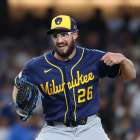
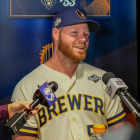
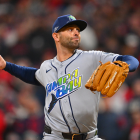
Trade with Brewers | 1.1 | Traded to Rays | |
RP Luke Weaver | Free agent (2 yrs, $22M) | 1.0 | Traded to Pirates |
Free agent (3 yrs, $51M) | 0.7 | Still with Mets | |
Trade with White Sox | 0.5 | Claimed on waivers by O's | |
Trade with Rangers | -0.2 | Still with Mets | |
Free agent (2 yrs, $40M) | -1.4 | Still with Mets |
Although he was a fan favorite and a franchise icon, you needn't try hard to defend letting Alonso leave given his age (31), contract demands (five years and $155 million), and the aging curve for righty-hitting/righty-throwing first basemen (pretty bad). Replacing him with Polanco, who had never played first base and had been healthy and productive at the same time for about five months in the previous three seasons, was a colossal error before he even took the field. It was too cute by half. Replacing Freddie Freeman with Matt Olson this was not.
Stearns' disastrous offseason cost manager Carlos Mendoza his job in June, not that Mendoza covered himself in glory this year and last. And yet it will be on Stearns to fix the Mets. Owner Steve Cohen has insisted Stearns will play out the final two years on his five-year contract -- "David is reflective and adaptable. We'll figure out what changes need to be made, but it won't be David," Cohen said in July -- even though the fan base is restless, the results are poor, and even the most modest expectations haven't been met.
What's next for the Mets? Here's a look at the biggest questions facing the club as they play out the string on their second straight disappointing season.
What went right?

Before we get into what's next, we should acknowledge what went right for the Mets this year, because it will influence the next steps. The Mets received tremendous production from rookies Nolan McLean, Carson Benge, and A.J. Ewing this year. McLean is a budding frontline starter who ranks in the top 25 among all pitchers in WAR. Benge has been one of the best all-around players in baseball since about May 1. Ewing looks like a rock-solid center fielder at worst, with upside for much more.
Righty Christian Scott returned from Tommy John surgery in late April and has shown the same high-end stuff that made him so exciting before his elbow gave out in 2024. He and McLean are two keepers who can pitch at or near the front of the rotation. Lefty Zac Thornton has also pitched well (oftentimes much better than well) in his various big-league stints this year, and while he's not as highly regarded as McLean and Scott, cheap back-of-the-rotation starters are incredibly valuable, and Thornton is that.
During this failure of a season, the Mets found four bona fide building blocks who can be centerpieces of the next contending Mets team, not just tag along for the ride. The upcoming collective bargaining agreement means we're in for a truncated and disjointed offseason, possibly even changes to the free agency and service time rules, but given Stearns' history with Milwaukee, it wouldn't surprise me to see him explore long-term extensions with Benge, Ewing, McLean, or Scott -- or maybe even all four.
There have been other, smaller wins along the way. The trade deadline bullpen exodus (Weaver, Huascar Brazobán, A.J. Minter, Brooks Raley, etc.) created opportunities for low-cost, low-service-time relievers like Daniel Duarte, Nate Lavender, and Jonathan Pintaro to show what they can do, and they've all ranged from good to great. Even in a bad and disappointing season, the Mets unearthed some young players who cemented their place in the franchise's future, and that's much more than a silver lining.
Baseball is a 162-game sport and a good month doesn't invalidate the rest, but the Mets showed vast improvement in the second half, going 29-24 through their official elimination on Monday. It certainly wasn't enough to save their 2026 season, but it did spark hope.
How do they improve the infield defense?

Last offseason, Stearns said his priority was improving the team's run prevention, and for sure, it needed improvement. Stearns not only failed to improve the defense in a meaningful way; he made it worse. The Mets went from below average defensively last year to one of the worst defensive teams in baseball this year, and it is entirely due to an infield shuffle that, frankly, didn't make much sense. Why ask Bichette and Polanco, two poor defenders to start with, to change positions if you want to improve your defense?
Here's where the Mets rank in Statcast's outs above average metric over the last two years:
| Overall OAA | Infield OAA | Outfield OAA | |
|---|---|---|---|
2025 | -13 (21st in MLB) | -3 (15th in MLB) | -10 (23rd in MLB) |
2026 | -22 (25th) | -24 (27th) | +2 (10th) |
Thanks to Benge and Ewing, the Mets fielded a much better outfield defense this year. The infield, though, good gravy. Bichette's learning curve at third base was steep. Polanco looked like a fish out of water in limited first base time around multiple injuries, and the various fill-ins (Vientos, Jared Young, etc.) didn't help matters. Even Lindor and Semien, two of the best defenders of their generation at any position, showed decline on defense, which wasn't unexpected at their age.
So, how do Stearns and the Mets go about fixing the infield defense? Clearly the status quo can not remain, and that's a problem, because the four infielders (Bichette, Lindor, Polanco, Semien) are all signed through next season. Perhaps Bichette will use his opt out and become a free agent, but that seems unlikely given his season. Stranger things have happened, though. Polanco's injuries, meanwhile, could force a full-time move to DH, creating an avenue to upgrade first base.
Lindor's not going anywhere. Would the Mets bite the bullet and release Semien with two years and $46 million remaining on his contract? It's possible, sure. Cohen can certainly afford it, but we don't know what the new CBA will bring, and I doubt the Mets or any team will rush into any major decisions without seeing the new lay of the land. Who knows? Maybe MLB gets its salary cap and part of it is amnesty buyouts to eliminate unwanted contracts, similar to how the NHL implemented its salary cap way back when.
Given the personnel and the contracts on the books, improving the infield defense this offseason will not be easy, but it is needed. Bad defense hurts in so many ways. It's more baserunners and runs, it's more stressful pitches for your pitchers, it's more work for your bullpen. The domino effect can be very costly. The Mets saw that last year, Stearns tried to fix it over the winter, failed, and now he has to try to fix it again. How he will do it, I do not know, but the current infield defense is untenable.
Will they make a run at Skubal?


The upcoming free-agent class is the weakest in quite some time, but there is a clear headliner and capital-A Ace available: Tarik Skubal. The reigning two-time AL Cy Young winner will be the best free-agent starting pitcher since Gerrit Cole (excluding Yoshinobu Yamamoto coming over from Japan) and, because he was traded at the deadline, Skubal is not eligible to receive the qualifying offer. There will be no draft pick/international bonus money penalty. The only cost is money. (A lot of money.)
Stearns does not like to spend money on pitchers. More accurately, he does not like to give pitchers pricy long-term contracts. He'll pay top dollar on one- or two- or three-year deals (Holmes, Sean Manaea, Frankie Montas, Luis Severino, etc.), but four or more years? Forget it. It's not in his DNA. There's a chance Skubal takes a high-dollar short-term deal similar to Kyle Tucker's contract with the Los Angeles Dodgers. Maybe four years at $65 million a year with an opt out after each year? We won't know until this winter.
The Mets have come out of this season with the makings of a strong, homegrown rotation. The rotation depth chart heading into the offseason looks something like this:
- RHP Nolan McLean
- RHP Christian Scott
- LHP Sean Manaea
- LHP Zac Thornton
RHP Tyler Megill(will miss start of 2027 with Tommy John surgery)- RHP Jonah Tong
- RHP Tobias Myers
- RHP Justin Hagenman
That's a great 1-2 punch, a 3-4 tandem that would look better as the 4-5 tandem, and then some question marks/upside plays. Put Skubal in the No. 1 spot and things look much more formidable, especially in a short postseason series, which is the ultimate goal. The Mets will of course face competition for Skubal. The Dodgers will assuredly try to re-sign him. I would expect the Toronto Blue Jays to get involved as well. If the new CBA brings a salary floor, maybe even the Rays make a push.
Skubal or no Skubal, the Mets will need to add a starting pitcher this offseason. At least a veteran innings dude to raise the team's floor and protect against injury, as well as subsidize the workload restrictions for the young pitchers. The Mets are not just a Skubal signing away from being a World Series contender, but he sure would help. As long as it's workable with the new CBA, Stearns might have to do something uncomfortable and give Skubal a long-term contract. No move would raise the Mets' ceiling more.