Warriors' trade deadline options after Jimmy Butler injury: Blockbuster to replace him? Stand pat? Blow it up?
Jimmy Butler is out for the season, and the Warriors' trade deadline just got even more complex

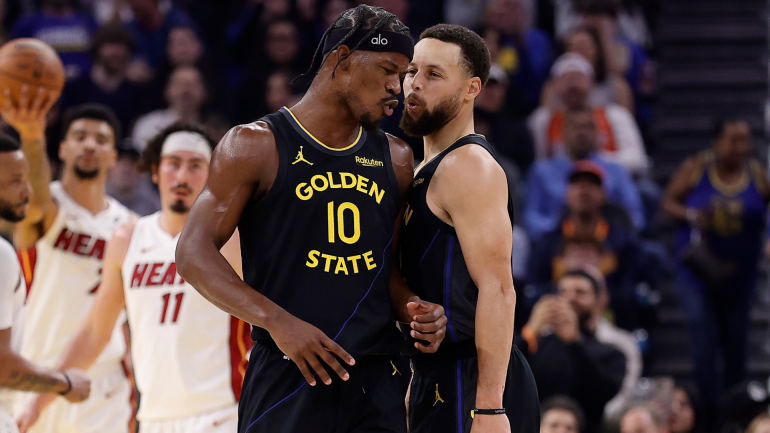
Jimmy Butler saved the 2024-25 Golden State Warriors. They hovered around .500 without him. They went 23-8 after getting him and won a first-round series over the Houston Rockets. Had Stephen Curry remained healthy, they may have reached the Western Conference finals. They ultimately fell short. While their status as contenders has been a matter of debate ever since, Butler legitimized what was otherwise shaping up to be a fairly ignominious end to the Curry era. Players that good shouldn't go out on lottery teams. Butler gave what Steve Kerr himself has called a "fading dynasty" a shred of dignity.
Nearly a year later, an injury to Butler has potentially killed the 2025-26 Golden State Warriors' chances of making any sort of run. In Monday's win over Butler's former team, the Miami Heat, Golden State's star forward reportedly tore his right ACL. His season is over. His prime may be as well. The Warriors now sit at 25-19 even having had Butler healthy all year. They're in eighth place in a crowded Western Conference playoff field, and arguably in a worse position than they found themselves a year ago. The depth spent to acquire Butler is gone. The young players haven't developed. They have a $54.1 million salary squatting on their books, giving them nothing the rest of the year.
When things were falling apart a year ago, the directive was obvious. ESPN's Shams Charania reported in the buildup to last year's deadline that the Warriors were "legitimately making calls on every All-Star player." They were desperate to do something, anything to give Curry a fighting chance in the postseason. Is that even possible anymore? Is there another Butler-esque rabbit to be pulled out of Golden State's hat? And if there isn't, what does that mean for the rest of this season, and potentially even the entire Curry era? Let's dig into Golden State's suddenly immensely complicated deadline plans.
So ... what Butler-sized holes do the Warriors need to fill?
The Butler-less Warriors are an incredibly homogenous group. The entire perimeter rotation is effectively made up of undersized shooting guards that want to take jump shots. Golden State leads the NBA in 3-point attempt rate by a mile, taking over half of its shots from deep despite their second-leading scorer, Butler, attempting only around two per game.
That made Butler an absolutely essential curveball. He's the only player on the entire team that attacks the basket consistently. He's responsible for 287 of Golden State's 974 free-throw attempts this season, or just under 30% of them on his own. He's scored 370 total points in the paint. Curry is the only other Warrior who has scored half as many.
Without Jimmy Butler, the Warriors are exclusively a jump-shooting team, and mind you, they're not an especially good jump-shooting team. They rank eighth in the NBA in 3-point percentage, yes, but remember, they have Curry on their team. Remove Curry and Butler from the equation and the rest of the team only hits 36% of their 3s. That's with the rim pressure Butler creates. Without him to draw help into the paint and away from the arc, this is a flat out bad shooting team aside from Curry. It was one in need of a creator even with Butler. Golden State's offense declines by more than 10 points per 100 possessions whenever Curry sits.
So, offensively, we've covered shooting, rim pressure and shot-creation as needs. Those are basically the three most important elements of offense. Rounding out the top five would be offensive rebounding, in which the Warriors are just below average after years of success (you're missed, Kevon Looney) and turnovers, which Golden State surrenders at the eighth-highest rate in the league as a baked in flaw of their passing-heavy system. Really, put all of this together and you could essentially just categorize "offense" as Golden State's biggest need. Doesn't matter what type.
Yet Golden State's defense also just got worse. While Butler isn't the night-to-night lockdown defender he once was, he's still as brilliant and physical as ever. Most metrics paint him as an above-average defender even now, in his mid-30s, and more importantly, he's big and he's versatile. For a defense that wants to switch and hunt turnovers as much as Golden State does, those are two absolutely essential traits.
The Warriors aren't the Warriors defensively without someone in that big wing slot below Draymond Green. Andre Iguodala and Andrew Wiggins are gone. The only like-sized defender left on the team is Jonathan Kuminga and, well, if he were interested in defending the way Butler does, his career likely would have gone very differently to this point. A lot of what makes the Warriors special defensively boils down to Draymond Green identifying and exploding opposing plays on the fly. He can't freelance as much if he doesn't trust the structure behind him. And frankly, he's taken a step back already this season. Still very good. No longer a real Defensive Player of the Year candidate.
So, what do the Warriors need? The answer is, well, everything. The Warriors need everything. And they don't have many tools to go and get it. Sure, they control most of their first-round pick supply (the only outlying first-round pick is top-20 protected in 2030, so they can functionally trade the valuable portion of four first-round picks), but that doesn't mean much without salary to attach them to. Golden State's balance sheet is extremely top heavy. Curry is the highest-paid player in the league. Butler makes 35% of the cap. Green and Kuminga are the only other players above the non-taxpayer mid-level exception. Oh, and they're pressed up against a second-apron hard cap.
The Warriors were linked to every big name on the market that doesn't play point guard. Their struggle in pursuing those bigger names was going to be making the money work without gutting their depth. Well, now they have $54.1 million in money that isn't actively helping them. There is no universe in which they make a win-now trade that maintains acceptable depth now that they're getting nothing out of Butler. So this raises the question that will now define Golden State's deadline: would the Warriors trade Butler, purely as a cap figure, to try to claw their way back into contention
Is there any sort of trade market for Butler?
As a player, Butler has no value right now. He's 36 years old and just suffered an injury that, at best, usually comes with a one-year recovery period. Even if he were healthy, his value was probably minimal. As he showed in Miami, he can become a malcontent pretty quickly if he's not happy in a given situation. How many teams would Butler have even wanted to play for? How many of those teams could absorb $54 million without gutting the rest of their roster? And how many of them could compensate for Butler's inconsistent aggression and bizarre refusal to shoot 3s with a teammate as perfectly fitting as Stephen Curry? The Warriors, for a variety of reasons, were the perfect team for Butler. He meant the world to them. But he wouldn't have been an easy player for most teams to incorporate even when he was healthy enough to play. Now he isn't. There's a chance the rest of his contract is just dead money now.
It's a lot of dead money. In addition to Butler's $54 million cap charge this season, he's owed just under $57 million next season. But, critically, his contract expires after that. And that's where the value comes in. There are teams out there with longer contracts owed to players who are worse than a healthy Butler, but obviously more productive than the version of him Golden State has now. Those teams might love the idea of shaving a year or two off of their own bad contracts by swapping them for Butler.
Take Anthony Davis, whom the Warriors were already linked to. He and Butler are owed the same amount this year. Davis makes slightly more next season. But after that? Butler expires while Davis has a $62.8 million player option. Davis is also injured at the moment, but there's a chance he returns this season with the news that he won't be having wrist surgery. Davis is a major injury risk in his own right. He'll almost certainly play more this year and next than Butler does.
There's a very easy construction here. The Warriors would send Butler, Jonathan Kuminga and Will Richard to Dallas. The Mavericks would send Davis, Klay Thompson and Jaden Hardy to Golden State. The money lines up almost perfectly, keeping both below their hard caps and retaining roster balance. Dallas might not even need a pick to do this. There's genuine value for them in getting Kuminga as an upside swing on youth and talent, and shedding multi-year deals for Davis, Thompson and Hardy would help out their long-term books. And hey, Warriors fans could use something to cheer for right now. A Thompson return would accomplish that.
Philadelphia is a similarly interesting possibility, especially as a former Butler employer. Paul George's contract is one year longer than Butler's. Joel Embiid's is two years longer. The 76ers are playing well right now, but nobody in Philadelphia has any illusions about the team's core at this point. They're on the Tyrese Maxey-VJ Edgecombe timeline now. Getting worse now might be worth it to save money later that could be reallocated towards their eventual peaks. The Warriors pursued George in the 2024 offseason. Maybe they'd be up for another swing at him.
Wanna get really crazy? Give the Lakers a call. They're floundering. They're clearly focused on the future. Would they be willing to eschew 2026 cap space by swapping LeBron James for Butler? They'd just be delaying their cap space by a year, reloading in 2027 instead of 2026, though they'd need to be compensated handsomely for doing so. That's probably a multiple-draft pick endeavor. Not worthwhile, but a fun thought.
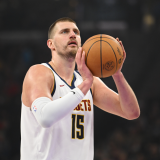
Moves like this would require the Warriors sacrifice any ambitions of 2027 cap space. As it stands now, Curry, Butler and Green are set to expire after next season. That was intentional, a way to set up a soft reboot in that offseason. Would it be worth sacrificing that cap space to improve now? That's hard to say. Truthfully, Curry is still so good that he'll likely still be worth a hefty salary by then, and it's unlikely they'd be able to recruit the biggest-name 2027 free agents anyway. Nikola Jokić and Giannis Antetokounmpo would want younger co-stars if they ever considered leaving their original teams. The money probably shouldn't be an impediment to a trade, but it's something to consider.
The contract doesn't even necessarily have to be longer than Butler's for it to make sense. Take Zach LaVine. Like Butler, his contract expires after next season. But the Kings are tanking. Would they rather simply have Butler on their books, not playing, not potentially helping them win basketball games, over LaVine, who, despite his flaws, remains a pretty valuable player? It's a worthwhile question, and given Sacramento's interest in Kuminga, one that might actually come into play. Here's your "so big it's a long shot" trade idea of the paragraph: Butler, Kuminga, Moses Moody and Buddy Hield for LaVine, Domantas Sabonis, Keon Ellis and Doug McDermott. It's a near perfect financial fit, though the Warriors would almost certainly have to attach draft picks to make this work.
The point here is that, while not exactly easy, a Butler trade is plausible, and therefore, some effort to salvage this season is also plausible. The next question becomes whether or not doing so would even be worthwhile. We've covered just how extensive Golden State's needs are, and how far down the standings they currently sit. Their season is currently being held aloft by a 6-foot-2 37-year-old who is currently defying every imaginable aging curve by playing at an All-NBA level. The Warriors might be able to remain competitive this season, but contending for the championship? That's probably a bridge too far. In that world, sacrificing future picks, which would be very valuable given Curry's age and the dearth of youth here, would be irresponsible.
So what happens if the Warriors decide that it ultimately makes no sense to act as trade deadline buyers? Could they, for the first time in over a decade, go the other way and sell?
... There's no chance the Warriors blow it up, right?
Let's make something clear: the Warriors would never trade Stephen Curry unless he asked. It's a fairly ironic position for them to be in considering they have, in the past, declined to give him an actual no-trade clause, but that's just semantic. The Spurs would never have traded Tim Duncan. The Celtics would never have traded Larry Bird. The Mavericks would never have traded Dirk Nowitzki (well, at least not unless Nico Harrison was in charge, maybe). Curry falls into that class of player. Even if his career is coming to an end, everyone in that building understands that even in retirement, he'll mean more to that franchise than they do. If he wants to retire as a Warrior he'll retire as a Warrior.
But retiring as a Warrior is a decidedly less appealing option today than it was yesterday. That doesn't mean it isn't what Curry wants. He's accomplished more than almost any player in NBA history. He doesn't need more rings, more money, more moments, more anything. But on the off chance he wants those things, that he wants to continue contending while his body allows it and any part of him believes that isn't possible with the Warriors, we should at least scope out what a possible trade would look like.
Let's get Charlotte out of the way quickly, as the only team besides Golden State he's ever really been linked to. If the Hornets could get Curry with matching salary and modest pick compensation, they'd do it for the business reasons alone. But Charlotte finally has a really promising young core. The Hornets have the No. 3 offense since Dec. 1. They aren't going to give away a core player to rush this thing. LaMelo Ball, Kon Knueppel and Brandon Miller are staying put. They're not giving away all of their picks for a year or two of Curry. If Curry wanted to try his luck as a Hornet, he'd probably do it as a 2027 free agent. So let's put aside the Hornets for the moment and focus on teams pursuing Curry to try to win now.
The obvious basketball fit would be Houston. It would reunite Curry and Kevin Durant, though on Durant's turf, potentially making the mercurial 2014 MVP a bit more amenable to sharing his team and credit. The Rockets badly need more shooting. The have a mountain of draft picks and young players to send. Jabari Smith's poison pill contract would make it complicated, but if you worked in Brooklyn or Utah as a third team, you could construct a trade in which the Warriors got Smith, Reed Sheppard, valuable picks and some contracts while the Rockets load up with Curry, Durant, Alperen Sengun, Amen Thompson and Tari Eason as probably the best five-man lineup in the NBA, plus Steven Adams off the bench as the ultimate curveball. It's a fascinating concept. Given Golden State's longtime rivalry with Houston, though, it's probably unfathomable. Curry wouldn't want to wear that jersey.
What about the Bucks? Milwaukee doesn't have much in the way of youth, but control over its first-round picks in 2026 (through swap rights), 2031 and 2032 (also through swap rights) sound fairly appealing. It would be an immensely complicated trade from a cap standpoint, but the Bucks could pull off a five-for-one involving Kyle Kuzma, Bobby Porter, Kevin Porter Jr., Ryan Rollins and Gary Harris to bring in Curry alongside Antetokounmpo and Myles Turner. Would those three players and a bunch of minimums accomplish much? It'd be tough, but an incredible watch.
Would Detroit want to give up youth and picks for Curry when its runway is so long? He'd be a perfect fit for the Pistons. The same question goes to the Magic, who could send Golden State apparent Kerr-favorite Franz Wagner as the centerpiece of a trade. Miami is always interested in big-game hunting. Heck, why shouldn't the Thunder offer a bunch of picks plus matching salary for Curry? They have such an insane asset surplus that they could effectively guarantee a second title and possibly a three-peat without really sacrificing that much runway if Curry were interested. Essentially, almost any contender could justify a possible Curry trade. It's Stephen Curry. His shooting fits anywhere. If you're scared of his age, fine. But if your goal is to win this year, he'd help anyone do it.
The market for Draymond Green wouldn't be quite so big, but there are plenty of plausible fits at a lower price point. Could he fix Milwaukee's woeful defense? Would the Bulls, reportedly seeking their version of the Pascal Siakam trade for Indiana, bring in Green as a culture-setter? Could Boston justify swinging on Green as the team's new center and going for the 2026 title? The Lakers have expiring contracts and a tradable first-round pick, if they wanted to focus on the present rather than the future. Again, the price here wouldn't approach Curry's. It's probably something like one weak first-round pick and matching salary. Green is still a very good defender, but he's a clunky offensive fit who's never played outside of Kerr's unique system. How he'd function on a normal team is a bit more of a question mark. But someone would pay positive value on that gamble.
This is all academic. There is no reason to believe Curry would ever knock down these dominos beside the idea that he's very good and very good players usually want to win. Our expectation should be that Curry and Green retire as Warriors until there's some reported reason to believe otherwise. So where does that leave Golden State?
What should the Warriors do?
The sad answer here is ... probably nothing. The Warriors weren't genuine championship contenders even with a healthy Jimmy Butler. Given how important he was to their team, it's not even especially likely that a trade they could make with his salary would get them back to their pre-Butler injury level, much less improve enough to make a genuine run at the 2026 title. They could try to make a trade with next season in mind, sure, but there's no guarantee that Curry is still this good in his age-38 season. The odds are too long to invest valuable future draft capital into this era.
Yet no Warriors fan on Earth is callous enough to trade Curry for the sake of speeding up a rebuild. Everyone in the Bay Area would rather spend the next few years celebrating the greatest shooter in NBA history than watching him win elsewhere even if such a trade came with a mountain of picks. Trades like the Paul Pierce-Kevin Garnett blockbuster to Brooklyn are a rarity, and with good reason. No one wants to see Curry in different colors unless that's what Curry wants himself.
They could still trade Kuminga, but amazingly, Butler's injury might actually open the door to reconciliation. The Warriors finally have shots available. Maybe the best use of this season for them would be fully investing in Kuminga, telling him to shoot 25 times a game and hoping that kick starts the star leap they've spent five years waiting for. Is that likely? No. But if Kuminga is willing to play ball, that sounds better than flipping him for Malik Monk or Rui Hachimura. He doesn't have trade value anyway. What better use is there for the rest of this season, provided Kuminga is open-minded about trying this out?
The Warriors owed Curry the Butler trade. He'd done so much for the franchise that allowing last year's mess to spiral any further would have been insulting. But at a certain point, they have to prioritize their future to some extent. The two-timelines plan has already failed. They have no young talent in the pipeline. They should employ Curry as long as he wants them to, but the organization's priority needs to be what comes after he's gone. That means preserving picks and financial flexibility where possible. They can't take a desperation swing every February, and with Butler now hurt, this season just probably isn't fixable.