The deals that got across the finish line at the 2026 NFL trade deadline included a couple of blockbusters that shook up the balance of power at the front of the Super Bowl race. But just as meaningful were the moves that never materialized. For instance, the Cincinnati Bengals and Philadelphia Eagles called off an agreed-upon transaction that would have bolstered the former's defense. Even more significant than the nixed Arnold Ebiketie deal were the offers for Jonathan Taylor and other stars that never resulted in trades, either.
Taylor was supposed to be the belle of the ball at the deadline, but the Indianapolis Colts turned down interest from other teams when they did not receive the first-round pick they sought in a return package. Stars like George Pickens and other players like Will McDonald IV who would have been plug-and-play starters on other teams remained in place on their present rosters.
The players teams made and entertained calls on but did not switch at the deadline immediately became names to monitor ahead of the next trade window, which opens in the spring at the start of the 2027 league year.
Here are the 10 biggest names that did not change teams at the trade deadline but who could be on the move in the offseason.

Jonathan Taylor, RB, Colts
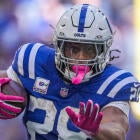
The Indianapolis Colts were the most aggressive sellers at the trade deadline, but Jonathan Taylor was not among the four players they shipped out of town. The three-time Pro Bowler is a gargantuan asset because he is an elite-tier running back with no guaranteed money on his contract in 2027 or 2028, so he can remain an affordable and prolific foundational piece of the Colts' rebuild. Those same factors make him tremendously valuable on the trade market, though, and for a team that is going nowhere fast, it would behoove the Colts to take the right deal if it came to them in the offseason. They reportedly turned down offers that included second-round picks and more, so it will probably take at least a first-rounder to pry him away next spring or summer.

George Pickens, WR, Cowboys
Unless the Dallas Cowboys re-sign George Pickens, they may regret not trading him. They likely could have garnered a sizable return package for their No. 2 wide receiver -- who would be a No. 1 on most teams -- and that would have arguably been the more prudent move than keeping him on a squad that is on the outside looking in on the playoff picture. Jerry Jones declined to sign Pickens to a long-term extension last offseason and could again use the franchise tag on the standout pass-catcher, but Pickens is worthy of a lucrative multi-year deal and may seek one elsewhere if Jones is hesitant again.

Will McDonald IV, EDGE, Jets
Will McDonald IV requested a trade from the New York Jets on the eve of the trade deadline, citing frustration with his playing time. He played 50% or more of the team's defensive snaps just three times over the first nine weeks and most recently saw only 24 snaps of work in Week 9. Darren Mougey did not heed his request, though, and retained him despite reported interest from other teams, including the Jacksonville Jaguars. New York has myriad options at edge rusher and will feature David Bailey most prominently in the years to come, so a clear path to a larger role may not manifest for McDonald. In that case, he could amplify his search for a trade in the offseason.

Khalil Mack, EDGE, Chargers
A reunion between Khalil Mack and the Chicago Bears would have made all the sense in the world, but the Los Angeles Chargers showed no interest in moving him, and the Bears used their draft capital on Jeffery Simmons instead. That the Chargers held onto all but one player despite their putrid 0-8 record was a major surprise. There were draft picks to be had for Mack, Ladd McConkey and even Justin Herbert, but the Chargers elected to keep their core intact even as it looks unsalvageable in a miserable campaign. Mack is a prime candidate to walk in free agency since he is in the latter stages of his career and would thus be more likely to seek a home on a contending squad rather than a bottom-dweller like Los Angeles.

Tony Pollard, RB, Titans
Teams inquired about Tony Pollard, but none constructed a trade package strong enough for the Tennessee Titans to move on from him. The 29-year-old's value has never been higher on the heels of back-to-back 100-yard performances in which he totaled five touchdowns, and that could have played a role in the Titans driving a hard bargain. Retaining him is a short-term play that will allow Tennessee to continue to evaluate second-year quarterback Cam Ward but may not be much more than that since Pollard can leave in free agency if he pleases. At 29, he is not on the same career timeline as the rest of the team's offensive building blocks, anyway.

Brian Thomas Jr., WR, Jaguars
It makes ample sense for the Jacksonville Jaguars to hold onto anyone and everyone as they prepare for a potential Super Bowl run. If it ain't broke, don't fix it. But Brian Thomas Jr. is only a marginal part of their stellar passing attack and lost ground to Parker Washington and Jakobi Meyers in the pecking order for targets. His Pro Bowl-caliber rookie season looks more and more like a flash in the pan. Unless the Jaguars truly believe they can maximize the former first-round pick's talent in the final year of his contract, his situation will be one to revisit in the next trade window that opens in March. This is not dissimilar to the situation that led to Marvin Harrison Jr. being traded to the Houston Texans for a second-round pick and sixth-rounder, but the Jaguars are a contender and would reasonably prefer not to toy with their lineup until after the season.

Budda Baker, S, Cardinals
Budda Baker is an Arizona Cardinals legend. If the 2026 trade deadline—when the Cardinals are projected as potential sellers amid on-field struggles —was not the time to move him, they may just let him play out his career in the desert. As the Cardinals' roster continues to shift in a younger direction, though, a split could make sense. Baker will be 31 when the 2027 league year begins, and the Cardinals are poised to take a quarterback in the first round of the draft, restarting the clock on their contention timeline. As an eight-time Pro Bowler still in his prime, Baker would garner the kind of return that would help Arizona load up on draft picks and build around that incoming quarterback.

Riq Woolen, CB, Eagles
As with the other trade candidates on expiring deals, Riq Woolen's potential exit in free agency could net the Philadelphia Eagles a valuable compensatory draft pick. That is probably the justification for keeping him, because Howie Roseman was willing to move on from some foundational pieces in the weeks leading up to the deadline, and Woolen seemed as tradeable as any of them. Woolen has been solid for the Eagles in pass defense but regressed from the standout level he performed at with the Seattle Seahawks -- his 103.3 passer rating allowed is by far a career-worst -- so Philadelphia may not aim to retain him on a multi-year deal regardless.
Josh Sweat, EDGE, Cardinals
There have been rumblings of a possible Josh Sweat trade since the spring. Nothing came to fruition in the offseason, and the Arizona Cardinals stood pat at the trade deadline, too. But as the team remains mired in the early stages of a deep rebuild, any tensions between Sweat and the front office may grow louder in advance of his next opportunity to seek a way out. Sweat reportedly requested a trade last spring amid frustration with his contract, but both he and the team worked to quell that narrative over the last handful of months. It is clear that moving him is not a top priority for the Cardinals, but the standout pass rusher will be one to keep monitoring at the start of the new league year in 2027 in case that changes.
Calvin Ridley, WR, Titans
The Tennessee Titans have phased Calvin Ridley out of their receiving corps, with Carnell Tate, Wan'Dale Robinson, Elic Ayomanor, and Chimere Dike outproducing him in catches. Two tight ends and two running backs also have more targets than him this season. If he is no longer part of their plans, it makes little sense to retain him for the final year of his $92 million contract. His dead cap hit shrinks from $22.5 million to $7.5 million this spring, so if the idea behind keeping him on the roster is to maximize future financial flexibility, that decrease in liability should free things up on the books enough to move on from him at the start of the next league year.