
Nine years without a Steelers playoff win and the quiet cost of never losing enough in Pittsburgh
Nineteen straight non-losing seasons kept the Steelers relevant and stuck at the same time

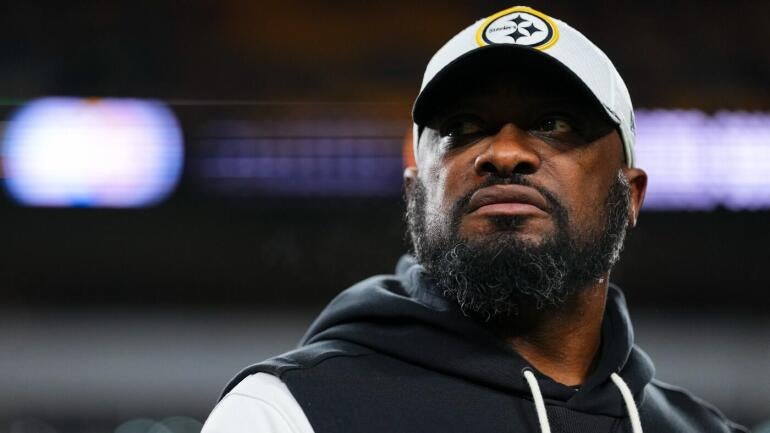
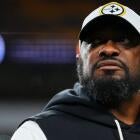
You might have heard this: Mike Tomlin has never had a losing season in 19 years in Pittsburgh. As impressive as that is, it also played a nontrivial role in the Steelers' last playoff win coming some 3,300 days ago. Tomlin's greatest strength -- never bottoming out -- became the Steelers' greatest long-term weakness once Ben Roethlisberger was gone.
This in no way diminishes what Tomlin accomplished; in fact, it further highlights how consistently good -- and often great -- he was at getting the most out of his teams, year after year after year. But that consistency only worked in the regular season, when you had 16 or 17 games to find a path to winning more than you lost.
Everything goes out the window in a single-elimination postseason, where the law of averages is just words, and if you're not at your best, you're headed home. "At your best" can mean a lot of things, but it starts and ends with one truth: If you don't have a franchise quarterback, nothing else really matters.
Consider the Steelers' postseason record during Tomlin's tenure:
- From 2007-16: 8-6, with an AFC title and a Super Bowl
- From 2017-25: 0-6
The biggest reason for the win-loss discrepancy? A franchise quarterback.
The Steelers drafted Ben Roethlisberger 11th overall in 2004, and over the next 18 seasons, he led the team to three Super Bowls, two Super Bowl titles and a 13-10 postseason record. Roethlisberger retired after the 2021 season, and Pittsburgh made the playoffs just three times from 2017-21.
Big Ben suffered an elbow injury that knocked him out for almost all of the 2019 season. (That team, miraculously, went 8-8 with Mason Rudolph and Duck Hodges, which by itself should have made Tomlin the unanimous pick for Coach of the Year. Instead, John Harbaugh won the award after leading the Ravens to a 14-2 mark.) Roethlisberger played two more seasons and was never quite the same.
From 2022-25, here are the quarterbacks who have started games for the Steelers:
| Year | Quarterback | Starts | W-L |
|---|---|---|---|
2025 | 16 | 10–6 | |
Mason Rudolph | 1 | 0–1 | |
2024 | 11 | 6–5 | |
6 | 4–2 | ||
2023 | 12 | 7–5 | |
Mason Rudolph | 3 | 3–0 | |
Mitchell Trubisky | 2 | 0–2 | |
2022 | Kenny Pickett | 12 | 7–5 |
Mitchell Trubisky | 5 | 2–3 |
A brief history of how we got here:
2022
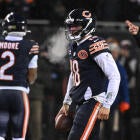
The Steelers over-drafted Kenny Pickett 20th overall and signed former Bears second-overall pick Mitchell Trubisky to start the season. Trubisky confirmed he is best suited for a backup role, and while Pickett had his moments as a rookie, it took an organization that preaches patience just two years to trade him to Philadelphia and go in another direction.
2024
That direction included rolling the dice on two veterans at different points in their careers. Sean Payton made it clear Russell Wilson was not part of his long-term vision in Denver, and the Steelers were able to sign him to a one-year veteran deal. It was a no-brainer.
They also traded for Justin Fields, another Bears first-rounder whose time in Chicago ended after the team drafted Caleb Williams. Pittsburgh acquired Fields, who was in the final year of his rookie deal, for what became a conditional sixth-round pick. The moves were defensible -- and that was the problem. Each one postponed the same question without ever answering it.
The results were promising early. With Fields starting while Wilson was injured, the Steelers opened the season 6-2, largely on the strength of a solid defense and one or two big offensive plays per game. It was fun, but it wasn't sustainable. Wilson provided a steady veteran presence when he returned to the lineup, but both he and Fields regressed to their previous form. Pittsburgh lost four straight games to end the regular season before another predictable first-round playoff loss.
2025
The Steelers let Russell Wilson walk, and he signed with the Giants. The Jets signed Justin Fields, and while Pittsburgh reportedly explored a trade for Matthew Stafford -- who ultimately remained with the Rams -- the team turned to 41-year-old Aaron Rodgers, another short-term fix for a long-term problem, a strategy that had already failed -- repeatedly.
How Pittsburgh got here
The results were predictable: enough bright spots to make watching the Steelers fun, a 2-5 stretch in the middle of the season to remind everyone of the glaring holes on the roster, and another playoff loss. This time, however, Tomlin, a future Hall of Famer, squeezed maximum value out of rosters that had no margin for error once January arrived.
Tomlin's success wasn't a flaw -- it just became a structural constraint once the quarterback pipeline dried up. Because of it, from 2007-25, the team never picked lower than 14th overall, routinely selected in the 20s or later (13 times) and used just one first-round pick on a quarterback: Kenny Pickett in 2022. In fact, their average draft position over that span was 22nd.
The Steelers twice traded up -- moving from 17th to 14th to get Jones in 2023, and jumping 10 spots to No. 10 overall in 2019 to take linebacker Devin Bush. The one year Pittsburgh didn't have a first-round pick came in 2020, when that selection went to the Dolphins as part of the Minkah Fitzpatrick trade, which turned out to be a huge success.
It's strange to say that all of Pittsburgh's regular-season success came at a cost, but remember: The last time the team had a losing record, going 6-10 in 2003, it drafted Roethlisberger, who changed the trajectory of the franchise.
For the Steelers, this wasn't a refusal to draft quarterbacks -- it was a refusal to ever be bad enough to realistically access one.
When you look at the teams outside Pittsburgh that qualified for the postseason in 2025, four last had a losing record in 2023, three in 2022, two each in 2021 and 2020, and the only team whose last losing season came in 2018 was also the one that traded up five spots to take Josh Allen No. 7 overall in that year's draft.
| Team | Last Losing Season | Current QB | Acquisition Method | QB in Last Losing Season |
|---|---|---|---|---|
2023 (8–9) | Draft (2024, No. 12) | Russell Wilson | ||
2024 (4–13) | Draft (2024, No. 3) | Drake Maye (rookie) | ||
2024 (4–13) | Draft (2021, No. 1) | Trevor Lawrence | ||
Pittsburgh Steelers | 2003 (6–10) | Aaron Rodgers | Free agency (2025) | Tommy Maddox |
2022 (3–13–1) | Draft (2023, No. 2) | |||
2018 (6–10) | Josh Allen | Draft (2018, No. 7) | Josh Allen (rookie) | |
L.A. Chargers | 2023 (5–12) | Draft (2020, No. 6) | Justin Herbert | |
2021 (7–10) | Free agency (2025) | Russell Wilson | ||
Chicago Bears | 2024 (5–12) | Caleb Williams | Draft (2024, No. 1) | Caleb Williams (rookie) |
2020 (4–11–1) | Draft (2020, No. 53) | |||
2025 (8–9) | Draft (2023, No. 1) | Bryce Young | ||
L.A. Rams | 2022 (5–12) | Matthew Stafford | Trade (2021, DET) | Matthew Stafford (started nine games) |
2024 (6–11) | Draft (2022, No. 262) | Brock Purdy | ||
2022 (8–9) | Draft (2020, No. 26) | Aaron Rodgers |
The point: Sometimes you have to bottom out to get your franchise quarterback. That's not to say the Steelers should tank -- none of the teams in the playoffs did -- but there's also something almost unnatural about nearly two decades of nonstop winning in the NFL. Once the franchise quarterback who got you there hangs it up, you're suddenly vulnerable to every other team that now has one.
Returning to the teams that made the postseason, seven of the 14 drafted a quarterback inside the top seven from 2018-24, including three first-overall picks.
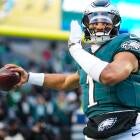
Of the remaining teams, the Rams traded for Matthew Stafford (the No. 1 overall pick in 2009), the Seahawks signed Sam Darnold last offseason (the No. 3 overall pick in 2018), the Broncos and Packers found their franchise quarterbacks later in the first round (Bo Nix, No. 12 overall in 2024; Jordan Love, No. 26 overall in 2020), and only Jalen Hurts (No. 53 overall in 2020) and Brock Purdy (Mr. Irrelevant in 2022) were selected after the first round.
What does Pittsburgh do now?
Good news: I talked about what the Steelers need to do on a recent episode of "With the First Pick" with former Titans general manager Ran Carthon.
First things first, they need to find a new head coach. But whoever gets the job, the blueprint doesn't change much, at least in the short term.
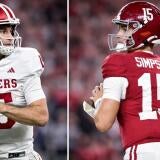
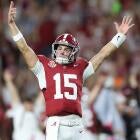
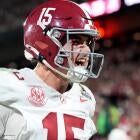
The Steelers have the 21st pick in the upcoming draft, and there are sure to be discussions about Alabama's Ty Simpson and whether he's worth a first-round selection given both his lack of experience and his uneven performance over the second half of the 2025 season. Unless the Steelers are as certain as you can be about a draft prospect, they should pass on a QB at No. 21 and target the best available player. On a team full of needs, that would be in their best interest.
(You might be wondering what recent history tells us. From 2010-25, nine quarterbacks were drafted between picks 20 and 32. Of those, only Jordan Love and Lamar Jackson are considered franchise QBs, though Jaxson Dart, selected 25th by the Giants last April, will have a chance to join that group. Other names include Pickett, Paxton Lynch, Johnny Manziel, Teddy Bridgewater (whose career was sidetracked by a serious knee injury) Brandon Weeden and Tim Tebow.)
Maybe that means giving 2025 sixth-round pick Will Howard a chance to win the job (some teams thought he had a chance to be a Day 2 pick last spring). Or maybe that means a year of Mason Rudolph, or possibly re-signing Skylar Thompson, who looked good in the preseason.
Alternatively, the Steelers could swing for the fences, like the Rams and Lions did in the blockbuster Stafford-Goff trade — or like Pittsburgh did when it traded for Minkah Fitzpatrick -- except this time by finding a proven quarterback with plenty of tread left on the tires.
The problem, of course, is that those QBs are hard to come by because if they're playing at a high level, short of demanding a trade or retiring, there is no incentive for a team to ship them elsewhere.
Which means, for now, the Steelers are stuck. The idea of another quarterback bandage in the mold of what we saw in recent years should be a nonstarter because why? If the goal is to win playoff games -- never mind getting to a Super Bowl -- history has shown the best coaching on the planet cannot overcome average to above-average quarterback play.
Why short-term pain may be unavoidable
The reality in 2026 could be more losing than winning. Think of it like this -- and I can't believe it's come to me making ecological analogies, but here we are: In the moment, natural forest fires appear incredibly destructive but, to quote National Geographic, "Small, low-intensity fires help rejuvenate forests and are overall beneficial for conservation."
This would be that: short-term pain with a long-term vision.
There are other reasons to consider this path. The Steelers have the second-oldest roster in the NFL, with an average age of 27.3, ahead of only the Commanders. They also rank ninth in available salary-cap space at $46.6 million heading into the offseason, according to Spotrac. And they also have 12 draft picks, including three third-rounders.
There is no better time to purge the roster of aging stars. Maybe that means trading T.J. Watt or Pat Freiermuth; maybe Cam Heyward retires. Use the cap space and draft picks to build a roster that can support whoever the next franchise quarterback is.
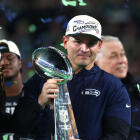
Look what the Texans have done for C.J. Stroud, or the Patriots for Drake Maye, or the Seahawks for Sam Darnold. That used to be the Steelers!
And here's where things get dicey.
Why betting on a future QB class is a risky strategy
We say it every year around this time, but … "next year's QB class appears to be loaded!" It's a dangerous sentiment to think, never mind say aloud, but after two lean years in 2025 and 2026 -- when Cam Ward and Dart were the only first-round QBs a year ago and Fernando Mendoza could be the lone first-round QB in this draft -- the 2027 group looks, at the very least, promising.
There is Arch Manning, of course, but other names already on NFL teams' radars include Dante Moore, Jayden Maiava, LaNorris Sellers and Brendan Sorsby. The more names, the better your odds of hitting on a quarterback, though the cautionary tales abound.
Just look at the 2024 class, when six QBs went in the top 12. So far, that group is batting a respectable .667 -- Caleb Williams, Jayden Daniels (when he's healthy), Drake Maye and Bo Nix have all, to varying degrees, been successful. J.J. McCarthy and Michael Penix Jr. remain question marks, and the 2026 season could be their last chance to prove themselves with their current teams.
The other issue is that the "can't-miss QBs" we talk up more than a year out aren't always the names that actually end up as first-round picks. Here are some of the "first-round prospects" media folks talked up the summer ahead of that year's draft:
- 2020: Jake Fromm and Jacob Eason
- 2021: Jamie Newman
- 2022: Sam Howell, Carson Strong
- 2023: Tyler Van Dyke (returned to college)
- 2024: Quinn Ewers (returned to college)
- 2025: Conner Weigman
Put another way: trying to predict first-round QBs before they've played their final college season is a fool's errand. So while the Steelers' strategy shouldn't be, "We'll be able to get our next franchise QB in 2027!" it also shouldn't be the "This is fine" dog-in-a-burning-room meme.
The reckoning finally arrives
Mike Tomlin didn't fail in Pittsburgh. He succeeded so completely that the franchise never had to confront its own mortality -- until it did. His teams squeezed every ounce of value out of the roster every season for nearly two decades. But the league caught up, the quarterback left, and the margins disappeared. Tomlin's consistency wasn't the problem; it just delayed the reckoning.
Now the Steelers finally have to do what they haven't done since 2003: rebuild with intention, not pride. Because sometimes the hardest rebuild isn't the one you choose -- it's the one you postpone.