

The SEC is the best conference in the country, but that argument should only go so far when the College Football Playoff begins its deliberations next month.
Florida demolishes Ole Miss. Missouri bludgeons Florida. LSU drills Clemson. LSU loses to Ole Miss. It's one thing for the middle and top teams in the league to battle back and forth in one-possession games, but watching the hottest team in the conference flounder on the road in a blowout one week after shining against a top-10 team seven days earlier should not feed the metric machines with overly positive data for the SEC.
Florida, Ole Miss and Missouri are at the center of that storm.
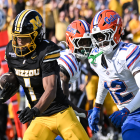
Fresh off an emotional win against their former coach at LSU, the Ole Miss Rebels were shellacked on the road by 24 points at Florida on Sept. 26. Many, including yours truly, overreacted and slotted the undefeated Gators inside the top five following their fourth straight 50-point performance and win. Then Florida laid an egg – do Gators lay eggs? – in a 45-17 loss Saturday at Missouri, a team that was barely hanging on at the bottom of the top 25 following a loss at Mississippi State the week prior.
Does any of this actually hold water, or are we simply witnessing the fallout of that legendary "gauntlet" conference leaders love to talk about — the very grind they cautioned would intensify once the nine-game league slate arrived? And does that really mean we should hand SEC teams a mulligan after a blowout loss?
I can tolerate the league's push to squeeze an extra program — even potentially a three-loss squad — into the playoff field, but that narrative falls apart when statement victories are instantly erased by embarrassing road slumps. Wild results happen every Saturday, but elite contenders in college football's premier conference shouldn't look this volatile, including the Gators' 52-point, week-over-week swing from win to loss.
Maybe it's just a blip, and the nail-biting games will return in the SEC. Or maybe there are only three elite teams in the conference – Alabama, Georgia and Texas – and everyone else is overrated. Either way, brace yourselves for an endless barrage of mental gymnastics and aggressive lobbying from league brass when the College Football Playoff Selection Committee meets in November.
Alabama is probably underrated
Kalen DeBoer can't catch a break from fans or the media as he continues to lead the Tide in the post-Saban era. His best chance yet to silence the haters comes this week, with No. 2 Georgia coming to Tuscaloosa. But you don't need that result to know this is likely the best version of Alabama yet in the DeBoer era.
Alabama drilled Mississippi State 56-23, setting and tying records along the way, including the most points scored by the road team in a ranked-on-ranked matchup in a non-OT game in SEC history. Alabama has scored 40-plus in five straight games, winning each by 14 points or more. The Tide haven't done that since 2020, the last time they won a national title.
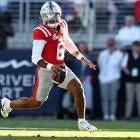
The primary reason for the offensive explosion is the emergence of dual-threat QB Keelon Russell, who threw for 285 yards and rushed for 16 more while scoring four total touchdowns, and the country is starting to take notice. He briefly moved to No. 1 on the Heisman Trophy charts after becoming the first Alabama player to throw three touchdown passes and score a touchdown on the ground in three straight games.
The trio in the backfield — Trae'shawn Brown, EJ Crowell and Daniel Hill — keeps defenses gassed late into games. Meanwhile, wideout Ryan Coleman-Williams is starting to look like the dominant playmaker everyone saw during his freshman season.
Alabama might be the best team in the country. A win against Georgia, the first SEC team to win its first five games by 24-plus points since 2019 Alabama, solidifies it.

Penn State has regressed
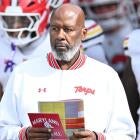
Remember last season, after Penn State fired James Franklin and the whispers of a fractured locker room and destructive, selfish attitudes leaked into the public? It didn't seem like it could get much worse for the Nittany Lions, but then something changed, and they ended the season on a four-game winning streak under interim coach Terry Smith, airing out the toxic atmosphere in the process.
The arrival of Iowa State coach Matt Campbell, along with a mix of veteran Cyclones, was supposed to clear the muck and upgrade the roster, too. That theory will be challenged this week with USC coming to Happy Valley for the annual whiteout.
Back-to-back losses have Penn State reeling, dropping out of the polls and raising questions about whether this year's Nittany Lions might be worse than last year's 7-6 crew. Northwestern opened the brand-new Ryan Field on Friday night with a controlled demolition of Penn State, rushing for 413 yards, the program's highest total in 23 years, in a 34-13 win. The common issue in these back-to-back losses is veteran quarterback Rocco Becht. The Iowa State transfer has been inconsistent, misfiring several times Friday, particularly in big moments with wide-open receivers downfield. He's thrown only one touchdown against three interceptions in the last two games.
"Rocco, we have great belief in, just like I have belief in all of our players, and I have great belief in our coaches," Campbell said. "But we've got to find answers, and we've got to get it fixed fast."
Campbell said Friday he won't bench Becht for Alex Manske, yet another Iowa State transfer. Did I mention Penn State has 24 transfers from Iowa State, with at least nine starting?
Maybe this Big Ten roster has too many Big 12 players.

PJ Fleck's best day ever
Minnesota coach PJ Fleck called the 20-14 win against Michigan, the program's first at home since 1977, perhaps the greatest day of his life.
It's the 10th year of the Fleck era for the Gophers, and his consistency, even in the NIL era, is a case study for every other mid-tier program in a power conference. I wrote in July about the growing money gap among Big Ten programs, and though Minnesota isn't in a terrible spot, it has to be more demanding and creative to maintain success.
"We have a product of a developmental life program that people want," Fleck told me in July "... Now, you might have to work a little harder, cast a wider net, to find those people that fit and want that, and value that, but I think that's very doable. Maybe we've proven that piece.
"Of course, you always want to do it better, you want to do more, you want to have more, you want to accomplish more, but I think the cultural sustainability matters."
That was clearly on display for the world to see Saturday. Michigan, a scarred and battered program still feeling the effects of the Sherrone Moore Experiment, is hapless on offense (180 yards), with multi-million-dollar quarterback Bryce Underwood (two interceptions) struggling to look average, let alone great. Utah's Kyle Whittingham, the West Coast's version of Fleck, was brought in to steady the structure and build a culture of accountability and confidence at Michigan. He obviously needs more time.
At least Fleck has proven the old ways can still work.
Heisman Trophy picture now in focus
Players will rise and fall, but it's really a three-man race for the Heisman Trophy as we near the season's midpoint.
Ohio State superstar Jeremiah Smith, one of the best players we've seen in the last decade, leads the race with a bullet after back-to-back 200-yard games. He now owns the Buckeyes' record with 36 receiving touchdowns after catching two more in the 31-14 road win at No. 14 Iowa. He's now Ohio State's all-time leader in receptions (207), receiving yards (3,381) and receiving touchdowns (36).
"This is the best player in the country right here," Ryan Day told CBS Sports' Jenny Dell after the win.
Darian Mensah is No. 2 because of his prolific start to the season, scoring 17 times without an interception, tying for the fourth-most total TDs without a turnover through five games since 2000. What hurts is the lack of top-tier competition on the schedule, other than the trip Nov. 7 to Notre Dame, but leading the nation in any category and then beating the Irish on the road could tip the trophy into the net.
The quarterback who could jump to No. 1 depending on how Smith performs the rest of the season is Alabama quarterback Keelon Russell, who leapfrogged Mississippi State's Kamario Taylor in the race with a 33-point win in Starkville. He provides a dynamic that Alabama has been missing over the first two years under Kalen DeBoer, and with so many ranked opponents remaining, including this week against No. 2 Georgia, the canvas is blank and ready for plenty of Heisman moments.
I would not be shocked to see him jump over Mensah with a win against the Bulldogs.

The window is slamming shut on Dabo Swinney
What else can you say about Dabo Swinney that hasn't been repeated to the point of boredom over the last three years?
Clemson has completely lost the magic that transformed it into an annual powerhouse, regressing into a squad trapped in a bygone era. Swinney can proudly recite every achievement from the past decade and a half, but this current roster barely resembles the ACC contender from two seasons back, much less the rising giant from 10 years ago that challenged and unseated Alabama's reign atop college football.
Swinney's buyout and the complicated emotions that come with his legendary status at Clemson make a change at the end of the season unlikely, as we reported two weeks ago, but you'd be fooling yourself if you believe the program will rebound and compete with the Miamis of the world without a wholesale change in philosophy, particularly with the front office's approach to talent acquisition. Miami's 41-13 win in Death Valley, the second-worst loss in the Swinney Era, is another nail in that coffin's argument.
Rather than dwelling on past glories and criticizing current shortcomings, the program must pose a straightforward choice to its leader: will Clemson aggressively embrace the transfer portal, invest $25 million, and secure game-changing talents at quarterback, receiver and along offensive line? If not, Clemson is hurting itself and burying itself further, even as its administration actively chases a brighter future as a member of the Big Ten or SEC. Grand posturing from university executives and politicians last week might grab headlines, but those ambitious conference-realignment dreams mean nothing if the athletic department keeps stumbling through basic modern roster construction while top-tier contenders run laps around it.
The window is closing fast, with the next massive wave of TV deal negotiations right around the corner. Clemson needs to get its house in order.