Every player has a range of possible outcomes for every season. For some players, those ranges of outcomes are relatively small – Aaron Judge isn't going to do the same exact thing every year, but you know you're going to get elite production every year, and it's more a question of how many more homers he'll hit beyond 50.
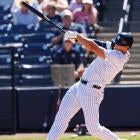
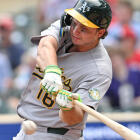
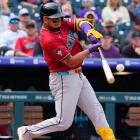
Young players generally have a wider range of outcomes than veterans with long track records simply because we can't be as sure of who they are yet. And yet, even among young players, Spencer Jones comes to the majors with an unusually wide range of possible outcomes as the hulking Yankees outfielder gets set to make his MLB debut Friday.
Although if we're being honest with ourselves, the range skews heavily toward the negative end of the spectrum, given his profile. Jones is one of the most extreme hitters in professional baseball, sporting plus athleticism and tremendous bat speed that leads to true plus power, but also some of the worst swing and miss issues you're ever likely to see. And the biggest reason I'm trying to be at least open-minded about Jones' chances of making it work is that Munetaka Murakami has been a huge success with a similar strengths and weaknesses profile.
Jones is coming off a 35-homer season in 2025 and already has 11 in his first 33 games this season, and it's not a case of a hitter making the most of some limited physical tools the way we sometimes see with minor-league power hitters. No, Jones is already capable of crushing the ball the way few hitters can, with an average exit velocity of 95.6 mph and a max EV of 117.4 – only James Wood and Oneil Cruz have a higher average EV in the majors right now, and only Cruz and Alvarez have a higher max exit velocity. This is true top-of-the-scale power Jones brings to the table.
Unfortunately, he brings even worse strikeout issues to the table than Murakami. And possibly worse than any other hitter in baseball. Jones shares Murakami's swing-and-miss issues – his 65.3% in-zone contact rate in Triple-A would actually match Murakami's MLB-worst mark, but obviously, he's doing it against Triple-A pitchers. And, unlike Murakami, Jones has the added issue of having poor swing decisions. Murakami mitigates his swing-and-miss issues somewhat by swinging at just 22% of pitches out of the strike zone, which helps him both avoid swinging at pitches he can't do anything with and to rack up walks. Jones, on the other hand, swings at 32.8% of pitches outside of the zone. Pitches in the chase zone are both more likely to be whiffs and less likely to turn into damage when you do make contact.
That combination of big swing and miss and poor swing decisions is what makes Jones seem especially unlikely to work out against big-league pitching. When you look at other high-strikeout hitters, most of them at least have a good sense of the strike zone, but Jones' profile right now looks like the 2026 version of Rafael Devers with even worse contact rates. And, again, that's against Triple-A pitchers.
Nothing is fated to turn out in any given way, though. A lot of people before the season convinced themselves that Murakami had no shot of competing against big-league pitching, and they've been wrong. The numbers are what they are for Jones, but that also includes the huge upside he brings to the table. Maybe better coaching and scouting in the majors can mitigate those issues, or maybe he can just get locked into a groove that renders his limitations moot for at least a little while.
I'd bet against it. Jones is a true long shot to be an impact bat in the majors. But if he does make it work, he could be hugely impactful, potentially even bringing 15-steal potential to the table with him. If it works, he could be a star. It's a big if, but at least in Roto leagues, it's worth taking a flier on him just in case he does overcome the issues. Worst-case scenario, you drop him in a week or two if he looks overwhelmed. The downside is a lot less harmful than the upside could be helpful, and that's ultimately what we should focus on with the waiver wire.
Before we get to the rest of the action from Thursday, I figured I should address the report about Tarik Skubal's timeline following surgery to clean up loose bodies in his left elbow Thursday. According to Jon Heyman, Skubal could be back on the mound for the Tigers within 4-6 weeks, and … I am skeptical.
Mostly because I haven't found any evidence of a pitcher returning from this surgery that quickly. That's not to say it's impossible, but the closest examples I have found are:
- Outfielder Manuel Margot returned from the same surgery in 2023 after 31 days.
- Blake Snell returned in 57 days in 2019.
And I don't think either really fits with the reported timetable for Skubal. Margot was an outfielder, and while throwing is obviously a big part of the job, it's not the job the way it is for pitchers; and while Snell's return was relatively speedy on the spectrum of elbow surgeries, he still missed over eight weeks. It's possible there are some examples to be found if you go back further than the research I have access to, but at least in the past 10 seasons, I can't find an example of a pitcher returning from this surgery as quickly as reported.
That doesn't mean Skubal can't or won't, but it does mean I'm betting against it. For him to return in six weeks (let alone four), pretty much everything would have to go right in his recovery and rehabilitation, and that's usually not a bet you want to make with elbow injuries and pitchers. I'm going to hope for an early July return until we get some concrete proof that he's projecting quicker than that. I'm still not dropping Skubal in any leagues, but I'd guess it's a lot more likely he's back after two months than after one month.
Here's what else you need to know about from Thursday's action around MLB:
Friday's top waiver-wire targets
Here's who we're looking to add coming out of Thursday's action:
Gregory Soto, RP, Pirates (42%) – That's now saves on back-to-back days for Soto, while Dennis Santana worked the seventh inning against the bottom of the Diamondbacks lineup. I'm not necessarily convinced Soto has the chops to take this job and run with it, but given the usage the past couple of games, I do think you have to at least assume that Soto is ahead in the pecking order right now, and he's certainly pitching well enough to justify it for now. I would rather roster Soto than Santana at this point.
Griffin Jax, RP, Rays (23%) – This is interesting. I'm not sure it'll work, necessarily, but the decision to move Jax to the rotation is very interesting. He has the quality of stuff and arsenal to make a move to the starting rotation, something The Athletic's Eno Sarris noted a couple of years ago, so it's mostly a question of how much of the stuff he gives back in longer spurts. Jax largely held on to his velocity in this start, and if he can keep doing that as he gets stretched out closer to 90-100 pitches, that'll be very interesting, indeed. But he did go from 96.3 mph with his sinker in the first inning to 94.9 by the fourth, so it's still an open question how he'll hold up to longer starts, and it's not like he was great in this one, giving up two earned runs (three total) on four hits and a walk while striking out three. For now, I think Jax is more of a 15-team stash candidate than anything else, but I'm very intrigued by how this experiment might go.
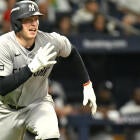
Trent Grisham, OF, Yankees (68%) – Grisham is a tough case because on the surface, it sure looks like he's regressed to being the same also-ran he was before last season's breakout. But a peak under the hood shows that the process metrics are still as strong as last season – his average exit velocity is actually up to a career-high 92.4 mph, while he has cut his strikeout rate to just 17%. But he's saddled with a .157 BABIP and 10% HR/FB rate, unusually low numbers for any player. Grisham has his limitations (he almost always runs low BABIPs), but he's a lot better than he has played so far this season, and if he's available in your league, I still expect him to be a viable starting outfielder.
Ryan Jeffers, C, Twins (75%) – It's still tough to get Jeffers into the one-catcher discussion, but with Agustin Ramirez sent down and Carter Jensen disappointing, there could be a need in many leagues. Jeffers probably won't stay as hot as he has been, but he also isn't showing any signs of slowing down yet, with a huge .387 expected wOBA over his previous 50 plate appearances before Thursday's three-extra-base-hit game. I'm fine with starting him in all leagues until this hot streak runs out.
Gus Varland, RP, Nationals (19%) – Save tries haven't exactly been plentiful, but I do think it's pretty clear Varland is the closer for the Nationals at this point. He has four of the past six saves, and one of the exceptions was a game where they brought in lefty Richard Lovelady for matchup reasons. Varland isn't a lockdown closer, and he's on a mediocre team, but he still deserves to be rostered when everyone is as desperate for saves as they are right now.
J.T. Ginn, SP, Athletics (4%) – Ginn put together a phenomenal start Thursday, going into Philadelphia and striking out eight over eight one-run innings. Ginn having a good start isn't necessarily shocking – he entered the start with a solid 3.75 expected ERA – but getting eight strikeouts is, as he's only ever had two starts with as many before this. And unfortunately, I'm not sure if I buy it. He turned 10 swinging strikes on 96 pitches into those eight strikeouts, and that's a tough ratio to sustain. But if you want to use him next week for a matchup against the beatable Cardinals, I think that's probably fine.
Thursday's standouts
Shota Imanaga, Cubs vs. CIN: 6 IP, 6 H, 1 ER, 3 BB, 10 K – What's great about Imanaga is that even in those stretches where the ball is leaving the yard, and he isn't putting up a great ERA, his WHIP still tends to be excellent. And when he is pitching well, he's just an all-around excellent pitcher – and this season that includes the highest strikeout rate of his career, thanks to even higher splitter usage than before. He might just be a top-24 SP the rest of the way.
Michael King, Padres vs. STL: 6 IP, 1 H, 1 ER, 2 BB, 6 K – King has probably benefited a bit from some good luck on batted balls this season, as his xERA suggests he deserves something more like a high-3.00s ERA than a high-2.00s mark. But that's also mostly because of an uncharacteristically high walk rate, and if that improves moving forward, he'll settle in as a mid-3.00s ERA pitcher and a must-start option for Fantasy. He's a top-40 SP for me.
Seth Lugo, Royals vs. CLE: 4 IP, 7 H, 4 ER, 4 BB, 5 K – Lugo is one of those pitchers whose good and bad starts never quite make sense, in that the stuff never looks all that different. He just seems to have an especially slim margin for error because he relies on command of a wide arsenal rather than overpowering stuff. It's not a profile I've ever been an especially big fan of, and we're seeing why in two of his past four starts. The ERA is still very solid at 3.21, and I'd expect it to end up closer to 4.00 moving forward, but I've also been lower than most on Lugo. So if you disagree, there could be a buy-low window opening here.
Max Meyer, Marlins vs. BAL: 5 IP, 6 H, 2 ER, 2 BB, 5 K – You can't blame the short outing here on the Marlins' tendency to be precious about limiting their starters' workloads, because he got over 90 pitches in this. He just struggled to put hitters away and didn't execute as well as normal. Meyer isn't going to rack up many quality starts either way, but I do think he basically deserves to be closer to 100% rostered than he is (71% rostered as of Thursday). He's not an ace, but the growth of his slider/sweeper combo has made him a better pitcher than ever before.
Mackenzie Gore, Rangers @NYY: 5.1 IP, 6 H, 5 ER, 3 BB, 3 K – I was open to the idea that Gore could take a big step forward with a change of scenery and a new voice in his ear after he wallowed on a Nationals squad that hasn't been on the cutting edge of coaching and development in a long time. It was a reasonable bet, but it's not one that has paid off yet, as Gore has struggled with the same issues of consistency and command he always has. He's a talented pitcher, but his limitations may be too much to overcome. I would try not to drop him, but I can't say he has to be rostered in all leagues right now, either.
Brent Rooker, OF, Athletics – Because Rooker is on the wrong side of 30, you always have to be on guard for the possibility of a rapid drop off the cliff. Add in the oblique injury that landed him on the IL, and there have been very real reasons to be concerned about Rooker's slow start. But your baseline assumption should still be that it's just a slow start, and a homer as part of a 2-for-4 day Thursday is a good sign that he hasn't totally lost it. Now let's see him string a few good games together, and then a few good weeks to get back on track. I still believe in him.
Zac Gallen, Diamondbacks vs. PIT: 6 IP, 6 H, 4 ER, 2 BB, 5 K – There was one interesting sign in this start from Gallen, who got nine whiffs with his slider, which was thrown 1 mph slower than usual and with six extra inches of drop. The pitcher still got hard hit when there was contact, and he still gave up four runs on the day, so it's hard to say this was a sea change for Gallen. But hey, if you haven't dropped him yet, maybe hang on to him for one more start just to see if he can build on this new slider look and turn his season around. I'm not optimistic, but I could see it.
Andrew Painter, Phillies vs. ATH: 3.2 IP, 7 H, 8 ER, 3 BB, 2 K – I don't think Painter is totally hopeless, but he needs to figure things out quickly. The problem is that he's still throwing his fastballs around half the time, and neither version is especially good – though the four-seamer is the real problem here, with just a 7% whiff rate and .3584 wOBA allowed for the season, the worst marks of any of his pitches. He allowed four hits and eight batted balls with the four-seamer in this one, with an average exit velocity of 99 mph, so that was clearly an issue here as well. The secondary pitches still look good enough that you can imagine a world where Painter deprioritizes his fastballs and learns to pitch backwards, but we just haven't seen any sign of that to date. He's droppable in most leagues right now.
Christian Scott, Mets @COL: 4.2 IP, 3 H, 1 ER, 2 BB, 6 K – This was a solid start for Scott, but it was at Coors Field, which renders any attempt at analysis kind of useless. He has strung together a couple of solid starts after an absolutely disastrous season debut, so Scott remains a pitcher to watch. There is swing and miss upside here with his sweeper, especially, but we need to see more from him before viewing him as a target on waivers.