Ranking MLB's best and worst farm systems, from the Dodgers and Mariners to the Astros and Royals
Does top-tier talent matter more than depth?

Earlier this week, we here at CBS Sports published our ranking of the 100 best prospects in Major League Baseball. That exercise was focused on the individual, on which players look positioned to have the most promising careers. Today, we want to approach minor-league prospects from a different angle by asking which organizations have the best and worst farm systems.
Mind you, this is a subjective matter. Some people will argue that the organizations with the top overall prospects are the best, regardless of how the rest of their coffers stack up. Others will put forth the idea that depth matters, especially quality depth. We tend to fall in between. High-end quality is tough to beat, but there's something to be said about a team that has an overwhelming number of top 100 prospects.
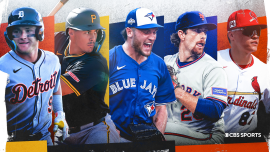
Below, then, you'll find our ranking of the three best and worst farm systems in the sport. Player development is an ongoing dynamic. The rankings you see below will probably be out of date in a matter of weeks as players report to camp and show off newfound strength or altered swings and arsenals. That's life for you. Take this for what it is, a snapshot in time, and you'll save yourself some stress.
The best
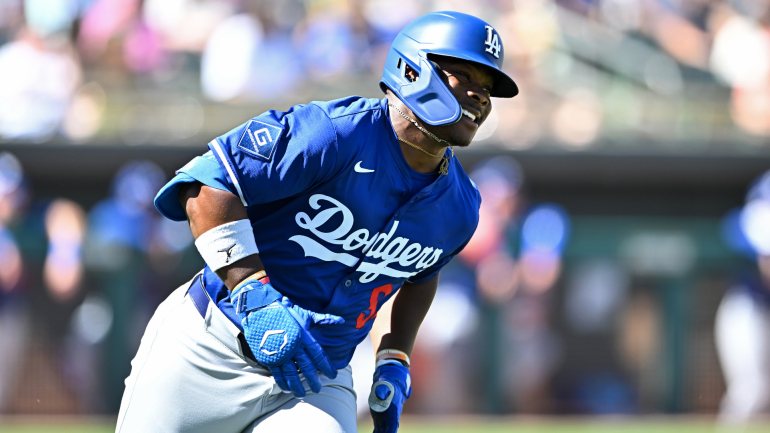
Because the Dodgers needed to be the best at something else, right? Realistically, they might have the most impressive player development machine in the sport's history. They never make "sell" trades or pick high in the draft -- their luxury tax status often means their first pick is 10 spots lower than it would be otherwise -- and yet they reliably turn out good players. Executives with other teams have pointed to the Dodgers' staff size and their ability to individualize development plans for each player (as opposed to relying on a one-for-all approach) as keys to their success in this area. Anyway, their current crop includes both high-end quality (outfielders Josue De Paula, Eduardo Quintero, and Zyhir Hope) and an impressive amount of depth. There's no reason to think they're going away.
The Mariners had the most top-100 prospects, with seven of their players making the cut. They're second in these rankings because the Dodgers have a slight edge in top-end quality. That isn't a knock on Seattle's farm. Infielder Colt Emerson is a promising lefty bat who could stick at shortstop and the Mariners have a stable of quality arms en route to Seattle (Kade Anderson, Ryan Sloan, and Jurrangelo Cijntje) -- a testament to their status as one of the best teams in the majors when it comes to pitching development. Factor in a few boom-or-bust types, like outfielders Lazaro Montes and Jonny Farmelo, and this is an impressive group on the whole.
There were a number of other compelling teams who could've slotted in here, including the Pittsburgh Pirates, Cleveland Guardians, and New York Mets. I went with the Brewers because they have both a good amount of depth and a couple of infielders with sky-high ceilings -- Jesús Made might be the No. 1 prospect by this time next year and Luis Peña could continue his climb as well. Infielder/outfielder Jett Williams, right-hander Logan Henderson, and catcher Jeferson Quero also made the top 100, giving Milwaukee five in total. That's without accounting for near-misses -- think infielder Cooper Pratt and right-handers Bishop Letson and Brandon Sproat, among others.
The worst
The Astros were the only team without a top-100 entrant. They've arrived at this position honestly, having spent most of the past decade making win-now trades or picking later in the draft. (To wit, earlier this winter they dealt arguably their two best prospects, outfielder Jacob Melton and right-hander Anderson Brito, to land fellow righty Mike Burrows from the Pirates.) The Astros, to their credit, have shown a real capacity for unearthing contributors at the pro level. This ranking indicates that they'll have to continue to do that in order to provide their big-league team with depth.
The Rockies had two players make the top 100, but each ranked lower than you'd expect for someone drafted in the top five over the last two years. First baseman Charlie Condon has disappointed since draft night, while shortstop/third baseman Ethan Holliday has a lot of questions left to answer about his game and whether his swing-and-miss tendencies will undercut his power and patience. The Rockies now have a new brain trust in place and it's worth giving them a chance to overhaul the player development department. This ranking suggests that's overdue.
A few teams had just one player on the top 100 list. The Royals were among those, and they happened to have the lowest ranked individual of the group. Logic, then, dictates they get this spot. The Royals do have some promising arms on their farm system that could lift their standing -- think Kendry Chourio and David Shields. Plus, they've spent the past few years graduating players to the majors, with outfielder Jac Caglianone and lefty Noah Cameron as the most notable in 2025.