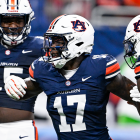


Winning a national championship and merely reaching the College Football Playoff are no longer the same thing. With a 12-team field, more programs enter the season believing they have a realistic path to the postseason, but only a handful possess the roster, quarterback play and championship-caliber depth to survive multiple rounds against the sport's elite.
That's where tiers matter. Some teams are legitimate title favorites. Others need a favorable draw or a few fortunate breaks to crash the party. Several more are talented enough to stay in the hunt through November, but they don't inspire much confidence once they get there.
From blue-blood heavyweights to emerging contenders, here's how the nation's top playoff hopefuls stack up entering the 2026 college football season -- and which programs are built to chase the sport's biggest prize.
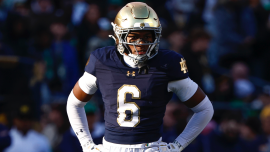
These tiers align with our way-too-early CFP projections and 10 guarantees for this season's eventual playoff bracket in December. Bookmark this one and come back to it in a few months. Then flood my inbox with noise.
Clear frontrunners
These are the five programs that are clear national championship frontrunners, no matter who you ask inside the sport. In no particular order, these are the teams I'm comfortable penciling in as playoff locks this fall. Some have favorable schedules relative to their talent, while others have limitless resources that dwarf most of the Power Four.
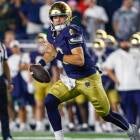
Notre Dame
This season is Marcus Freeman's time to shine. Not only do the Fighting Irish welcome back several All-American candidates on both sides of the ball, but they'll face only a couple of teams during the regular season capable of matching them athletically. Notre Dame is college football's villain this fall for a reason after last season's CFP snub, and the Fighting Irish are out for blood. Get on the CJ Carr bandwagon now because there's going to be no more room when Notre Dame starts 6-0 with ease.
Ohio State
When you're 82-12 as a head coach, winning big is expected. Ryan Day has another title-capable squad after the Buckeyes fell well short of the prize in 2025. Heisman finalist Julian Sayin has a new offensive coordinator to pair with the nation's best player, Jeremiah Smith, and a few first-year impact players from a decorated signing class.
Oregon
Armed with an all-senior defensive front, all-world linebackers and one of the nation's most lethal secondaries, Oregon's defense, built by Dan Lanning, could be the best in college football. And we haven't even mentioned the return of quarterback Dante Moore, who led the Ducks to within one win of last season's national championship game. Lanning is due for a breakthrough, and it feels like the 2026 campaign is when it'll happen.
Miami
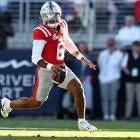
My preseason No. 1, the Hurricanes, aren't getting enough love from the rest of y'all this summer. Those close to the program are not losing sleep after losing multiple first-rounders, given the developed players behind them, the 2026 signees and playmaking portal additions. There's also the fact that Mario Cristobal just proved he could win at the highest level -- including twice as an underdog at Texas A&M and against Ohio State -- when his team was backed into a corner. Shake the distrust in the Hurricanes and know this: Miami is headed toward double-digit wins this season with Darian Mensah at quarterback and weapons everywhere.
Georgia
It's business as usual in Athens after consecutive SEC titles, but the Bulldogs want more. Since winning back-to-back national championships at Georgia, Kirby Smart is 0-2 in playoff games, with both losses coming in New Orleans against teams the Bulldogs believed they should have beaten. Gunner Stockton started both of those games and gets a redo opportunity of sorts as a senior, facing a schedule that includes only three SEC teams ranked in our post-spring top 25.
Program leadership should prevail
Graced with excellent coaching, Indiana and Texas would waltz into the CFP if their schedules were easier. Indiana has a target on its back after consecutive playoff appearances and last season's national championship, while Texas and Steve Sarkisian are aiming to get back after a one-year hiatus. For as much flak as Sarkisian gets for not having a title yet with the Longhorns, he's won 35 games over the last three seasons.
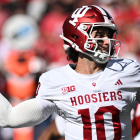
Indiana
The Hoosiers proved last season their rise under Curt Cignetti was no fluke, and expectations for 2026 extend well beyond another playoff appearance. Continuity, confidence and one of the nation's most disciplined programs have transformed Indiana into a legitimate Big Ten heavyweight. The roster is experienced and bolstered by portal additions; the culture is established, and the belief in Bloomington has shifted from chasing respect to chasing championships. The Hoosiers may not recruit like Ohio State or Oregon, but they have consistently outperformed expectations under Cignetti. Counting them out of the national title conversation after winning it all last season would be a mistake.

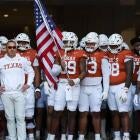
Texas
Texas checks every championship-capable box. The Longhorns have elite talent at the sport's most important positions, enviable depth on both lines of scrimmage and a roster built to withstand the inevitable bumps of a playoff run. Expectations are sky-high in Austin because they should be. Sarkisian has assembled one of college football's deepest rosters, and anything short of a trip to the national semifinals would register as a disappointment. Texas belongs firmly in the title conversation. If the schedule weren't one of the nation's toughest, the Longhorns would move up a tier in these rankings. Another three-loss season, however -- even with a schedule loaded with ranked opponents -- would not guarantee a berth.
Rosters worth a second look
Any of these half-dozen teams -- perhaps multiple -- could reach the 12-team bracket based on personnel and two-deep enhancements this offseason. However, in our early playoff projection, only two programs from this group made the CFP based on matchups and our win-loss picks.
LSU
Lane Kiffin did not take the LSU job to win nine games and compete for playoff berths -- even if he has pumped the brakes on the hype train ahead of his first season. He built a premier roster through the transfer portal and recruiting, immediately elevating expectations in Baton Rouge thanks to the program's resources. The Tigers have the offensive firepower to stress any defense in the country with Sam Leavitt at quarterback, and Kiffin's aggressive, pass-friendly system should maximize an explosive group of playmakers. Few programs can match LSU's combination of talent, home-field advantage and coaching upside.
Texas Tech
Cody Campbell has ensured last year's Big 12 title and CFP appearance were no fluke for the Red Raiders. Texas Tech is built from the line of scrimmage out with a two-deep that dwarfs most others in the conference in terms of upside. After another aggressive, talent-rich transfer portal haul, Joey McGuire knows he has a team with legitimate playoff aspirations, much like another wealthy program in the Lone Star State. The expectation in Lubbock has shifted from winning the conference to competing for a national championship. If the offensive line holds up and the defense delivers another banner season, Texas Tech has the balance to challenge anyone.

USC
The Trojans' roster makeover under Lincoln Riley has reached the point where excuses no longer exist. USC paired the nation's No. 1 recruiting class with an already talented core, creating the kind of depth required to survive both the Big Ten and CFP. Elite freshmen won't have to carry the program, but several are talented enough to contribute immediately. More importantly, the Trojans look tougher in the trenches and more complete defensively than they have in recent seasons.
Alabama
Kalen DeBoer's offensive system is fully established under Ryan Grubb, and the quarterback position is in capable hands, whether Austin Mack or Keelon Russell wins the job. Alabama's defense has the speed and playmaking ability to control games against elite competition, too. The expectation in Tuscaloosa is championships, not playoff appearances, and the key will be getting back to the physical brand of football not yet seen under the current regime. If Alabama wins the battles at the line of scrimmage this season, the Crimson Tide has every ingredient necessary to earn a high seed in the 12-team bracket.
Oklahoma
A healthy John Mateer changes everything for Oklahoma. Brent Venables finally has the experienced, dynamic quarterback capable of maximizing an offense that showed flashes of explosiveness before injuries got in the way. Pair that with one of the SEC's stingiest defenses under Venables, and the Sooners have the balance every championship contender needs. Oklahoma is built to win ugly when necessary, but Mateer's dual-threat ability also gives the Sooners the firepower to win shootouts against the league's elite. If he stays on the field for a full season, don't be surprised if Oklahoma spends November battling for an at-large CFP berth.
Texas A&M
Losing Collin Klein to Kansas State was hardly ideal on offense, but it shouldn't derail Texas A&M's championship trajectory. Mike Elko has built the Aggies around the traits that travel in the postseason -- elite defensive play, physicality at the line of scrimmage and one of the SEC's deepest rosters. The offensive system may look different, but the talent remains in place to keep Texas A&M among the league's most dangerous teams. Elko has elevated expectations in College Station because the foundation is finally stable.
Schedule assistance looms large
When your schedule doesn't feature the week-to-week grind most within the Big Ten and SEC face, you must take advantage.
BYU
BYU may not have the roster depth of the heavyweights, but the Cougars possess something every playoff contender covets -- one of the nation's most favorable schedules. That matters in the 12-team playoff era. A manageable path through the regular season gives BYU an outstanding chance to stack wins, stay healthy and secure premium postseason positioning. The Cougars have proven they can develop experienced talent, play disciplined football and capitalize on opportunities when expectations rise. If the offense performs at its expected level and the defense continues to create timely takeaways, BYU has a realistic path to an unbeaten or one-loss campaign. And the Cougars won't have to play Texas Tech until conference title weekend if both teams are as good as expected.
SMU
Kevin Jennings gives the Mustangs a legitimate difference-maker under center, the kind of veteran playmaker capable of carrying a team through high-pressure moments. Pair that with one of the nation's softest paths within the Power Four, and SMU has every opportunity to build momentum throughout the regular season. The Mustangs won't have to survive a weekly gauntlet seen in the SEC and Big Ten, allowing them to enter December fresh and confident. Rhett Lashlee has already taken this program to the CFP once during his tenure and is destined to do it again.
Houston
Houston holds the label of preseason darling after winning 10 games and has not-so-quietly assembled the ingredients to become a threat to be the Big 12's top CFP seed. Willie Fritz returns several of his most explosive offensive playmakers, giving the Cougars continuity at the skill positions and the experience needed to capitalize on a favorable slate. The showdown early with Texas Tech is vital to staying in the CFP conversation long term.
First-year coach hesitancy
These programs have won big before, but there's heightened pressure after mass coaching changes and considerable roster movement.
Ole Miss
There's enough talent at Ole Miss to flirt with the CFP, but asking the Rebels to make that leap in Pete Golding's first season remains challenging, even with Trinidad Chambliss and Kewan Lacy returning. First-year coaches rarely navigate the SEC without a few costly growing pains, especially while implementing a new culture and system. Golding knows the league, but leading a program through the grind for 14 weeks is far different than coordinating a defense.
Michigan
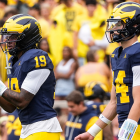
Kyle Whittingham offers Michigan instant credibility, but even one of college football's most respected coaches inherits a difficult path in Ann Arbor. The Wolverines face one of the nation's toughest schedules, leaving little margin for error during a transition season of sorts. Whittingham's teams are known for toughness and consistency, yet expecting an immediate playoff breakthrough against this slate feels ambitious.
Utah
Devon Dampier gives Utah a chance in every game, but replacing Whittingham and what he brought to the Utes is a different conversation entirely. For two decades, Utah was defined by elite coaching, discipline and consistency, regardless of roster turnover. That proven edge is gone. Even with an experienced quarterback back under center, there's understandable hesitation about projecting Utah into the CFP during a coaching transition. The talent is there, but matching Whittingham's standard from Day 1 is an enormous ask.
Dark horses
Six teams no one in the Power Four ranks wants to play this season, and there are a couple who could make their first appearances in the CFP. Two programs within this group have been there before, while the other four have not. Quarterback play will dictate the overall value for most.
Washington
Jedd Fisch has wasted little time restoring belief at Washington, and with Demond Williams Jr. taking another step at quarterback, the Huskies have the look of a playoff contender should the ball bounce their way in the Big Ten. Williams is one of the league's most dynamic dual-threat playmakers, capable of changing games with both his arm and legs. Fisch's offensive system is built to maximize that skill set while keeping defenses off balance.
Tennessee
The Vols aren't generating the same preseason buzz as several SEC contenders, and that's exactly what makes Tennessee dangerous. Josh Heupel has proven his offense can overwhelm elite defenses when it finds its rhythm, and the roster still has enough speed and explosiveness to challenge anyone in the conference on defense. If Tennessee gets steady quarterback play and the defense improves under Jim Knowles, the Vols will have every opportunity to play their way into the CFP. They're flying under the radar in July.

Clemson
Clemson has spent so long living in the playoff spotlight that it's almost strange to call the Tigers a dark horse, but that's exactly where they enter 2026. Dabo Swinney's team isn't carrying the same national hype as Miami or several Big Ten powers, yet the roster is still loaded with championship-caliber talent in its own league. Betting against a program with this pedigree has burned plenty of people before, and that's how Swinney likes it.
Louisville
Louisville has all the makings of this season's surprise playoff team. Jeff Brohm welcomes back one of the nation's most electric running backs in Isaac Brown and supplemented an already talented roster with another impressive haul from the transfer portal. The Cardinals have added speed, experience and depth at several key positions, giving Brohm more flexibility than ever before. The Cardinals need quarterback Lincoln Kienholtz from Ohio State to be a star and the defense to play at a high level. The schedule sets up for success if Louisville can upset Ole Miss in the opener or beat SMU to open ACC play.
South Carolina
What happens if quarterback LaNorris Sellers goes back to 2024 Superman mode when he drove the Gamecocks to a nine-win finish, one victory shy of the program's first CFP appearance? If the offensive line takes a step forward and the defense continues creating game-changing plays, South Carolina has upset potential against anyone on its schedule. The path isn't easy, but the ceiling is high enough to make the Gamecocks a legitimate dark horse.
Oklahoma State
Even after a 1-11 finish last season led to Mike Gundy's firing, the Cowboys will not be a walkover. Oklahoma State is one of the Big 12's biggest wild cards, actually. Eric Morris essentially hit the reset button, importing a roster built largely around a group of North Texas stars who already know his system. That familiarity could accelerate the rebuilding process and give the Cowboys an early-season edge while others search for chemistry. If the transition clicks as expected, Oklahoma State has enough offensive talent to surprise the conference.
UNLV
Dan Mullen has won at the highest level before, and that pedigree immediately raises UNLV's ceiling. The Rebels don't need to navigate a Power Four gauntlet to reach the playoff -- they simply need to dominate the Group of Six. Mullen's offensive creativity and quarterback development have always been his calling cards, giving UNLV an edge in the conference race. If the Rebels handle their biggest games early, like Memphis, don't be surprised if they're the Group of Six representative in the playoff.