Ranking the top 100 MLB prospects: Kevin McGonigle, Jesús Made, Konnor Griffin lead top young talent
Unlike other sports, MLB prospects often take years to impact their teams. Who's poised to make their mark?

•
65 min read
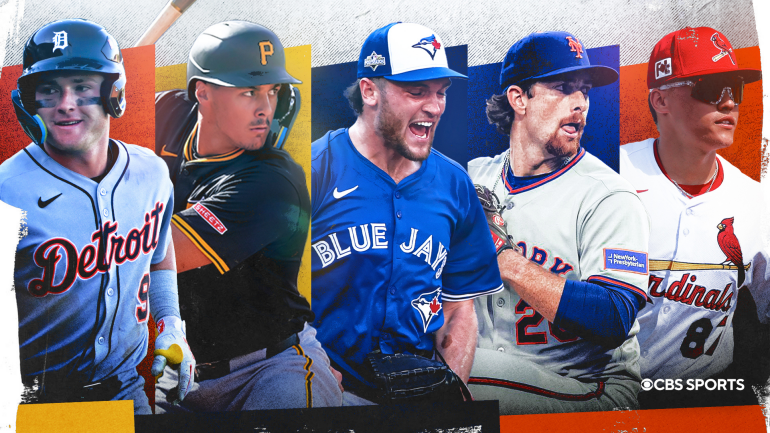
CBS Sports has spent the last several weeks highlighting the top 20 minor-league prospects in each division. Today, with barely a week to go until pitchers and catchers report for duty across sites in Florida and Arizona, we're putting a bow on the exercise by publishing our list of the game's top 100 prospects.
As noted in each of the divisional rankings, these lists were compiled after conversations with scouts, analysts, and player development specialists, as well as firsthand statistical and video analysis. There's some bias baked in as well; everyone likes a certain profile more than someone else does, and there's no sense pretending otherwise.
Ranking the top 100 MLB prospects, by the numbers
R.J. Anderson
Before getting to the rankings, here are the links to each of the divisional pieces:
Now, onward.

1. Kevin McGonigle, SS, Tigers
- The quick hook: Polished lefty hitter with contact, patience, and strength
- MLB ETA: Summer 2026
McGonigle is probably the single most polished hitter not already in the majors. He's a lefty who, when he's in his stance, resembles a mirrored version of Jose Altuve. There are some skill-set similarities too. McGonigle can hit the ball wherever, whenever, and often with gusto behind it. He's mindful of the zone, and last year he walked 13 times more than he struck out combined across three levels. McGonigle has shown headiness on the basepaths in the past, though last year he wasn't as successful in volume or efficiency. Defensively, he may play shortstop at the onset of his big-league career as a necessity to get his bat in the lineup. McGonigle seems unlikely to remain at the six much beyond that, however, with second base appearing to be his long-term home. It won't matter. If he hits like he's demonstrated he can throughout his professional career, the Tigers will be pleased all the same.

2. Jesús Made, SS, Brewers
- The quick hook: The future face of Brewers baseball
- MLB ETA: Summer 2027
It's hard to find many better prospects than Made. He won't celebrate his 19th birthday until next May, yet he's already had enough success in the lower minors to earn a late-season promotion to Double-A. Why not? He's a switch-hitting shortstop who has demonstrated his ability to connect often and with authority, and he clearly has the physical attributes to remain at shortstop for the long haul. The dream outcome here is for him to become a plus hitter and a plus defender at short. That is and will always be a star in the world of baseball. Expect Made to spend much of the upcoming season at Double-A, with a chance to position himself for big-league arrival the following year.

3. Konnor Griffin, SS/CF, Pirates
- The quick hook: Electric prospect with superstar upside
- MLB ETA: Summer 2026
The rap on Griffin during his amateur days was that he had every tool but the hit tool, the most important of the bunch. It was encouraging, then, to see him ease concerns about his swing-and-miss during his first pro season. He connected on more than 75% of his attempts while showing off the power (he cleared the 114 mph threshold) and speed (he stole 65 bases) combination that gave him a high ceiling. Griffin even kept his strikeout rate under 24% during a 21-game stint in Double-A, suggesting that he wasn't just feasting on younger pitchers or those with less raw talent. Knowing when to adjust priors is one of the trickiest parts of evaluating players. Given everything about Griffin's year, it would be silly to ignore how much higher his chances of reaching his star ceiling are now than they were 365 days ago.

4. Sebastian Walcott, SS, Rangers
- The quick hook: Big-time strength remains after successful Double-A vetting
- MLB ETA: Late summer 2026
Walcott continues to be one of the sport's most exciting young players thanks to his top-end strength and his track record of performing well against older competition. He won't celebrate his 20th birthday until closer to Opening Day, meaning that he spent last season as a 19-year-old in Double-A. His youth didn't prevent him from hitting .255/.355/.386 with improved strikeout and walk rates. Walcott even recorded a 115 mph exit velocity in spring against an MLB-caliber pitcher. If there are negatives to be found here, they're in the forms of his ground-ball rate (he hit nearly half his batted balls to the dirt) and his 24 errors at shortstop. Still, Walcott is an impressive prospect who, with a little more refinement, could make an impact at the big-league level for years to come beginning this summer.

5. Colt Emerson, SS, Mariners
- The quick hook: Plus lefty bat who may stick at shortstop
- MLB ETA: Late summer 2026
Emerson is a well-rounded prospect who only celebrated his 20th birthday in July. That's notable since he hit for an .842 OPS across three levels last season, including a six-game cameo in Triple-A that saw him tally 11 hard-hit balls. Emerson deploys a handsy lefty swing and he's exhibited a good feel for making contact and minding the zone alike. He also looks playable at shortstop, even though evaluators have long pegged him as someone who may have to move to second or third base. J.P. Crawford remains under contract through the 2026 season, so it's possible the Mariners will usher Emerson into the majors at a different position. Either way, he should hit.

6. JJ Wetherholt, SS/2B/3B, Cardinals
- The quick hook: Quality lefty bat who'll stay on the dirt
- MLB ETA: Spring 2026
Trepidation about Wetherholt's frame (he's listed at 5-foot-10) and his history of soft-tissue injuries (he missed half his platform season with a hamstring issue) resulted in him slipping to the Cardinals at No. 7 in the 2024 Draft. At least a few teams already have reason to regret that decision. Wetherholt split last season between the upper-minor levels, hitting .306/.421/.510 with 17 home runs, 23 stolen bases, and nearly as many walks as strikeouts. He's going to be an above-average hitter at the big-league level, one who contributes in each triple-slash facet. There's little doubt about that. What remains in question is where he plays defensively. The safe projection is second base, but the Cardinals have continued to give him looks at shortstop and third base to expand his optionality. He's one of the favorites to win the National League Rookie of the Year Awards.

7. Leo De Vries, SS, Athletics
- The quick hook: Young, switch-hitting infielder with pop
- MLB ETA: Summer 2027
The key part of the Mason Miller return, De Vries is a switch-hitting teenage shortstop who has already reached and enjoyed (in a limited sample) success at the Double-A level. He hit .255/.355/.451 with 15 home runs and 11 stolen bases in 118 total games -- marks that grow more impressive when you consider he didn't celebrate his 19th birthday until after the season. De Vries' age-relative performance suggests he should enjoy a career as a big-league regular at an infield position. There are underlying reasons to believe that too, like how he's reliably kept his strikeout rate in check at each stop and how he's already adept at pulling the ball in the air. On the negative side, he's a much better hitter from the left side than the right, and there's a fair chance he moves off shortstop.

8. Nolan McLean, RHP, Mets
- The quick hook: End-of-season breakout star remains eligible
- MLB ETA: Already debuted
McLean was the breakout star of the regular season's final six weeks. He debuted in mid-August then notched a 2.06 ERA (196 ERA+) and a 3.56 strikeout-to-walk ratio in eight starts. It's hard to do much better than that. It's also hard to do much better from a modern arsenal perspective than what McLean has going on. He throws six pitches -- a pair of mid-90s fastballs, two high-spin breaking balls with massive horizontal break, and a cutter that serves as a bridge offering -- giving him plenty of options to break out against hitters of either hand. He works the angles too, with a delivery that sees him launch the ball from a low angle and release height. Piece it all together and it's easy to understand why McLean looks like a star already on the rise.

9. Samuel Basallo, C/1B, Orioles
- The quick hook: Lefty thumper with positional questions
- MLB ETA: Already debuted
Basallo is, among other descriptions, the richest man on this list. He signed an eight-year extension worth $67 million after debuting last August, a transaction that hints at how the Orioles feel about his offensive upside. The lefty-swinging Basallo posted a combined hard-hit rate against right-handed pitchers of nearly 58%, right around the overall marks put up by Shohei Ohtani, Aaron Judge, and Kyle Schwarber. His feel for loud contact should play nicely in Camden Yards, one of the sport's top ballparks for left-handed power. Defensively, it's to be seen how the Orioles handle Basallo's positional assignments around a healthy Adley Rutschman. He remains a subpar receiver behind the plate, one who too often stabs at balls in the dirt. Basallo does have a strong arm, though, and the Orioles have resisted the temptation to move him down the defensive spectrum for this long. What's a little longer?

10. Trey Yesavage, RHP, Blue Jays
- The quick hook: Playoff-tested pitcher with an unusual game
- MLB ETA: Already debuted
Yesavage is an oddball prospect in more ways than one. There's the obvious angle: he's the rare bird whose big-league track is mostly contained to the postseason. There's also the way he goes about his business. His extremely steep release point means that his arsenal differs from the norm: he throws a four-seamer, a slider that averages arm-side break, and a splitter. They all grade well individually, suggesting he'll be able to withstand the exposure effect that has doomed countless pitchers with unusual release attributes. The actual drawbacks to his game are his durability -- he's yet to clear 100 innings during any regular season -- and that he's been a touch wild as a professional. Still, the Blue Jays have every reason to be thrilled that they landed him with the 20th pick in the 2024 Draft.
11. Max Clark, OF, Tigers
- The quick hook: Well-rounded center fielder coming off strong year
- MLB ETA: Late summer 2026
Long compared to Cubs outfielder Pete Crow-Armstrong, Clark split his age-20 season between High- and Double-A and demonstrated that he's a different, and arguably more well-rounded player than his All-Star aspiration. He hit .271/.403/.432 with 14 home runs, 19 stolen bases, and more walks than strikeouts -- the latter being the product of him improving both his strikeout and walk rates from the previous year. He could feature five average or better tools at maturation, including the kind of contact and on-base skills that permit him a lengthy career atop a batting order.

12. Josue De Paula, OF, Dodgers
- The quick hook: Cleanup hitter in the making
- MLB ETA: Summer 2027
De Paula remains just a few tweaks away from emerging as a monster middle-of-the-order bat. His age (he'll turn 21 in May) and the Dodgers' sterling player development reputation makes it easier to take the leap of faith. He's a well-constructed lefty hitter with big-time power and a borderline passive approach at the plate. Unlike some of his organizational peers, he doesn't swing and miss at high rates. Rather, the areas of concern for De Paula entail him better leveraging his strength by lifting the ball more frequently and his long-term defensive value (he may end up at DH). The Dodgers once traded Yordan Alvarez. De Paula may give them a second crack at that skill set.
13. Bubba Chandler, RHP, Pirates
- The quick hook: Yet another exciting Pirates right-hander
- MLB ETA: Already debuted
Chandler, who was on debut watch from Opening Day onward, didn't break into the majors until late August. He made seven appearances, split between the rotation and the bullpen, and amassed a 4.02 ERA despite a 7.75 strikeout-to-walk ratio. Chandler has a handful of quality pitches, beginning with an upper-90s rising fastball and a hard changeup that led the way with a 34.6% whiff rate overall. He also throws two breaking balls that bleed together in velocity and shape. He did well to locate them within the zone more than 50% of the time, but neither missed even a league-average amount of bats. Chandler should begin the season in the big-league rotation with a chance to eventually form an impressive bunch alongside Paul Skenes, Jared Jones, and Mitch Keller.
14. Eduardo Quintero, OF, Dodgers
- The quick hook: Yet another promising Dodgers outfielder
- MLB ETA: Summer 2028
Quintero celebrated his 20th birthday in September as he was putting the finishing touches on a season that saw him hit .293/.415/.508 with 19 home runs and 47 stolen bases split between A-ball affiliates. Despite his youth, he already has a feel for making loud contact while running an 80% contact rate. Quintero's approach is borderline passive, but that's about the biggest knock you're going to find here.

15. Walker Jenkins, OF, Twins
- The quick hook: Potential middle-of-the-order bat who can't stay healthy
- MLB ETA: Summer 2026
Jenkins is an undeniably skilled hitter who should contribute across each of the triple-slash categories. The catch, and you know there's a catch coming with that framing, is he's shown less aptitude for staying on the field. In two and a half seasons since being drafted, he's appeared in fewer than 200 total minor-league games. The Twins, perhaps sensing the need to strike while the iron is available, if not necessarily hot, pushed him to Triple-A to close out 2025. In turn, it's fair to envision Jenkins making his big-league debut in 2026, with the exact timing depending on his health.

16. Travis Bazzana, 2B, Guardians
- The quick hook: Former No. 1 pick can really hit
- MLB ETA: Summer 2026
The No. 1 pick in the 2024 Draft, Bazzana is now positioned to debut sometime in 2026. He split his first full professional season between Double- and Triple-A, hitting .245/.389/.424 with nine home runs and 12 stolen bases in 84 games. The book on him remains the same as when he was drafted: he combines a disciplined approach with above-average contact chops and power output. Indeed, Bazzana atones for pedestrian exit velocities by lifting and pulling the ball at high rates, a combination that ought to play well in Cleveland's ballpark. His comfort with deep counts will ensure he strikes out a fair amount, and he's not going to win a Gold Glove award anytime soon. Even so, Bazzana is a heady player who should justify the Guardians' selection for years to come.
17. Edward Florentino, OF, Pirates
- The quick hook: One to watch
- MLB ETA: Summer 2028
Put a star next to Florentino's name. He's a 6-foot-4, left-handed swinger who hit .262/.380/.503 in the Florida State League last season as an 18-year-old. Florentino's underlying data looks good too. He connected on more than 81% of his swings, including nearly 90% within the zone, and he was able to reach a 109 mph exit velocity despite having plenty of frame to tack on muscle over the coming years. The biggest knock on Florentino might be his approach and whether he's truly disciplined or just passive. That's nitpicking a bit, however, given everything else that he has working in his favor. If Florentino continues to develop as planned, he's a future plus bat.

18. Aidan Miller, SS, Phillies
- The quick hook: Left-side infielder on the cusp
- MLB ETA: Summer 2026
The knocks against Miller as an amateur pertained to his age (he was 19) and his long-term defensive home (scouts thought he'd move to third base). The Phillies took him in the late stages of the first round all the same. Three years later, his birthdate and position remain unchanged. Miller is still a shortstop, even if he's not likely to win any individual honors for his fielding. The same may not be true of his hitting. Between his strong hands, his discerning eye, and his feel for contact, he should be able to bat in the middle of good lineups. The Phillies already have one quality shortstop in place, but Miller ought to make his big-league debut this season at some left-side position or another.
19. Luis Peña, INF, Brewers
- The quick hook: Thrilling power-speed combination from a young infielder
- MLB ETA: Summer 2029
Peña would probably get more attention if he were in a different system than Jesús Made. Instead, he's often viewed as the other promising young infielder on Milwaukee's farm. That's too bad. Peña, at just 18, split last year across three levels, including nearly 100 games outside of the complex league, hitting .270/.335/.422 with nine home runs and 44 stolen bases. Be aware that there's more raw juice here than that home run total suggests. He does need to work to elevate the ball more often and he did see his contact rate crater when he was promoted to High-A. (The second part could've just been a small-sample issue.) The other question about Peña is his position. The Brewers played him at all three of the skilled infield positions, so even they don't seem certain about it yet.

20. Thomas White, LHP, Marlins
- The quick hook: Physical left-hander reimagined
- MLB ETA: Late summer 2026
White overhauled his arsenal from year to year, making clear alterations to his changeup (it now features more velocity and far more sink) and adding in a cutter/slider to serve as a bridge offering between his rising mid-90s fastball and his sweeping slider. His new-look repertoire empowered him to post a 2.31 ERA and a 2.84 strikeout-to-walk ratio across three levels, including a two-start stint in Triple-A. White still needs to reduce his walk rate (he averaged more than five free passes per nine), but the stuff is good and he's one decent stretch of strike-throwing away from joining Miami's rotation.

21. Bryce Eldridge, 1B, Giants
- The quick hook: Big man, big power, big whiff
- MLB ETA: Already debuted
Eldridge is a 6-foot-7 first baseman, and you know what that means. He combines massive strength (he had a hard-hit rate over 60% between Triple-A and the majors) with legitimate swing-and-miss concerns (especially against breaking balls). Such is life for most players this size. Eldridge has had his share of issues with left-handers (no surprise given the previous parenthetical), suggesting that he may be best deployed as part of a timeshare. He should see plenty of time in the majors in 2026 and he should eventually record San Francisco's second 30-homer season since the Barry Bonds days.
22. Kade Anderson, LHP, Mariners
- The quick hook: Polished southpaw who will move quickly
- MLB ETA: Late summer 2026
Anderson appeared to be in the running for the No. 1 pick until late in the draft cycle. He slipped to No. 3 after the Angels opted for Tyler Bremner, which looks like a stroke of luck for the Mariners. Anderson has four above-average offerings and he survived a thorough SEC vetting. There's every reason to expect him to zip through the minors, perhaps even debuting late this season. Long term, Anderson should grow into a No. 2 or 3 starter under the Mariners' guidance.
23. Ryan Sloan, RHP, Mariners
- The quick hook: Has everything you want in a starting pitcher
- MLB ETA: Late summer 2027
The Mariners are one of the best teams at pitching development. Sloan, who required $3 million to forgo his commitment to Wake Forest, gives them plenty to work with. He checks all the boxes for an above-average starting pitching prospect, beginning with a modern low release point. (Although he's listed at 6-foot-5, he really hinges on his back leg to create a flatter plane to the plate.) Sloan won't turn 20 until late January, but he's already shown an appreciable feel for two quality secondaries (slider and changeup) and the strike zone alike. Provided he stays healthy, and you never can be sure with young pitchers, he's going to become a fixture on these lists until his MLB debut.
24. Andrew Painter, RHP, Phillies
- The quick hook: The waiting is the hardest part
- MLB ETA: Spring 2026
Painter has been in line to debut since 2023, when he injured his elbow and subsequently required two full seasons to recover. He seemed certain to get over the line last year, only to stumble his way to a 5.40 ERA and a 2.41 strikeout-to-walk ratio in 22 Triple-A starts. Painter remains a compelling pitching prospect thanks to his (unusually steep) release point, arm strength, and arsenal depth. His fastball clocked in at 96 mph in Triple-A and he complemented it with a curveball, a changeup, a sweeper, and a slider that he shows exceptional feel for locating within the zone. It's fair to have reservations after a challenging season, but there's still plenty of reason to believe in him becoming a quality starter.

25. Eli Willits, SS, Nationals
- The quick hook: Well-rounded shortstop with youth, bloodlines
- MLB ETA: Summer 2029
The No. 1 pick in last year's draft, Willits possesses four above-average tools -- or, everything except power. He's a switch-hitter with a good feel for contact and the zone alike, and his combination of quickness and headiness should play up on the basepaths and at shortstop. He hit .300/.397/.360 in a 15-game sample against Carolina League competition that was on average three years his senior. Willits, whose father was a big-league outfielder, is accustomed to being the youngest player on the field seeing as how he only turned 18 in December. Such polish at this age bodes well for his long-term prospects.

26. George Lombard Jr., SS, Yankees
- The quick hook: Dynamic shortstop nearing arrival
- MLB ETA: Summer 2026
Lombard has bloodlines working in his favor -- his father is the Tigers bench coach and his younger brother could be a top pick in the upcoming draft -- but don't mistake him for a nepo baby. He's a compelling prospect who could provide value across the board. Offensively, he has patience and budding power, the combination of which should cover for an elevated strikeout rate. Though he's prone to some scattershot throws in the field, there's no denying his range or his ability to convert on difficult plays that, in a different time, would've made him a Web Gems regular. Lombard is also an above-average runner who successfully stole 35 bases on 43 attempts in 2025. He'll turn 21 in June. It's possible that Lombard will have already made his big-league debut by then.

27. Payton Tolle, LHP, Red Sox
- The quick hook: Big fastball from a big lefty
- MLB ETA: Already debuted
Tolle is a physical southpaw who really gets down the mound. In the process, he generates roughly 7.5 feet of extension from the rubber to his release point, creating a flatter angle on his pitches and allowing them to play around two ticks hotter than they clock in on the radar gun. Those effects help explain why Tolle's mid-90s fastball, a pitch he threw nearly 60% of the time, has served as a highly effective weapon at generating whiffs and combating hard contact. The rest of his arsenal isn't as obviously impressive, but his slider and curveball both graded as above-average offerings per some of the public-facing pitch-quality measures. Ultimately, Tolle is going to go as far as his heater takes him.
28. Jonah Tong, RHP, Mets
- The quick hook: Funky righty with sterling track record
- MLB ETA: Already debuted
Tong is an undersized right-hander who effectively jumped from Double-A to the majors late last season. He didn't fare so well in a five-start sample, surrendering 20 runs in 18 innings as the Mets collapsed. Tong should be back and better in 2026 thanks to his unusual mechanics and two quality pitches. He manipulates his body to achieve a steep arm slot and release point, and in turn he throws a mid-90s fastball with plenty of ride and more cut than expected. Tong's go-to secondary offering these days is a changeup but he also throws a slider and a curve that features 16 inches of drop. He's so unlike most pitchers that it's only fair to have some reservations about the profile. Even so, it seems clear that Tong is going to be a big-league contributor.
29. Justin Crawford, OF, Phillies
- The quick hook: Speedy outfielder with throwback bat
- MLB ETA: Spring 2026
Crawford spent the entire season in Triple-A, hitting .334/.411/.452 with seven home runs and 46 stolen bases. He possesses raw power, but his game is built around hitting the ball the other way, often on the ground -- to the extent that his average launch angle was 0.6 degrees. Only three MLB players (min. 100 PA) finished below 1 degree: Chandler Simpson, Jake Mangum, and Brandon Lockridge -- none of whom were above-average hitters and two of whom finished below a 90 OPS+. To Crawford's credit, he does leverage his speed by dropping down bunts and causing chaos on the basepaths. There will be many occasions where he creates a run using his legs. You can argue about whether or not that's the optimal version of him. It may not matter. Crawford should break camp with the Phillies.

30. Tyler Bremner, RHP, Angels
- The quick hook: Changeup artist who should move quickly
- MLB ETA: Summer 2026
Bremner entered the spring viewed as a legitimate contender to be the first pitcher drafted on the strength of his high-grade changeup and above-average control, yet him making good on that promise still registered as a surprise given his uneven season. He struggled with his fastball throughout much of the year, only rediscovering it late in the process -- and, along the way, convincing the Angels he was worthy of the No. 2 pick. As is the case with every Angels first-round pick under Perry Minasian's watch, Bremner should move quickly and might make his big-league debut before Flag Day.
31. Emmanuel Rodriguez, OF, Twins
- The quick hook: Strikeouts and walks and power
- MLB ETA: Spring 2026
Rodriguez is the oddest prospect in the minors: a legitimate centerfielder who is more likely to walk or to strike out than he is to put the ball in play. (That's not a joke, by the way; he took a free pass or punched out in more than 52% of his trips to the plate in 2025.) Rodriguez has excellent strike-zone judgement and well-above-average thump, though the former may be in response to other deficiencies. Indeed, he almost never swings at anything and, when he does, he tends to make a high rate of contact only within a certain path that leaves him prone to swinging and missing elsewhere. His extreme passivity, then, is a useful survival mechanism. Rodriguez is going to walk a lot, he's going to strike out a lot, and he's going to hit for his share of power. He, like seemingly every notable Twins player for the past decade, has had his share of injuries, too. Expect to see him in the majors soon.

32. Caleb Bonemer, SS/3B, White Sox
- The quick hook: Bat-first infielder coming off big first season
- MLB ETA: Summer 2028
The White Sox paid Bonemer $3 million in the summer of 2024 to forgo his commitment to Virginia. After one full season, that looks like a wise investment. He split the year between A-ball affiliates, hitting .281/.401/.473 with 12 home runs and 29 stolen bases in 107 games. Bonemer's swing features minimal hand load, yet he generates power all the same and he's shown an advanced feel for the strike zone. Defensively, he's probably stretched at shortstop, something the White Sox have tacitly acknowledged by giving him a start at the hot corner for every two at the six. Rest assured, they'll find a spot on the infield for him if he continues to provide on-base and slugging value.
33. Chase DeLauter, OF, Guardians
- The quick hook: Talented hitter who cannot stay healthy
- MLB ETA: Already debuted
Last October, DeLauter became the sixth player ever to make his MLB debut in the postseason. What's more is that his maiden appearance in the AL Wild Card Series marked his first game, at any level, in nearly three months. Injuries, particularly to his left foot, have been a constant for DeLauter, limiting him to 138 minor-league games since he was drafted in 2022. That's a shame for a number of reasons, not least among them being that he's a well-rounded hitter who can (and will) provide the Cleveland lineup with a boost for as long as his body permits.
34. Carson Benge, OF, Mets
- The quick hook: Garden variety right-hander
- MLB ETA: Spring 2026
Benge, a two-way player at Oklahoma State, has made a quick ascent since being drafted 19th overall in 2024. He split last season across three levels, batting .281/.385/.472 with 15 home runs and 22 stolen bases. Benge has shown real promise at the plate, particularly against right-handed pitching, by showing a good feel for contact and the strike zone. He has above-average juice as well, though a lot of his most authoritative contact is low flying in nature. The Mets have openly discussed letting Benge compete for the starting center field job next spring. If he wins it, he probably won't give it back.
35. Franklin Arias, SS, Red Sox
- The quick hook: Surefire shortstop with great feel for contact
- MLB ETA: Summer 2027
Arias has two major pluses working in his favor. Foremost, he's a talented defensive shortstop who'll have no trouble remaining at the six for the long haul. He's also highly adept at putting the bat on the ball. Last season, he connected on nearly 90% of his swings and maintained a strikeout rate close to 10%. Arias, 20 as of November, does hit a lot of ground balls at present. With some additional time, however, it's possible that he adds strength and the ability to better manipulate his barrel to keep pitchers honest. Should that prove to be the case, he should settle in as a regular.
36. Zyhir Hope, OF, Dodgers
- The quick hook: Power and walks for days, but strikeout creep a factor
- MLB ETA: Summer 2027
Hope, the best part of the return on Michael Busch, batted .266/.376/.428 with 13 home runs and 27 stolen bases while spending most of the year in High-A. He's a physical left-handed hitter with clear loft to his swing. He knows how to lift and pull the ball, which is a good thing given his innate strength. Hope also possesses a patient approach that, when married to his swing-and-miss tendencies (he connected on fewer than 70% of his swings in High-A), could result in an uncomfortably high strikeout rate. A larger sample of him in Double-A should reveal just how high.
37. Liam Doyle, LHP, Cardinals
- The quick hook: Top-five pick with an explosive fastball
- MLB ETA: Spring 2027
Tops among the eye-popping numbers Doyle put up in his platform season at Tennessee: a 42.6% strikeout rate that speaks, in large part, to the quality of his fastball. He can chuck his heater into the upper 90s and he imparts more than 17 inches of induced vertical break from a 5-foot-6 release height. That combination of velocity, movement, and deception allowed him to bully collegiate hitters without much need for the rest of his arsenal. Doyle has a splitter that shows promise as a chase pitch and a pair of breaking balls, though he may need to make some alterations before he finds his peak form.
38. Harry Ford, C, Nationals
- The quick hook: Second-division catcher in a new home
- MLB ETA: Already debuted
The Nationals landed Ford from the Mariners early in the offseason in exchange for reliever Jose A. Ferrer. That should prove to be a nifty piece of business. He spent most of last year in Triple-A, hitting. 283/.408/.460 with 16 home runs and seven stolen bases. Ford isn't going to be as productive in the majors, but the shape of that statline is true to his game: he employs a very patient approach at the plate while possessing enough raw juice to keep pitchers honest. Defensively, he's improved to the point where there's no longer any question about him catching for the long haul. Ford figures to serve as the Nationals' most-days backstop beginning this spring.
39. Aiva Arquette, SS, Marlins
- The quick hook: Left-side infielder with powerful righty stroke
- MLB ETA: Summer 2027
Arquette was the first collegiate hitter off the board last summer, going to Miami at No. 7 in what was considered to be a weak class for the group. There's no denying his impressive raw strength, but scouts have had reservations about other aspects of his game -- like his swing and miss tendencies and his future defensive home. Arquette passes the eye test at shortstop, yet his 6-foot-5 listing is unusually tall for the position. If he can stick there, he'll buy more margin for error for his hit tool.
40. Robby Snelling, LHP, Marlins
- The quick hook: Big league-ready lefty
- MLB ETA: Spring 2026
Snelling, part of the return that landed the Padres Tanner Scott at the 2024 trade deadline, could've debuted last season without any fuss. Instead, he finished the year with an 11-start stretch in Triple-A that saw him compile a 1.27 ERA and a 4.76 strikeout-to-walk ratio. Snelling boasts a four-pitch arsenal led by a mid-90s fastball that found the zone 60% of the time in Triple-A despite featuring more rise than you would expect from his sub-6 foot release height. He also throws a changeup, a gyro slider, and a curveball that generated 41% whiffs in Triple-A. The total package here should allow him a lengthy career as a mid-rotation starter.

41. Carson Williams, SS, Rays
- The quick hook: Defense, power, and major contact woes
- MLB ETA: Already debuted
Williams is a talented shortstop defender who is blessed with plus power at the plate, a combination that gives him a real chance at earning MVP votes during his best years. There's just one catch: he lacks any semblance of bat-to-ball skills. He has a rigid swing that saw him connect on about 73% of his combined in-zone attempts in 2025, a figure that would've placed him near the bottom of the majors if he had qualified. Williams is going to strike out a lot and he's going to stumble through his share of prolonged slumps. There's still enough working in his favor to envision him enjoying a fruitful, if at times maddening, career. Consider Gabriel Arias a decent proxy: he's a lesser player in some ways, yet he just started at short 106 times for a playoff team. There are worse fates.

42. Ryan Waldschmidt, OF, Diamondbacks
- The quick hook: Quality, if unusual corner bat
- MLB ETA: Summer 2026
Waldschmidt was an analytics darling heading into the 2024 Draft, but he slipped to No. 31 because of an odd swing that sees him barely stride before he launches. He's since put some of those aesthetic concerns to sleep with a strong introduction to the professional ranks. In fact, last season he hit .289/.419/.473 with nearly as many walks as strikeouts split between High- and Double-A. Waldschmidt has sneaky athleticism, but he's likely ticked for a corner at the game's highest level. Still, there's enough here to project him as an above-average hitter who could arrive before the season is out.

43. Cam Caminiti, LHP, Braves
- The quick hook: Athletic lefty with deception
- MLB ETA: Summer 2028
The Braves popped Caminiti with their first pick in 2024 on the strength of his athleticism and budding arsenal. His deception might end up being an X-factor. Caminiti creates tough angles, especially on left-handed batters, thanks to a flat plane and a crossfire delivery that sees him loosen the ball from well off the first-base side of the rubber. He's not just throwing junk out there either. Caminiti has a low-to-mid-90s fastball and a promising sweeper. Scouts have long predicted that Caminiti will add a gyro slider to his mix at some point. Time is working in his favor: he only turned 19 in August, giving him plenty of daylight between now and his eventual arrival.
44. Jurrangelo Cijntje, SHP, Mariners
- The quick hook: It's time to end the switch-pitching experiment
- MLB ETA: Late summer 2026
Cijntje, best known for being a switch-pitcher who can clear 90 mph with either arm, was Seattle's first-round pick in 2024. He reached Double-A in his first full professional season despite some underwhelming numbers that make it clear his future is exclusively as a right-hander. Indeed, he surrendered a .618 OPS and recorded a nearly 20% strikeout-minus-walk rate throwing righty, as opposed to 1.117 OPS and more walks than strikeouts as a lefty. Cijntje will be just dandy when and if he gives up on the novelty act: he has a sneaky good right-handed fastball as well as a swing-and-miss breaker that ought to result in a middle-of-the-rotation future.
45. Jamie Arnold, LHP, Athletics
- The quick hook: Smaller southpaw with good stuff
- MLB ETA: Spring 2027
Arnold had a chance to solidify himself as a top-five pick in last summer's draft, but he fell outside of the top 10 after seeing most of his key performance indicators slip in his junior season. Nonetheless, he has a chance to be a value get for the Athletics. Arnold delivers two low-to-mid-90s fastballs, a slider, and a relatively new split-changeup from a sidearm slot, the kind that provides him a flat plane to the top of the zone. He also has a history of throwing strikes despite a delivery that includes elbow creep. Arnold, who didn't pitch after being drafted, should move quickly through the minors.
46. Lazaro Montes, OF, Mariners
- The quick hook: Massive three-true-outcomes lefty
- MLB ETA: Late summer 2027
Montes has massive raw strength from the left side, but the amount of swing and miss in his game may undercut his entire profile. He split last season between High- and Double-A, with his time at the higher level culminating in a 30.5% strikeout rate. To his credit, he walked and slugged enough to still produce at an above-average clip. Montes is either going to have to make adjustments that allow him to connect more often or he's going to have to sustain a strikeout rate that threatens to lead the majors.
47. Elmer Rodríguez, RHP, Yankees
- The quick hook: Sideslinging righty nearing MLB debut
- MLB ETA: Summer 2026
Rodriguez, acquired in the November 2024 trade that sent catcher Carlos Narvaez to the Red Sox, has a lanky frame and releases the ball from a low arm slot. Predictably, his arsenal is heavy on horizontal movement. He throws a mid-90s sinker, a changeup that operates like a kick-change at times, and three breaking balls. Rodriguez's arm can be a little late getting up, such is the nature of his operation, and he'll probably never have tremendous command as a result. His ability to miss bats and generate ground balls should enable him a future in the middle of a rotation all the same.
48. Connelly Early, LHP, Red Sox
- The quick hook: A most modern pitcher
- MLB ETA: Already debuted
Early, Boston's fifth-round pick in a fruitful 2023 class, made an impression in his four introductory starts at the big-league level, even earning the nod during the Red Sox's Wild Card Series loss to the Yankees. Early fits the league's current preferences, throwing a bevy of pitches from a lower arm slot. His arsenal includes three breaking balls and a changeup with sink, meaning that he has options across the four quadrants of the movement spectrum. Early has flirted with a 10% walk rate more than you might expect from someone with average velocity, but, provided he can throw enough strikes, he has a real chance at continuing to outperform relative to his past prospect status.
49. Carlos Lagrange, RHP, Yankees
- The quick hook: Big frame, big velocity, big control issues
- MLB ETA: Late summer 2027
Lagrange is a power pitching prospect straight from central casting. He's listed at 6-foot-7, he regularly sits in the upper-90s with his four-seam fastball, and he has some promising secondary offerings to keep batters honest. The main knock against him is his control, as he's handed out more than five free passes per nine innings for his career. Lagrange's delivery looks like one that belongs in the bullpen, specifically because of how much recoil he experiences as part of his followthrough. The Yankees have every reason to keep starting him until they can't justify it anymore. Stay tuned.
50. Angel Genao, SS, Guardians
- The quick hook: Contact-driven shortstop with power questions
- MLB ETA: Summer 2027
The Guardians have a clear fondness for switch-hitting infielders, from Asdrúbal Cabrera and Francisco Lindor in the past, to José Ramírez, Brayan Rocchio, and Ángel Martínez in the present, to Juan Brito and Genao in the future. That kind of consistency is hard to find, but easy to take comfort in. Anyway, Genao is a contact merchant who connected on roughly 83% of his swings in 2025. The big question with him pertains to his power output. He puts the ball on the ground a lot, particularly when he's batting lefty, and that limits his slugging capacity. If he can make any gains in that respect over the coming year, he'll find himself much higher on the next edition of this list.
51. Bryce Rainer, SS, Tigers
- The quick hook: Strong, disciplined lefty bat with contact concerns
- MLB ETA: Summer 2029
Rainer, the 11th pick in the 2024 Draft, had his first professional season end in June when he suffered a shoulder injury retreating to the bag on a pickoff attempt. Prior to that, he hit .288/.383/.448 with five home runs and nine stolen bases in 35 games, all the while showing off a firm grasp of the strike zone and impressive left-handed power (three times he cleared a 111 mph exit velocity). If there was a non-injury downside to Rainer's season, it was how often he whiffed within the zone. His 75.6% zone contact rating would've been seven percentage points lower than the MLB average. Rainer's other offensive attributes provide him some wiggle room, but he'll need to keep his swing and miss in check as he moves up the ladder.
52. Seth Hernandez, RHP, Pirates
- The quick hook: Top prep arm in last year's class
- MLB ETA: Summer 2029
It's not a secret: history hasn't been kind to prep right-handers selected in the early stages of the draft. So much can (and often does) go wrong with young pitchers. There are some exceptions, most recently Hunter Greene, but the macro analysis suggests you're better off selecting another player type when you can help it. The Pirates still took the plunge with Hernandez, a physical right-hander with a live arm and a stellar changeup, with the No. 6 pick. He'll begin to attempt to validate that decision this spring. Hold on tight.
53. Trey Gibson, RHP, Orioles
- The quick hook: Physical mid-rotation prospect
- MLB ETA: Spring 2026
Pitching is all about deception and angles. Gibson, a former undrafted free agent, benefits from that dynamic through his varied arsenal and an unusual release point. He threw six pitches at least 10% of the time last season, including two low-to-mid-90s fastballs; two breaking balls; and a "deathball" cutter that might be his single best offering. Gibson also generates nearly seven feet of extension with a six-foot release height, a combination that puts him in company with the likes of Hunter Brown, Gavin Williams, and Tanner Bibee. He should slot into Baltimore's rotation this spring, cementing himself as a scouting and developmental win along the way.
54. Arjun Nimmala, SS, Blue Jays
- The quick hook: Young shortstop with power, patience
- MLB ETA: Late summer 2028
Nimmala's season doesn't appear impressive at a glance, but it's worth keeping in mind he only turned 20 in October. In other words, he spent the campaign as a teenager competing against players who were three years his senior on average. Despite that disparity, he sliced into his strikeout rate (reducing it from 30.7% to 21.4%) and did so without impacting his walk rate. Nimmala ought to continue adding muscle as he matures. He should stick at the shortstop position, too. That combination, plus his youth, makes him one of the most enticing players in the Blue Jays system.
55. Troy Melton, RHP, Tigers
- The quick hook: Broad arsenal, deception, and control
- MLB ETA: Already debuted
Melton made his big-league debut last July, starting three of his first five appearances before shifting into a multi-inning relief role for almost all of his final 11 outings. Don't let that confuse you: he looks like a starting pitcher, and probably a good one at that. Melton threw six pitches at least 5% of the time in the majors, including an upper-90s heater. They all grade as at least average, per various pitch-quality models. Melton also has deception working in his favor. He generates nearly seven feet of extension from the rubber, allowing him to leverage his low-three-quarters arm slot and release the ball at a 5-foot-5 height. Factor in how Melton has a history of throwing strikes and it's probably reasonable to consider him a Rookie of the Year Award darkhorse if he gets enough starts.

56. Carter Jensen, C, Royals
- The quick hook: Bat-first backstop
- MLB ETA: Already debuted
Jensen put on a show upon his arrival last September, hitting .300/.391/.550 with nine extra-base hits and nearly as many walks as strikeouts in 20 games. He's evolved behind the plate, but the draw here remains what he does at it. He possesses immense strength from the left side, recording a hard-hit percentage around 59% between his Triple-A and big-league stints. He also has a firm grasp of the strike zone, creating leeway for a strikeout rate that was around 25% in the minors. Only six catchers managed at least a 10% walk rate and a .180 ISO in 2025. The Royals will be thrilled if Jensen adds his name to that group heading forward.
57. Gage Jump, LHP, Athletics
- The quick hook: Another small A's southpaw
- MLB ETA: Summer 2026
Injury prevented Jump from pitching much in college. (Indeed, he threw more innings last season than he did in his entire collegiate career.) The A's drafted him with a top-75 pick anyway and their faith is in the process of being rewarded. Jump has a quality fastball and two solid breaking balls that benefit from a deceptively quick, plunging arm stroke. He should slot into the A's rotation as soon as this summer.

58. Steele Hall, SS, Reds
- The quick hook: Infielder with dynamic upside, hit tool questions
- MLB ETA: Summer 2029
Hall benefited as much from helium as anyone else in the 2025 amateur class, ascending all the way up preference lists to No. 9 on draft night. The Reds were no doubt enamored by his power-speed upside and his extreme youth (he didn't celebrate his 18th birthday until a week after being selected). In the lead up to the draft, evaluators with other teams expressed concerns about Hall's hit tool. For an example of what this profile could look like if things break right for Hall and the Reds, press "control" and "F" and type in "Konnor Griffin."
59. Michael Arroyo, 2B/OF, Mariners
- The quick hook: Plate discipline and power, but where will he play?
- MLB ETA: Spring 2027
Arroyo is a short, sturdily built right-handed hitter capable of piling up his share of walks and extra-base knocks. He's taken a free base at least 12% of the time in each of his three seasons outside of the complex and he's done it while showing power to all fields. (Of his 17 home runs last season, 10 were launched between center and right field.) The biggest knock on Arroyo is that he's not a graceful infield defender. He's expected to see outfield action in winter ball and, if nothing else, that ought to improve his optionality. The Mariners have a ton of other talented young infielders, so don't be surprised if Arroyo's name also surfaces in trade rumors.

60. Moisés Ballesteros, DH/C, Cubs
- The quick hook: Capable lefty bat who probably won't catch much in the majors
- MLB ETA: Already debuted
Ballesteros has long been described as a bat-first catcher. That may no longer be the case. He appeared in more than 20 big-league games last year, including a few in the playoffs, and he caught a total of just six innings. The Cubs instead deployed Ballesteros almost exclusively at DH, where he hit .298/.394/.474 with five extra-base knocks and nearly as many walks as strikeouts. Ballesteros isn't going to maintain that pace, but he projects as an average or better hitter who should enjoy an MLB career even if he is free to place his mitt collection in storage.
61. Sal Stewart, 1B/3B, Reds
- The quick hook: Above-average righty stick
- MLB ETA: Already debuted
Stewart projects as just a right handed-hitting first baseman, limiting his prospect ceiling given how teams generally view that profile. Still, he's a reasonably safe bet to be an above-average hitter in the majors. Credit that to his apparent feel for contact and impact alike. He connected on around 75% of the swings he took between Triple-A and the majors; more than 51% of them had an exit velocity north of 95 mph. It's to be seen how the Reds sort out their first-base playing time, but Stewart ought to receive ample chances to take the gig for his own throughout the 2026 season. He should succeed.

62. Kruz Schoolcraft, LHP, Padres
- The quick hook: Massive lefty with two-way background
- MLB ETA: Summer 2029
Schoolcraft drew comparisons to Giants prospect Bryce Eldridge as an amateur based on size (he's listed at 6-foot-8) and their two-way potential. Whereas Eldridge has focused on hitting as a professional, Schoolcraft's future is on the mound. He's able to generate a flatter plane than his power forward frame suggests he should and he's shown promising velocity (touching into the upper 90s) and feel for secondaries (a changeup and a slider). He's one to keep tabs on.
63. Ethan Salas, C, Padres
- The quick hook: Extremely young backstop whose ascent has slowed
- MLB ETA: Spring 2027
As recently as 18 months ago, Salas looked destined to become MLB's first teenage catcher since Iván Rodríguez. Unfortunately, he's no longer assured of that fate. He followed up a disappointing 2024 campaign by missing almost the entire year on account of a back injury. The perfect world outcome here remains a strong defensive backstop who offers enough offense to start most days. Given that Salas won't turn 20 until June, it's fair to remain hopeful that he can reach that projection -- even if it's going to take more time than was originally expected.
64. Jonny Farmelo, OF, Mariners
- The quick hook: Toolsy outfielder with limited reps
- MLB ETA: Spring 2028
Farmelo's greatest weakness continues to be his availability. He's appeared in just 75 regular-season games since being drafted in 2023, with a torn ACL wiping out most of his 2024 campaign and a fractured rib doing the same in 2025. He made up for some lost time with a strong showing in the Arizona Fall League, hitting .234/.406/.442 against players who were two years his senior on average. Farmelo continues to display a tantalizing power-speed combination, albeit with a significant amount of swing and miss. He needs a few healthy seasons if he's going to reach his lofty ceiling.
65. JR Ritchie, RHP, Braves
- The quick hook: Former first-round pick with broad arsenal
- MLB ETA: Spring 2026
Ritchie was limited to 20 starts over his first three professional seasons on account of Tommy John surgery. He more than doubled his career total last year, spinning a 2.64 ERA and a 2.59 strikeout-to-walk ratio in 26 starts spread across three levels. Ritchie has a broad arsenal that gives him plenty of ways to attack the opposition: two low-90s fastballs, two breaking balls, a cutter, and what looks like a kick-changeup. Provided Ritchie's control continues to bounce back the further he gets from his surgery, he ought to settle into the middle of Atlanta's rotation.
66. Jett Williams, CF/SS/2B, Brewers
- The quick hook: Undersized speedster with pop
- MLB ETA: Summer 2026
Williams will test your preconceived notions. He's a 5-foot-7 speedster who has experience at all three up-the-middle positions. Yet his offensive game isn't built on a strong foundation of bat-to-ball skills. Rather, he's all about the slug. Williams lifts and pulls the ball at high frequencies, allowing him to get the most from pedestrian strength markers. The downside here is that Williams swings and misses a lot (he had a 73.5% contact rate in Triple-A), meaning he's likely to strike out around a quarter of the time in the majors. He should provide enough of everything else -- power, walks, defense, and baserunning -- to enjoy a big-league career. It just won't be the one you'd expect at first blush.
67. Logan Henderson, RHP, Brewers
- The quick hook: A testament to modern day pitching analysis
- MLB ETA: Already debuted
Henderson wasn't the Brewers' most famous rookie right-hander last season, but he put together an impressive five-start sample that saw him post a 1.78 ERA and a 4.13 strikeout-to-walk ratio. He's a good example of the differences between how teams view pitchers now versus how they viewed them 25 years ago. It's not a stretch to write that he would've been sentenced to a life in relief because of his stature (he's listed at 6-foot-1) and his arsenal (he's essentially a fastball-changeup pitcher). Henderson figures to continue to get starts in the present day, however, thanks to a low-90s fastball that plays up because of a flatter-than-average approach angle and a high-spin changeup.
68. Owen Caissie, OF, Marlins
- The quick hook: Boom-or-bust outfielder
- MLB ETA: Already debuted
Caissie has been a fixture on prospecting radars since he was drafted in 2020. He's since been moved in deals involving Yu Darvish and Edward Cabrera, all without getting an extended look at the big-league level. That ought to change soon. He has a real chance of becoming a valued contributor, too, thanks to his innate strength (he recorded an exit velocity over 114 mph in the big leagues) and plate discipline -- that despite an unusually upright swing. Caissie does swing and miss a lot, however, running a nearly 40% whiff rate on non-fastballs. He's not a great defender or runner, so it's on his bat to make him playable. The Marlins have every reason to find out if he can it work.
69. Emil Morales, SS, Dodgers
- The quick hook: Powerful infielder overshadowed in deep system
- MLB ETA: Summer 2028
Morales spent most of last season as an 18-year-old, but he already looks like a thumper in the making. The combination of his 6-foot-3 frame, his loft-heavy swing, and his actual output (a handful of his 14 home runs last season exited to center or right field) makes it clear that power will carry his game. As for everything else? Well, his contact rate was on the wrong side of 70% and his size may necessitate a move to the hot corner in due time. In a lot of other systems, he'd be the crown jewel. With the Dodgers, he's not even among the top three most enticing young hitters.
70. Slade Caldwell, OF, Diamondbacks
- The quick hook: Short, speedy outfielder who needs to swing more
- MLB ETA: Summer 2028
Caldwell is your standard issue Diamondbacks outfield prospect. He's listed at just 5-foot-9, but he's fast and he's shown more thump in the past than you'd anticipate thanks to his feel for lifting and pulling. That last part wasn't on display in his first professional season, as he put the ball on the carpet more than 50% of the time. To make matters worse, Caldwell employed a laughably passive approach, swinging about a third of the pitches he saw. (For context, Juan Soto had the lowest swing rate among qualified hitters, and even he made an attempt at a 35% clip.) He was technically an above-average performer all the same, but he's going to need to let 'er rip more often as he progresses through the minors.
71. Gage Wood, RHP, Phillies
- The quick hook: Impressive right-hander with durability concerns
- MLB ETA: Late summer 2026
Wood may have lasted until the 26th pick, but he was clearly one of the most talented pitchers in the class (as evidenced by his 19-K no-hitter against Murray State in the Men's College World Series). He sits in the mid 90s with his heater, which plays up thanks to the interplay between its rising action and the flat plane he generates by getting far down the mound. Wood has multiple quality breaking balls, including a curveball he throws hard with ample depth and an even harder slider, and he's thrown strikes when he's been able to perform. The last part is key because he tallied just over 100 innings across three collegiate seasons, and fewer than 40 in 2025 on account of a shoulder impingement. The Phillies have reason to move him quickly with his body determining his ultimate role.
72. Jarlin Susana, RHP, Nationals
- The quick hook: Arm strength for days, healthy for hours
- MLB ETA: Late summer 2026
Susana has been a fixture on these lists since being part of the trade that sent Juan Soto to San Diego. The book on his game hasn't changed a ton. He remains a physical right-hander who regularly pumps 100-plus mph fastballs and chucks nasty sliders as part of a power arsenal. The drawbacks here have to do with his durability and his command. Susana was limited to 56 innings in 2025 because of various arm woes -- perhaps not the biggest surprise given his extreme velocity -- and he averaged more than five walks per nine innings for the second time in three years. Taken together, those negatives would seem to point to a future in relief. Susana will try to avoid that fate in 2026.
73. Noah Schultz, LHP, White Sox
- The quick hook: Giant lefty with platoon problems
- MLB ETA: Spring 2026
Schultz didn't have the best year in 2025, starting 17 combined times between Double- and Triple-A and tallying a 4.68 ERA and a 1.69 strikeout-to-walk ratio. His output may have been compromised by a knee injury that cost him more than a month. Given his ailment and his relative inexperience (he's pitched in 50 professional games), it's probably OK to give him a pass on last year. Of course, that doesn't mean it's reasonable to project Schultz as the next Chris Sale, either. He's a 6-foot-10 southpaw who, nevertheless, has a sub-6-foot release height thanks to his sidearm slot. Predictably, his arsenal has a lot more west-and-east to it than it does north-and-south, with a mid-90s sinker and sweeping slider serving as his main offerings. Also predictably, evaluators have long expressed concerns about his ability to combat right-handed batters. (Horizontal movement is more important against same-handed batters, vertical movement against opposite-handed batters.) Schultz's arm slot makes it tough to generate a lot of rising or sinking action, so he's going to have to forge his four-seamer, cutter, and changeup into effective weapons against right-handed batters to realize his potential.
74. Brody Hopkins, RHP, Rays
- The quick hook: Funky righty with impressive arsenal
- MLB ETA: Late summer 2026
The book on Hopkins, part of the return in the Randy Arozarena trade, continues to be the same. He has a fantastic arsenal, headlined by a rising mid-90s heater and a pair of quality breaking balls, but he may not reach his ceiling because of spotty command. Hopkins walked more than 12% of the Double-A batters he faced last season, a rate that would've been the highest among big-league qualifiers. Gavin Williams, Dylan Cease, and others have demonstrated it's possible to succeed while handing out free passes at unnerving rates. Hopkins certainly has the stuff to join their ranks.
75. Braden Montgomery, OF, White Sox
- The quick hook: Switch-hitting outfielder with pop
- MLB ETA: Late summer 2026
Montgomery is perhaps best known for what's happened to him over the last few years: first, fracturing his ankle ahead of the draft -- he was still selected No. 12 overall -- and then, months later, being dealt to the White Sox as part of the Garrett Crochet deal. Those headlines shouldn't obscure that he's an intriguing switch-hitting outfield prospect with strength and strike-zone judgment. The keys for Montgomery will be improving his contact rate (something that has dogged him since his collegiate days) or, at least, offsetting his strikeout tendencies by lifting the ball more frequently and upping his power output. He seems more likely than not to make his big-league debut this season, so some on-the-job training may be in order for him to realize his true ceiling.
76. JoJo Parker, SS, Blue Jays
- The quick hook: Lefty infielder with a promising bat
- MLB ETA: Late summer 2028
Parker, the eighth pick in last summer's draft, was one of the biggest risers in the class. Scouts project him to develop a plus hit tool from the left side, a fancy way of saying he has strong bat-to-ball skills. Parker could develop average or better power too, a combination that would make him a valuable offensive player. Defensively, he should remain somewhere on the infield and there's a non-zero chance he sticks at shortstop. Parker turned 19 shortly after draft day, making him a little older than the typical prepster.
77. Kyson Witherspoon, RHP, Red Sox
- The quick hook: Quality stuff and improved control
- MLB ETA: Spring 2027
Witherspoon has an uptempo delivery that sees him pitch off a high front side and really hinge on his back leg before he looses the ball from a high-three-quarters slot. Despite the frantic aesthetics, he was able to rein in his control at Oklahoma, with his strikeout-minus-walk percentage improving from 13.4% to 25.9% year to year. Witherspoon certainly has the stuff to start at the big-league level -- his arsenal includes a heater that sits in the mid-to-upper 90s, a cutter, and two breaking balls -- so his future will hinge on his ability to maintain those control gains as a professional.
78. Parker Messick, LHP, Guardians
- The quick hook: Substance over style starter
- MLB ETA: Already debuted
Messick, along with seemingly a dozen other pitchers last season, began his big-league career with an impressive stretch that saw him compile a 155 ERA+ and a 6.33 strikeout-to-walk ratio in seven outings. He's unlikely to maintain that pace, but it's clear that he was underrated as a prospect -- and it's easy to figure why. Messick doesn't throw particularly hard (his rising fastball averaged 92.8 mph) and he doesn't have the most aesthetically pleasing arsenal or delivery. He has a history of getting results, however, behind a good changeup and the deception he creates from an unusual release point. Again, it's not a profile that's going to jump off the screen. It is an effective one all the same.
79. Dylan Beavers, OF, Orioles
- The quick hook: Pull-happy corner outfielder with extreme approach
- MLB ETA: Already debuted
Beavers had a successful introduction to the majors last season despite a somewhat unusual profile. He isn't particularly eager at the plate, employing a borderline passive approach that saw him walk or strike out in 45.3% of his big-league plate appearances. When he did put the ball in play, he often pulled it in the air. If he had qualified, he would've been the only player in the majors with an average launch angle above 20 degrees and a hard-hit percentage below 30% -- everyone else with a launch angle that high cleared 40%. That combination worked for him in a small sample, but how about in the future? The most similar players (think Kyle Manzardo, Miguel Vargas, and Mike Yastrzemski) are roughly league-average hitters, suggesting Beavers has a chance to make things work. It helps that he'll play his home games in a favorable setting like Camden.
80. Nate George, CF, Orioles
- The quick hook: Tooled-up outfielder coming off a breakout debut
- MLB ETA: Summer 2029
George, a 16th-round selection in 2024, is a highly athletic outfielder with a rising stock. He fared much better at the plate than expected, hitting .337/.413/.483 across parts of three levels. That included a 21-game stint in High-A that saw him face significantly older competition on average, given that he won't celebrate his 20th birthday until June. George runs well and should mature into an asset both in the outfield and on the bases, where he successfully stole 50 bags last season (albeit on 75 attempts). All signs point to him being a drafting and development win for the Orioles.
81. Rhett Lowder, RHP, Reds
- The quick hook: Polished right-hander who just needs health
- MLB ETA: Already debuted
Lowder debuted in 2024, starting six times and performing like someone who would be a big part of the 2025 rotation. Unfortunately, last season proved to be a lost year. He missed time and/or had rehab assignments shelved because of shoulder, forearm, and oblique injuries. In turn, he pitched just five times during the regular season, all in the minors. Provided Lowder is hearty and hale this spring, he should break camp with the Reds. He doesn't have the flashiest arsenal -- he'll need to either hide or locate his fastballs -- but he knows how to pitch and his slider and changeup give him a chance.
82. Jeferson Quero, C, Brewers
- The quick hook: Catcher with a bad run of injury luck
- MLB ETA: Summer 2026
Quero has appeared in just 70 regular-season games over the last two years on account of various injuries. Had he been able to stay healthy, he would've already played in the majors. Quero has historically graded as an above-average framer with a strong arm, though both aspects slipped last season. At the plate, he has apparent bat-to-ball skills and some power to his pull side, even if he's too prone to expand his strike zone. Quero only turned 23 last October, meaning that the injuries haven't derailed his chances of developing into a legitimate starting catcher. He just needs more reps.
83. Rainiel Rodriguez, C, Cardinals
- The quick hook: Promising young backstop with pop
- MLB ETA: Spring 2029
The Cardinals just keep producing interesting catchers. Rodriguez, 19 as of early January, performed well in his first taste of life outside of the complex league. In 60 A-ball games, he batted .249/.373/.498 with 13 home runs. He even hit a ball harder than 111 mph, which is notable given his youth (though perhaps shouldn't be a surprise given he's already quite physical). That Rodriguez was able to hit for such power while maintaining healthy rates of walking and contact bodes well for his future. He seems more likely than not to stick behind the plate too. Young catchers have a devastatingly high attrition rate, but all of Rodriguez's indicators are pointing in the direction of him having staying power.
84. Dax Kilby, SS, Yankees
- The quick hook: Tooled-up shortstop coming off a strong introduction to pro ball
- MLB ETA: Summer 2029
The Yankees used their top selection in last summer's draft (No. 39) on Kilby, an athletic prep shortstop from Georgia. After signing for nearly $3 million, he then put on a show in an 18-game introduction to pro ball by hitting .353/.457/.441 with four extra-base hits, 16 stolen bases (on 17 attempts), and more walks than strikeouts against Florida State League competition nearly three years his senior. Kilby is a fantastic athlete who marries a good feel for contact with a firm grasp of the strike zone. The main knocks against him were his below-average arm and his power output.
85. Luis De León, LHP, Orioles
- The quick hook: Quirky lefty with premium stuff, questionable command
- MLB ETA: Late summer 2027
De León and Esteban Mejia, two of the most intriguing young arms in the Orioles system, both arrived as international amateur free-agent signings from the Dominican Republic. De León is older and, unsurprisingly, more developed as a pitcher, so he gets the nod here. He's a short-striding lefty who relies on an unusual four-pitch mix. In addition to a mid-90s sinker, he throws a distinct changeup and splitter, as well as a slider. It's a high-premium arsenal, but he has subpar control (he walked 12 batters in 16 Arizona Fall League innings) that may limit him to relief work.
86. Mike Sirota, OF, Dodgers
- The quick hook: Nifty trade acquisition who could start most days
- MLB ETA: Summer 2027
Sirota has been on prospect radars since he was known as a big-swing, small-school outfielder at Northeastern. The Reds popped him in the third round of the 2024 Draft, but they sent him to the Dodgers that offseason in exchange for Gavin Lux. That looks like another savvy move by the Dodgers, since Sirota spent last year hitting .333/.452/.616 across A-ball affiliates before hurting his knee on a slide in early July. He possesses a patient, maybe even passive, approach and above-average juice and athleticism. Sirota did swing and miss a lot, so keep an eye on that dynamic as he continues to climb the ladder.
87. Theo Gillen, OF, Rays
- The quick hook: Pure hitter with projection and new position
- MLB ETA: Summer 2028
Gillen was considered one of the best pure hitters in the 2024 Draft thanks to his feel for spraying line drives. He's since hit .267/.433/.387 in a full season in the Carolina League, all the while doing it against competition that was more than a year his senior. Gillen will need to fill out his 6-foot-2 frame to add wallop to his game, and he could stand to be more aggressive. (Walking roughly 20% of the time in the majors is great, but doing so in the minors suggests he might be too passive.) The biggest question facing him as an amateur was his long-term positional home, as a shoulder injury had wrecked his arm strength and left him as a low-probability shortstop. The Rays have punted on the infield entirely, instead moving Gillen to center, where his above-average speed should empower him to become a quality defender. He's one to watch.
88. Joe Mack, C, Marlins
- The quick hook: Legit catcher with power
- MLB ETA: Summer 2026
The odds were stacked against Mack working out. Not only was he a prep catcher chosen in the first round, but he hailed from a cold-weather state. Generally, that's a bad combination. Yet here he is, on the cusp of making it to The Show with his prospect standing intact. Mack has two major traits on his side: he's capable of launching 20-plus home runs per season thanks to a lift-and-pull happy approach; and he's an above-average defender who can really frame and chuck the ball. Those skills can (and must) atone for his extreme swing-and-miss tendencies. Mack had a 32.4% whiff rate in Triple-A and was particularly susceptible to pitches down. He's going to strike out a lot against MLB pitching, limiting his overall upside in the process.
89. Jacob Reimer, 3B/1B, Mets
- The quick hook: Corner player with a near-ready bat
- MLB ETA: Late summer 2026
Reimer split the season between High- and Double-A, batting .282/.379/.491 with 17 home runs. He became a popular ask in trade talks thanks to his disciplined approach and legit thump. Reimer's contact rate did crater with his promotion, dropping from 78.7% to 72.5%, and that'll be worth monitoring heading forward. Ditto for his defensive position. There's a fair chance Reimer ends up playing a different corner over the coming years, putting more pressure on his bat playing to its full potential.
90. Billy Carlson, SS, White Sox
- The quick hook: Promising, well-rounded shortstop prospect
- MLB ETA: Summer 2029
Carlson, the 10th pick in last summer's draft, is a former two-way prepster who will focus on hitting when he officially begins his professional career in the spring. He has all the requisite traits to be a plus defender at the next level: a strong arm (duh), smooth actions, and soft hands. Carlson is also a promising offensive player, with a line-drive stroke and a pathway to average or better power. You don't have to meditate to realize he could boast five average or better tools at maturation.
91. Josue Briceño, 1B/C, Tigers
- The quick hook: Quality left-handed bat with positional concerns
- MLB ETA: Summer 2027
Briceño is, in the most basic sense, Detroit's answer to Samuel Basallo. Both are strong left-handed hitters with enough going for them behind the plate to see action there in the majors, even if they won't necessarily be popping a squat 100-plus times a season. Basallo is regarded as the superior player, of course, but Briceño's day in the sun is coming soon enough if he can correct his course following an uneven introduction to Double-A.
92. Ralphy Velazquez, 1B, Guardians
- The quick hook: He can hit, but that's all he can do
- MLB ETA: Summer 2028
It's not easy being a first-base prospect in contemporary times. Velazquez still earns placement here after a strong year that began with him notching three 100-plus mph batted balls against MLB pitchers in spring training. He was a well-above-average performer across two levels when the games started to count, leveraging his high-grade thump into 22 home runs and 37 additional extra-base hits. Velazquez kept his strikeout rate in check too, fanning in less than 20% of his plate appearances. He's shown a propensity for both lifting and pulling the ball -- a good sign for his slugging, albeit at the cost of his average -- and for once he was a more productive hitter versus lefties than righties. Add it all together and Velazquez is an interesting, if unidimensional, prospect.
93. Alex Freeland, SS, Dodgers
- The quick hook: Quality infielder without a clear role
- MLB ETA: Already debuted
The state of the Dodgers' roster and player development machine is such that they're able to bring up prospects like Freeland and Daulton Rushing, who would be Day One starters for most other organizations, and deploy them in reserve roles. It's to be seen how Freeland, a switch-hitter with discipline and pop (particularly against right-handed pitchers) fits onto the 2026 roster. He should be part of it, though, because he doesn't have anything left to prove in the minors.
94. Cooper Ingle, C, Guardians
- The quick hook: Singles and walks, singles and walks
- MLB ETA: Summer 2026
Ingle is a small, athletic backstop who has continued to produce year in and out despite well-below-average strength. To wit, his maximum exit velocity during his Triple-A stint last season was 105.6 mph, a figure that 1) was more than two mph above his next highest mark, and yet 2) would have ranked as the third lowest among qualified MLB hitters. Ingle regularly connects on around 85% of his swings and his passive approach spares him from expanding the zone often. It's always fair to wonder how well this sort of profile will port to the next level. There's only one way to find out for sure, but Ingle's ascension will depend on Bo Naylor or Austin Hedges coming down with something.
95. Alfredo Duno, C, Reds
- The quick hook: Powerful catcher with hidden swing-and-miss concerns
- MLB ETA: Spring 2028
If this were 10 or 15 years ago, Duno would already be considered an elite prospect. As a 19-year-old who is likely to stick behind the plate, he hit .287/.430/.518 with 18 home runs and more walks than strikeouts against competition that was roughly two years his senior. Duno isn't on that level, at least not yet, because his strikeout rate obscures a below-average hit-tool projection. He whiffed on 31%, a figure that exceeded the league-average mark by several percentage points. Duno's youth, strength (nearly 48% of his batted balls cleared 95 mph), and positional value give him plenty of wiggle room. He just needs to make some gains with his bat-to-ball skills to join the crest.

96. Charlie Condon, 1B, Rockies
- The quick hook: Disappointing righty bat
- MLB ETA: Summer 2026
Condon was a legitimate candidate to go No. 1 overall in the 2024 Draft thanks to a well-rounded offensive game that featured contact, on-base, and slugging upside. He instead went third and then had a dismal introduction to pro ball for someone with a successful SEC vetting to his credit. He had an improved first full year, batting .268/.376/.444 with 14 home runs split between High- and Double-A. There are still some discouraging aspects to his game, including how the Rockies used him primarily at first base. That puts more pressure on his bat, which may not be a good thing. Condon whiffed on nearly 30% of his swings and most of his hardest contact came at low-flying trajectories. Maybe the new Rockies regime can help unlock the version of Condon that drew comparisons to Kris Bryant?
97. Ethan Holliday, SS, Rockies
- The quick hook: The most famous player in last year's class has upside, downside
- MLB ETA: Spring 2029
It was only fitting that Holliday was selected by the same franchise that chose his father Matt 27 years prior. Will this decision work out as well as that one did? There's reason to be skeptical. Holliday the Younger has power and discipline working in his favor, but the amount of swing and miss in his game could sabotage the entire operation. (There's no sense reading too much into an 18-game sample, particularly when it represents a player's introduction to pro ball, but he whiffed on more than 40% of his swings in the California League.) The Rockies played Holliday exclusively at shortstop, but scouts believe he'll eventually move to the hot corner.
98. Kaelen Culpepper, SS, Twins
- The quick hook: Pull-side power and a little bit of everything else
- MLB ETA: Late summer 2026
Culpepper spent most of his first full professional season at Double-A, hitting .289/.375/.469 overall with 20 home runs and 25 stolen bases. For as impressive as those marks are, particularly from a shortstop, it's worth noting there are some reasonable concerns to be had about other aspects of his game. Culpepper is a pull-happy hitter who puts the ball on the ground at a high enough frequency to cap his slugging output. He's also a free-swinger at the plate, though to his credit he's kept his strikeouts and walks at healthy frequencies. It's at least possible that Culpepper reaches the majors in 2026 and there's a pathway for him to serve as the Twins' regular shortstop for years to come.
99. Nelson Rada, OF, Angels
- The quick hook: Young center fielder with throwback profile
- MLB ETA: Summer 2026
Rada played most of last season at 19, but that didn't prevent him from hitting .292/.398/.360 with 54 stolen bases across Double- and Triple-A. That production at this age at those levels is an encouraging sign. Yet it's hard to rank Rada too high because of his offensive profile. He doesn't hit the ball hard and he almost never hits it in the air. You might look at Jacob Wilson or Luis Arraez as positive comparisons. It's hard to buy in on either, though, because Rada's contact skills are merely good, not great. The name that comes to mind instead is Ben Revere, who, in fairness, had a few solid seasons. The Angels being the Angels, Rada should get a crack at the majors before his 21st birthday.
100. Didier Fuentes, RHP, Braves
- The quick hook: Little righty, big fastball
- MLB ETA: Already debuted
The Braves, as part of their attempts to salvage a lost season, gave Fuentes a series of starts right after his 20th birthday. The results weren't good -- he allowed 20 runs in 13 innings -- and he later missed time with a shoulder injury, but it shouldn't be long before he's back in the fold. Fuentes is a short, hard-throwing righty (his fastball clocked in at 96 mph in the majors) who really gets down the mound, creating an incredibly flat plane. Indeed, his vertical approach angle on heaters would've ranked behind only Bryan Woo and Logan Webb among MLB qualifiers. The rest of Fuentes' arsenal isn't as good or well-defined. He's not an extreme benefactor of seam-shifted effects, like the aforementioned Woo and Webb, and he doesn't throw either of his breaking balls as hard as they do despite his demonstrable arm strength. He's a work in progress, then, but his fastball quality and control ensure some kind of big-league future.