NBA front office rankings: Lakers fall, Hornets rise in post-trade deadline check-in, OKC, Boston still on top
With another transaction cycle behind us, here's a look at where all 30 NBA front offices currently stand

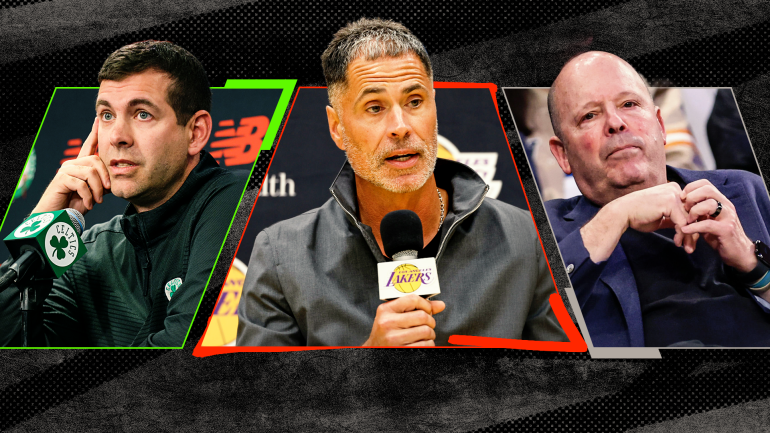
It has never been harder to build a competitive NBA team. There is no more low-hanging fruit. There are no more obvious market inefficiencies to exploit. There are more ways to screw up now than there have ever been.
The aprons and the repeater tax are clamping down harder on front offices than any previously introduced spending deterrents. Teams are openly expressing concern about whether the league's current pace of play and advances in overall playing style are leading to more soft tissue injuries. So many first-round picks get traded now that teams have to be adept at forecasting not only their own futures, but those of every team around the league whose assets they may have a chance to acquire. The flattened lottery odds and the sheer volume of tanking teams has made it substantially harder to simply park yourself at the bottom of the standings and let the draft replenish your roster. More and more research is showing that trading for stars doesn't work, so the old superteam model now appears to be woefully outdated.
But within that crisis lies opportunity. (If you needed one word to describe running an NBA team in 2026, I doubt you could do better than the Homer Simpson-created "crisitunity.")
After all, if you're struggling with these leaguewide changes, it stands to reason that everyone else is too. Someone else's apron crunch is your chance to swipe a valuable player at a bargain price. These changes in playing style are putting an emphasis on depth, making it easier for teams without easy access to star power to thrive. Every advantage, every tiny edge is more powerful now than it was a decade ago because those edges are so much harder for everyone else to replicate given all of these newfound constraints. The front offices who do so consistently are the ones building long-term winners.
So, as we do twice per year, once in February and once in July, we are going to rank the NBA's front offices on their ability to navigate these crises and capitalize on the opportunities they generate. I've covered the traits I evaluate in these rankings more thoroughly in prior editions, but in short, this is what we're judging: track record, overall vision, creativity, current success, willingness to spend money, alignment between all stakeholders, drafting, trading, pro scouting, value in contracts, coach hiring, ambition, malleability, self-awareness, luck, and whether or not there is a clear hierarchy in decision-making. Think of these rankings this way: if you could choose any organization's management to take over your favorite team and attempt to build it into a champion, this is a ranking of whom you should pick.
A note that we're obliged to share at the beginning of each set of rankings: there are more smart teams than ever. Do not treat a below-average ranking or even a ranking in the 20s as a condemnation of a front office. In many cases, the teams in that range are either working off of a very small and therefore difficult to judge track record or they are being dinged for recent decisions that haven't panned out. There is a pretty clear top four, though you could argue with the order. There is a pretty clear bottom three, with two other teams that have previously been in that grouping starting to nudge their way out. The middle is otherwise pretty close, and there are certainly teams you could argue deserve to be a good deal higher or lower. Very few teams are operating in a manner that cannot truly be defended. So with that in mind, let's begin.
1. Oklahoma City Thunder
July ranking: 1
The Thunder have topped every set of these rankings we've published, and as the season-long betting favorite to win the 2026 championship, I see no reason for that should change. Oklahoma City does just about everything at a high level. They either drafted or developed the overwhelming majority of their roster, and aside from Chet Holmgren, none of them were considered guaranteed studs. Shai Gilgeous-Alexander grew into an MVP without having been a top-10 pick, and Jalen Williams was just the first non-top-10 pick to make an All-NBA Team within his first three seasons since Kobe Bryant.
Their latest breakout player, Ajay Mitchell, was the No. 38 overall pick. The only two substantial external additions here were Isaiah Hartenstein, whom they wisely nabbed on a front-loaded deal while their core remained cheap while protecting themselves on the back end with a team option, and Alex Caruso, whom they acquired for a former lottery pick who no longer fit into their plans. They even developed their own head coach, as Mark Daigneault led their G-League team for five seasons before making the jump to the NBA as an assistant, and a year later, head coach.
The Thunder have built their juggernaut already. The key now is maintenance, and the Thunder have thus far done a good job of it. Take their deadline acquisition of Jared McCain. He cost them a first-round pick, but remember, the Thunder have three of them already in 2026. They gave up the worst one, and they had no roster room for three rookies anyway. In McCain, they got two-and-a-half years of team control on a dirt cheap rookie deal for a player who, prior to getting hurt, was on track to win Rookie of the Year in 2025. That will mean a lot this summer as their roster vaults above the second apron. If they can get McCain back on track, they'll have him for less than $12 million total over the next two years to serve as cheap yet somewhat proven depth to replace whatever they lose this offseason.
There's no real blueprint for managing the sort of asset surplus the Thunder have built, but Sam Presti is drawing it right in front of us. Whether it's turning bad picks into high-upside swaps, taking low-risk, high-reward swings on cheap talent elsewhere or leveraging team options and restricted free agency into team-friendly long-term contracts, Presti is proving just as good at sustaining a winner as he was at constructing one. The Thunder are the class of the league and will likely remain so for a long, long time.
2. Boston Celtics
July ranking: 2
The Thunder have ranked No. 1 in every ranking we've published, and the Celtics have always ranked No. 2. Frankly, if the Thunder weren't the Thunder, the Celtics would have run away with the top spot this time around. The nine months or so they've had since losing Jayson Tatum to a torn Achilles have been basically flawless.
Last May, the Celtics were staring down a half-billion dollar payroll with their historic repeater tax bill factored in. They've since managed to not only get below the second apron, but duck the luxury tax entirely without giving away a single first-round pick to do it. Yes, that's just saving the owner money, but guess what? Owners care about saving money, and it affects their willingness to spend later. The Celtics will now presumably duck the tax again next season, resetting their repeater tax clock starting in the summer of 2027 and essentially allowing them to spend with impunity for the rest of the decade afterward. The revamped repeater tax was designed to break up teams as expensive as the Celtics. If we're judging teams on the "crisitunity" scale of roster management, Boston took the crisis of Tatum's torn Achilles and used it as an opportunity to set themselves back up financially for the second half of his prime.
Brad Stevens hadn't done much drafting in his tenure largely because he hasn't needed to. Danny Ainge drafted a handful of core players right before he left and Stevens only really needed to put the finishing touches on the team through veteran acquisitions. Still, it's nice to see him hit his first real draft home run in Hugo Gonzalez at No. 28 if only to prove that he can do it. His track record of hiring coaches is nearly flawless. Ime Udoka has emerged as a top-tier coach. Joe Mazzulla might even be better, and Stevens hired him under adverse circumstances.
If the Celtics have distinguished themselves in one, specific area, though, it's their ability to scout players on other rosters. Neemias Queta played 20 games for Sacramento. He's now a legitimate, starting-caliber center for the Celtics. He replaced Luke Kornet in Boston, who went through a similar albeit longer arc as a no-name backup elsewhere who grew into a high-level player with the Celtics. Luka Garza showed little in Detroit or Minnesota, but has been a serviceable backup for in Boston. And of course, there's Derrick White, who cost only a single first-round pick in a 2022 trade but has since become a cornerstone. No team in the NBA is better at looking at underutilized players on other rosters and figuring out exactly how to make the most of them in their own system.
3. Houston Rockets
July ranking: 4
We are splitting the tiniest of hairs when it comes to Houston vs. San Antonio. The Spurs are having a better season than the Rockets. Their 2026 offseason is looking better than Houston's as well. The only substantial change in either team's long-term fortunes since our July edition is that Reed Sheppard, a draft pick who showed little in his rookie season, appears to be a good deal more valuable in his second season. Of course, we could ding Houston for taking him one spot in front of where San Antonio selected the superior Stephon Castle, but Castle, given Amen Thompson's place in Houston, wouldn't have made much sense for the Rockets anyway.
So, why did Houston jump San Antonio here? To be blunt, I don't believe I weighed San Antonio's lottery luck heavily enough in July. To be absolutely clear: I am firmly of the belief that you can be lucky and smart. The Spurs are -- for reasons we'll get into more in their blurb—both. But we can't ignore the reality that the foundation of their success right now hinged on the lottery. If they win a championship in the near future, that will be the single biggest reason why. If Houston wins a championship in the near future, it will have less to do with luck.
The Rockets have ultimately been slightly bolder in charting their organizational course. They kickstarted the offensive rebounding revolution sweeping across the NBA this season. Alperen Sengun is, by a country mile, the best non-lottery pick either team has made, and in the long run, I suspect Tari Eason is better than any other non-lottery pick San Antonio has made as well.
Both Houston and San Antonio made blockbuster trades within the past year. Houston paid less for Kevin Durant than San Antonio did for De'Aaron Fox. Fox is a good deal younger than Durant, but it's notable that Houston convinced Durant to take a pay cut whereas Fox insisted on the full max after forcing his way to the Spurs. Right now, he's justifying it. It's worth wondering if his speed-reliant style will age particularly well, and with two other young, star guards in the pipeline, the Spurs may one day wish they'd negotiated a bit harder with Fox.
The Rockets appear to be, by far, the NBA's toughest negotiators. They got Sengun to take less than the max. Dorian Finney-Smith got only two guaranteed seasons from them. Clint Capela took a pay cut and a role reduction to come to Houston. Jabari Smith's deal descends after the first year, making it a bit easier to trade if needed. This is a real point in Rafael Stone's favor. His single best trait as an executive is how effectively he manages contracts.
If there's one question worth monitoring, it's one of alignment. This roster was designed essentially to force Udoka to play Sheppard even before Fred VanVleet's injury. Sheppard is far from a perfect player, but his shooting and playmaking is badly needed especially now, with Steven Adams hurt and their offensive rebounding advantage lessened, to keep the offense afloat. Udoka doesn't seem to fully trust him yet, and while injuries may have doomed this season's title hopes, figuring out what they have in Sheppard is important moving forward. That means letting him play through some mistakes. If the front office wasn't comfortable letting him do that, it likely would have added a guard to replace VanVleet. It didn't, but Udoka is still a bit unsteady with his playing time. That situation will play out over time, but the Rockets have earned the benefit of the doubt here.

4. San Antonio Spurs
July ranking: 3
Ok, remember the whole "you can be both lucky and good" concept we addressed a few paragraphs ago? Well, let's lay it out here. The San Antonio renaissance unequivocally started when the lottery gave the Spurs Victor Wembanyama and Stephon Castle. Yet, according to Cleaning the Glass, the Spurs still outscore opponents by 1.8 points per 100 possessions when both are off of the floor. Basically everything in San Antonio is working right now. This isn't just about the lottery picks.
Luke Kornet was one of the best signings of free agency in 2025. Demand greatly outpaces supply on the center market right now, yet the Spurs got a starting-caliber big on a four-year deal in which most of the third and all of the fourth season is non-guaranteed. Oh, and his salary descends with each passing year. Harrison Barnes has started on the No. 2 seed in the Western Conference for most of the season. The Kings gave the Spurs an unprotected 2031 first-round swap just to take him. Julian Champagnie went from undrafted free agent to solid two-way wing. San Antonio has excelled at virtually every element of talent acquisition lately, and though we haven't seen him in the postseason yet, Mitch Johnson appears to have been a strong hire as the replacement for Gregg Popovich.
Yet that lottery luck does loom, especially since the two picks they made before Wembanyama, Jeremy Sochan and Josh Primo, both failed to make it through their rookie deals. The Spurs clung to the middle longer than they should have. Based on what we now know, they got less back for Derrick White than they should have (though they obviously hit the Dejounte Murray trade out of the park). The Spurs and Rockets will be jockeying for position against one another on these sorts of lists for years to come. Right now, I just favor the slightly more self-made Rockets over a Spurs team that has largely nailed the stuff it has been able to control but nonetheless benefitted enormously from things it couldn't.

5. Cleveland Cavaliers
July ranking: 5
Koby Altman's boldness speaks for itself. He convinced Donovan Mitchell to stay in Cleveland without advancing beyond Game 5 of the second round of the postseason. He just traded a 26-year-old All-Star in Darius Garland for a 36-year-old All-Star in James Harden, the sort of move we'd typically call crazy, but one that makes plenty of sense in light of Cleveland's specific circumstances. Yes, Mitchell reportedly angled for the move, and Harden is indeed better and more durable than Garland today. He will give Cleveland a better chance at making the Finals this season.
But there was also a long-term financial reality the Cavaliers had to consider. Garland was extension-eligible this offseason. They didn't trust his durability enough to keep him. By moving him proactively, they didn't risk his value plummeting upon the revelation that they were not interested in paying him, and they ensured their long-term books would be clean enough to eventually pay Jaylon Tyson, the No. 20 pick in 2024, who has been the breakout player of their season and fills a more important niche as a two-way wing.
You could argue Cleveland should have traded Garland sooner, when his value was higher. That's a fair argument, though for what it's worth, I suspect Cleveland's 2025 postseason would have gone differently if Garland had been healthy. But this also points to a major strength of Altman's: he cleans up his mistakes. Take the De'Andre Hunter trade last season. It didn't work. No problem. Altman flipped him into Keon Ellis and Dennis Schröder, saving a boatload of money and getting better in the process. The Cavaliers don't overvalue their own players. They don't fixate on prior decisions and cling to old victories. If they have to trade Lauri Markkanen a year after getting him for a bargain in order to secure Mitchell, they'll do it.
Their other competitive advantage? Dan Gilbert's money. Few owners are willing to consistently spend as much as he does, and the ones who do aren't operating out of markets as small as Cleveland. Any other owner lets Sam Merrill walk last summer. The Cavs bolted past the second apron to keep him, and now he's having the best season of his career. In the apron era, having an owner as willing to spend is a tremendous weapon. Pair it with Altman's shrewd management and you have one of the smartest teams in basketball.
6. Indiana Pacers
July ranking: 7
Did the Pacers give up too much for Ivica Zubac? Plenty would argue that they did. Personally, I believe the trade was not only justified, but necessary. One of my firmest beliefs about NBA team-building, perhaps the single trait that most informs how I rank these teams, is that you don't win championships by accident. You do it by taking calculated risks. That's especially true now, in a world in which arguably the two best teams in the NBA are also among the two youngest and most asset-rich. You can't keep up with the Spurs and Thunder by playing cautiously. They just have too big an asset advantage over everyone else for that to be a viable approach. The Pacers needed a high-end center to compete next season. They also needed a top lottery pick to give themselves the long-term star upside they'll need to sustain this team for the long haul. They made a trade that gives them a chance to do both, even if it comes down to luck on lottery night. I applaud the ambition and creativity of the move.
There are two main critiques for Indiana's front office. The first is both a point in their favor and something that makes them hard to judge: they have the NBA's best coach. That raises the question of how much of their success belongs to the front office vs. how much belongs to Rick Carlisle. Take Indiana's remarkable second-drafting. Nobody is better at identifying upside players deep on other teams' benches than Boston, but no team is better at figuring out which draft busts on other teams will thrive for them than Indiana. The Pacers plucked Aaron Nesmith off of Boston's bench and made him a key role player. They did the same for Obi Toppin in New York, and of course, Tyrese Haliburton was the pinnacle of this practice.
But Carlisle crafted the unique structure in which they've all thrived. The front office deserves credit for identifying players that fit within that structure, and their consistency in actually landing their targets is commendable. It's just hard to know how much of this is the front office and how much of it is the legendary coach they hired. If Carlisle retired tomorrow, would they be able to keep this up?
The other critique is their spending. Losing Myles Turner for nothing, even if he didn't give them a chance to counter Milwaukee's offer, was what forced the pricey Zubac trade in the first place. The Pacers haven't paid the luxury tax since 2005, which, in modern terms, means they've essentially never paid it (the more punitive bracket system replaced the old dollar-for-dollar tax in 2011). How much of the Zubac trade was about his talent and how much of it was about his team-friendly contract? We'll find out in the coming years just how willing the Pacers are to spend.
We still shouldn't overthink this. They just made the NBA Finals out of nowhere. The Pacers are a mostly exceptionally well-run organization. They're hardly ever bad and usually at least on the periphery of the championship picture. They have to rank fairly high on lists like this.
7. New York Knicks
July ranking: 6
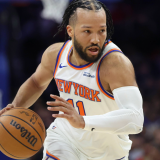
We've chronicled New York's lengthy history of winning on the margins in prior editions. The Knicks, like the Rockets, manage their books almost flawlessly. They frequently sign contracts that descend in annual value or include team options or non-guarantees. Jalen Brunson is the best free-agent signing of the decade and he's currently playing on one of the best contracts in basketball. They're consistently aggressive as an in-season trader, with their latest win being Jose Alvarado for pennies on the dollar. They've drafted exceptionally well late, getting Immanuel Quickley at No. 25 and Deuce McBride at No. 36 (who is also currently on an extremely team-friendly contract). Considering the Knicks are currently slated to pick at No. 26 and No. 32 in June, they're well-positioned to add more cheap talent.
There are two lingering questions here, both of which may be answered by this summer. The first is whether or not Mike Brown was the right hire as head coach. Ultimately, the decision to fire Tom Thibodeau was probably the correct one. Brown isn't perfect, but he's addressed glaring flaws. Yet the team has a worse record today than it did a year ago at this point, and Thibodeau's defensive genius is a big reason New York beat Boston last spring. The real test for Brown will come in the playoffs.
The other feels closer to a miss already. The Knicks bet basically their entire asset war chest on Mikal Bridges and Karl-Anthony Towns. Did they pick the right guys? Would they have Giannis Antetokounmpo right now if they hadn't sprung for Bridges? I think the answer is no, but it's certainly plausible. Would they rather have Julius Randle, Donte DiVincenzo and the No. 17 pick in last year's draft than Towns? I believe the answer is probably yes, if only for the increased flexibility of spreading that money among three assets instead of one. Towns, by all accounts, had little trade value at this year's deadline. Bridges has never made an All-Star team. The Knicks wouldn't have made the Eastern Conference finals without either last spring. But would they be in a better position to win the championship eventually without them? I very slightly lean yes, but am very open to being proven wrong in the coming months. I do prize boldness, after all, and those moves were nothing if not bold.
8. Utah Jazz
July ranking: 8
Many of the misgivings critics had about the Jazz are starting to dissipate. A common issue people had, for example, was that the team hadn't gotten anything notable out of its years of high draft picks. Well, Keyonte George is a budding star. Problem solved. First-round picks like Cody Williams, Isaiah Collier and Brice Sensabaugh are flashing potential in smaller roles, but George was the accelerant here. They felt comfortable trading a haul for Jaren Jackson Jr. because they have a great youngster in the building.
Speaking of the Jackson trade, the tank is almost over. Of course, these last few months are going to be uglier than ever. The Jazz owe the Thunder a top-eight protected pick they have no intention of conveying, so they've taken to sitting their best players late in games in order to preserve their pick. It's not pretty, but it's necessary -- even with the fines.
The other primary concern here is whether or not there's a franchise player in place. Jackson is an All-Star. George could be an All-Star. Lauri Markkanen is an All-Star. But there's no MVP candidate here at the moment. In a few years, this concern becomes more legitimate. For now, between George, Ace Bailey and the 2026 pick, they have enough bites at the apple to play things out. Worst case, they're pick-neutral again in two years. If they're a 50-win team at that point, convincing that sort of player to come to Utah goes from unfathomable to possibly plausible.
The pressure is on now. If next year's team isn't in the playoffs, then you start to wonder if four years of losing was worth it. There are no excuses when you punt away four seasons. Next year is put-up-or-shut-up time.
9. Philadelphia 76ers
July ranking: 9
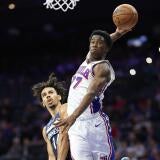
I have one meaningful misgiving about ranking the 76ers this high: how much bleaker would their outlook be if they'd surrendered last year's first-round pick to Oklahoma City? The answer is... meaningfully. VJ Edgecombe is a future star. And yet, I'd applaud Philadelphia for taking the steps necessary to maximize their chances of keeping the pick. They tanked early and aggressively in a lost 2024-25 season. They got lucky, yes, but they had the proper vision.
That's what Daryl Morey does best. There are no half-measures where his teams are concerned. The big moves are made with championship contention in mind, and when he misses, they are at least usually the sort of aggressive misses you'd want your team to make. The Joel Embiid and Paul George contracts look better today than they did nine months ago, but both are ultimately overpays. Yet if you're going to overpay for anyone... shouldn't it be for players who have been proven stars? I'd rather swing big and miss than play it safe.
Ironically, for all of the big names that have come through Philadelphia since Morey took over, his tenure has ultimately been defined by his drafting. It's ironic because he barely drafted toward the end in Houston, and when he did, he only ever had late picks. But Tyrese Maxey at No. 21 is arguably the single best draft pick of this decade. Edgecombe vs. Ace Bailey was a real debate, and right now, it seems as though Morey chose correctly. Jared McCain looked like the runaway Rookie of the Year last year before he got hurt, and the team he returned to no longer really had a place for him with Edgecombe and Quentin Grimes in place. Adem Bona has been a solid second-round pick, and nabbing Dominick Barlow on a two-way deal has been a home run.
Aside from Morey's high-risk, high-reward style making Philadelphia somewhat volatile, the other question here is spending. The 76ers duck the tax at the deadline every year. Embiid even asked them not to this season, though in fairness, they may not have done so if George's 25-game suspension hadn't opened the door.

10. Minnesota Timberwolves
July ranking: 11
Minnesota has a lot in common with Cleveland here. Both front offices are incredibly bold. Tim Connelly traded Karl-Anthony Towns after the best season in franchise history. He just mounted an out-of-nowhere pursuit of Giannis Antetokounmpo. Both front offices are also good at fixing their mistakes. The Timberwolves couldn't find a way to re-sign Nickeil Alexander-Walker last offseason while staying below the second apron, so they traded for Ayo Dosunmu to replace him.
Of course, this marks the first meaningful difference between the two teams: Dan Gilbert would've just shrugged and gone into the second apron. It's still not clear how committed to spending this ownership group is going to be. Connelly got points for ingenuity with how he handled Mike Conley at the deadline, using a late first-round pick swap to dump his salary, but getting far enough below the first apron in the process to re-sign him after he was subsequently dealt again and bought out. Of course... there was no tangible basketball benefit to doing so. That flexibility might have helped them land Giannis, but ultimately, it just saved money.
Connelly's boldness has also come back to bite him a bit more than Cleveland's has. The decision to trade a lightly protected swap and an unprotected first-round pick deep in the future for Rob Dillingham was a good risk in theory, but in practice, it was a bet on the wrong player. Ultimately, the move was a borderline disaster. The Rudy Gobert trade, even in light of Minnesota's consecutive trips to the conference finals, was an overpay. How much worse is Walker Kessler than Gobert, really? The gap is not the overwhelming majority of Minnesota's tradable draft capital. Connelly's aggression and creativity are by and large positive traits. It's also fair to wonder if he gets a bit too fixated on specific moves and overpays to his detriment. Who else could Minnesota have pursued alongside Anthony Edwards if Connelly had been a bit more cautious about giving away all of those picks? We'll never know.
Still, the track record speaks for itself. In addition to those two conference finals trips, Connelly built the bulk of Denver's 2023 championship team. He is unquestionably a very good general manager. This is just the range of the list in which concerns start to get a bit more noticeable.

11. Memphis Grizzlies
July ranking: 10
Drafting is Zach Kleiman's calling card, and he hit another home run with Cedric Coward at No. 11 last June. Zach Edey has had health issues, but has been stellar when he's been available, and between their own picks and pilfering deep bench players from other teams (quite often the Lakers), they've done an excellent job of cultivating cheap depth. These are the traits you want out of a small-market team that's about to kick off a rebuild.
Hey, speaking of which, in the middle of the apron-and-depressed-trade-value-for-stars era, Kleiman just got seven first-round picks and a swap for Jaren Jackson Jr. and Desmond Bane. Short of Oklahoma City getting Shai Gilgeous-Alexander, that might be the best headstart any rebuilder has ever gotten in a rebuild. It's not clear how close a Ja Morant trade ever came to happening, but the name of the game at this point is probably just getting his contract off the books. They did so well on their first two big trades that they don't really need to maximize value on the third. Kudos to the Grizzlies for having the self awareness to pull the plug on an era that wasn't working.
Now, drafting (and accumulating picks) is an absolutely vital skill for any Memphis front office, but there are some other reasonable concerns here. Everything surrounding the transition from Taylor Jenkins to Tuomas Iisalo at head coach was messy, and it thus far hasn't looked great. Morant has certainly played his part in some of the cultural degradation here, but the front office probably misread the room in some other areas. The further we get away from Dillon Brooks' departure out of Memphis, the worse it looks.
The Grizzlies were either a legitimate playoff team or at least considered themselves one for five full years, but they never really executed a successful win-now trade. Now, the Grizzlies certainly tried to be aggressive. They went after Mikal Bridges hard. They seemingly chased Jimmy Butler and Kevin Durant only to find that they weren't interested in Memphis. But still, when your big trade swings are Justise Winslow and Marcus Smart, that doesn't look great. The next few years will be a real test for their team-building acumen.
12. Charlotte Hornets
July ranking: 20
The biggest risers of this edition of the rankings. The Hornets are on a heater. Their 2024 draft hasn't given them much (though there have been recent signs of life from Tidjane Salaun!), but they went 3 for 3 in 2025. Sion James and Ryan Kalkbrenner both have obvious niches as long-term role players, but the real win was Kon Knueppel. He was by no means an obvious choice at No. 4, but he has emerged as a Rookie of the Year candidate. You could argue he's already the best shooter in the NBA whose last name isn't Curry today, and he's so much further ahead as an overall creator than most draft experts predicted. He's a star. Plain and simple.
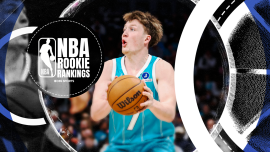
Moussa Diabaté isn't a star, but he's one of the best fringe finds of the past few years. The Charles Lee hire looks great two years in. The Hornets were intentional about stacking draft capital through trades of Terry Rozier, P.J. Washington and Mark Williams. They didn't cave to the early season LaMelo Ball trade noise, and now they're on the verge of something special.
For now, 12 is as high as I can justify ranking a team with such a brief track record. The Hornets are well on their way to a top-10 ranking before long.
13. Atlanta Hawks
July ranking: 16
The Hawks were last year's big risers, and they seem to have nailed the two most important moves of the summer. That widely praised Derik Queen trade? Yeah, thanks to Milwaukee's struggles, it looks even better today than it did in June. As of this moment, no team in the NBA has better odds at the No. 1 pick. The Hawks have a 14% chance at No. 1 through New Orleans and another 4.5% chance through Milwaukee.
Nickeil Alexander-Walker has improved in exactly the ways the Hawks hoped he could in an on-ball role. Now they have a killer two-way guard who can scale up or down in usage as needed. He's probably a bit overtaxed in his current role, but that's a good problem to have. As we learned with Trae Young, point guards are not considered especially valuable right now. The Hawks need more creation, but they can find it. If they want to use cap space this offseason, they can generate around $26 million of it (with some wiggle room on either end depending on where they draft). Or, if Jonathan Kuminga looks like a keeper, they'll have the full mid-level exception at their disposal too. Speaking of Kuminga, that was a zero-risk, high-reward swing considering his team option for next season.
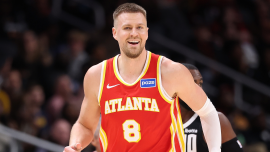
The Hawks had to give away Kristaps Porziņģis to get him, but they clearly no longer trusted him medically. That creates a long-term hole at center, but remember, the Hawks also shed the three-year Terence Mann contract in that deal, so the Porziņģis trade was still mostly a win. There are still questions here, and the track record is too short for a higher ranking than this, but the Hawks are in a good place. Remember, 2026 isn't even the only incoming pick they own from the Pelicans and Bucks, as next year, they'll get the lesser pick between those teams with a top-four protection. That gives them all of the ammunition they'll need to find extra shot-creation and a center.
14. Miami Heat
July ranking: 13
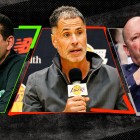
The Heat would have ranked at or near the top of any list like this published for nearly three decades. Pat Riley and his braintrust are still here. But at a certain point, we have to ask what their strategy is beyond hoping that a superstar becomes available at a price they can afford (and are willing to pay) in the somewhat near future. Their last few years have frankly been bad:
- They're barreling toward their fourth consecutive Play-In Tournament trip. The Heat are seemingly organizationally opposed to rebuilding. Right now, they're running in place.
- They badly mishandled the Jimmy Butler situation, with Riley throwing gasoline on the fire with his postseason press conference in 2024. If they weren't going to extend Butler then and there, they had to know their player well enough to know he would cause problems. They should have traded him that summer.
- They've given up a first-round pick for one player in the past five years, Terry Rozier, who was a disaster for them entirely independent of the gambling allegations he now faces.
- They nailed two mid-first-round picks in Bam Adebayo and Tyler Herro last decade. Since then, they haven't drafted a single long-term starter. Jaime Jaquez, Nikola Jović, Pelle Larson, these are good players. The Heat just tend not to need good role players considering how well they develop them on the margins. They need to shoot higher than this. The one player they did this with, Kel'El Ware, has shown a lot of promise... but Erik Spoelstra won't use him consistently and hasn't been able to figure out how to make his partnership with Bam Adebayo work.
There are still things the Heat do very well. They remain great at maximizing players they pluck off of other teams. They got Norm Powell basically for free, and now he's an All-Star. Davion Mitchell has been a real success story. Dru Smith is their latest two-way victory even despite last year's torn Achilles. Their track record still matters. The Heat, more than almost any other team in the NBA, deserve some benefit of the doubt.
But we can be honest here: if there were any other name across the chest, if anyone but Pat Riley was their general manager, their last few years would have put them in the 20s on this list and the consensus would be that they should trade Bam Adebayo and rebuild. We're not there yet because it's the Heat and because they still have Riley. But they can't keep waiting around.

15. Brooklyn Nets
July ranking: 17
The Nets are the team I most consistently find myself defending in arguments about these rankings. A lot of the criticism Brooklyn's front office gets is unfair. Sean Marks took over a team without control over its first-round picks, built it into a championship favorite, and then watched it fall apart because of a pandemic. I'm not punishing a general manager for COVID, and if I were to punish general managers over abrupt James Harden trade requests, we'd be dinging a huge chunk of this list. Besides, they've rebounded quite nicely.
Criticism over last year's guard-heavy draft class -- some of which came from me! -- appears mostly overblown at this point. There were a lot of difference-makers in last year's draft, but most of them were gone by the time Brooklyn made its second-pick. Its first one, Egor Dëmin, has exceeded expectations as a big playmaker who's making his shots after missing all of his jumpers last year at BYU. The other four first-round picks are like most rookies: showing promise in small roles, but still far away from their theoretical peaks.
Everything else the Nets did last summer was a win. Day'Ron Sharpe is one of the most underrated big men in the league. The Nets re-signed him for $12 million over two years. Where else are you getting quality front-court defense and stellar rebounding for essentially taxpayer mid-level money? The Michael Porter Jr. trade is a home run. They got an unprotected, deep future first-round pick to take on the contract of a player who probably should have made the All-Star Game. You can argue that the Nets should have dealt him at the deadline. I probably would have. But the Nets have developed a Jazz-esque reputation of holding their veterans until they're offered great returns for them, and history is proving they've been right to do so.
The Jordi Fernandez hire looks great thus far. Their longterm books are clean and they'll have the cap space to do whatever they want this summer. Their owner has proven willing to pay big luxury-tax bills in the past. The Nets got enormously unlucky right as their last roster build was supposed to peak. That doesn't make them flawless, but it does mean they deserve some grace as they work to turn that mess into something sustainable.

16. Detroit Pistons
July ranking: 19
The Pistons are consistently among the harder front offices in basketball to rank. They're 84-51 since Trajan Langdon took over, and currently hold the No. 1 seed in the Eastern Conference. But Troy Weaver drafted the entire young core. We have very little to evaluate here.
What Langdon has done exceptionally well -- and why Weaver no longer has this job and is struggling in his current one -- is find the right veterans to buttress those youngsters. Last year, it was Tobias Harris, Dennis Schröder and Malik Beasley. Langdon wisely pivoted to Caris LeVert and Duncan Robinson, who have both been as advertised this season. Harris remains a solid starter and locker room fixture, the perfect veteran for this sort of team.
Daniss Jenkins is one of the better two-way finds in the system's young history. He more or less played Jaden Ivey off of the Pistons, and Langdon wisely used Ivey to get a small but meaningful 2026 first-round pick swap with the Timberwolves. It was a nice way to generate upside out of a bad situation.
Would it be easier to judge Langdon in the somewhat near future if he had, say, traded for Michael Porter Jr.? Sure. But patience, in Detroit's case, is a reasonable virtue.
17. Golden State Warriors
July ranking: 14
The Warriors are a bit like the Heat in that a really positive rating for their front office relies quite a bit on history that's getting further and further away. Complicating matters for Golden State: they've dealt with brain drain that Miami hasn't. Bob Myers, Jerry West and Travis Schlenk, all important figures from Golden State's rise, are gone. We're now almost three seasons into Mike Dunleavy Jr.'s tenure, and not much has been accomplished. The signature move was the Jimmy Butler trade, and it by and large worked as intended. A torn ACL, though, all but ended any hopes they had of contending this season.
Otherwise? The past few years have mostly been disappointing. Free-agent signings that were praised in the moment or showed early promise like Al Horford and Buddy Hield were ultimately disappointing. The Dennis Schröder trade was an abject disaster. The seeds of Klay Thompson's departure were planted long before Dunleavy took over, but it's a bummer all the same to see both sides languish outside of the championship picture separately.
The last lingering two-timelines threads have since been snipped. Brandin Podziemski mostly plateaued after a strong rookie season. They mishandled Jonathan Kuminga in more ways than we can cover. It was never clear how close they ever got to moving either in any sort of aggressive, win-now move, but almost anything that might have been on the table probably would have been better than the way things played out. The roster is stuffed with guards who can't really create.
The Warriors are operating under a pretty unique set of constraints here, and they deserve a bit of slack for it. This notion that they haven't done enough to allow Stephen Curry to retire on a competitive team is pretty unfair in light of the Butler acquisition. They've by and large balanced Curry's needs with the reality that it would be irresponsible to invest their entire future into a 37-year-old's present. Based purely on where they are as a team right now, they probably should be heading into a rebuild. They just can't do that with Curry on the team, and they absolutely cannot trade him unless he asks them to (which he almost certainly won't). So they're stuck, trying to do right by the greatest player in franchise history without doing wrong by their future selves.

18. Los Angeles Clippers
July ranking: 12
Let's get this out of the way: I don't know what to do about the Aspiration investigation. I am doing my best not to let it color my evaluation of this team, but I won't pretend it isn't subconsciously impacting my opinion.
Investigation aside, the Clippers' defining mistake of the 2025 offseason was trading Norm Powell and assuming Bradley Beal could replace his production. Even before he suffered the hip injury that ended his season, he was a mess in his few appearances for the Clippers, while Powell is an All-Star in Miami. The Clippers have a history of relying on older, declining players, and it's come back to haunt them this year. Brook Lopez has declined as well, and Bogdan Bogdanović has struggled mightily when he's played. The basketball implications of the Chris Paul debacle were minimal. I do wonder what sort of spiritual toll it takes on organization to keep breaking up with franchise icons in such ugly ways.
But that coldness has served the Clippers well in other regards. Not all organizations are willing to make the hard choices winning demands. The decision not to pay Paul George looks correct in hindsight, and their willingness to break up this year's team in the middle of an extremely hot stretch was the proper one as well. Darius Garland is worse than James Harden today, but he's a decade younger and offers a real runway moving forward. Their creativity in potentially securing a top-five pick for Ivica Zubac was commendable, and if their worst-case outcome is Bennedict Mathurin and two unprotected picks down the line, that's still a reasonable return that's fully in line with their long-term needs. Ballmer's wealth -- again, putting aside the Aspiration stuff -- iis a genuine weapon.
We're going to learn a lot about the Clippers in the coming years. They've always been good at identifying undervalued veterans, but they've struggled mightily to develop young players with their meager draft assets and the two-way system. This year has shown a bit of promise. Jordan Miller, Cam Christie, Kobe Sanders and Yanic Konan Niederhäuser have played real minutes for them at some point or another. But they've done so in a supporting capacity. In the coming years, given the asset deficit they're working through, the Clippers are going to have to be able to develop whatever young, cheap talent they get their hands on in more central roles. That's been a problem area for awhile. Remember, they drafted Moussa Diabaté, but let him go before his Charlotte breakout. Mistakes like that are going to be costlier in the coming years, as Kawhi Leonard is eventually phased out with no obvious franchise player ready to replace him.
19. Portland Trail Blazers
July ranking: 23
Several of Joe Cronin's biggest moves are all looking great right now. The Deni Avdija trade? An enormous victory. He's an All-Star on one of the best contracts in the NBA. The Damian Lillard trade? Superb, in hindsight. Those Milwaukee picks are some of the best owed draft picks in basketball. Even moves that looked a bit shaky over the summer, like the Jrue Holiday trade, have mostly gone as planned. Holiday's age and contract are still a concern, and he missed a lot of time earlier in the season, but he's been spectacular when he's been available. It says quite a bit about the state of the Blazers that, even if reports indicated that he was not interested, Portland was treated in some corners of the internet as a reasonable suitor for Giannis Antetokounmpo.
I remain somewhat concerned about the $88 million or so owed to Holiday, Lillard and Jerami Grant in 2028, especially now that Avdija has broken out. Portland will probably want to keep cap space open for the summer of 2027 in order to renegotiate and extend his contract before he becomes a free agent, and that's going to mean avoiding further expenditures if they can't move off of some of that money owed to older players. Shaedon Sharpe is living up to his extension thus far, but Toumani Camara hasn't been quite as effective defensively after signing his own new deal.
The jury is still out on Portland's drafting, at least outside of Donovan Clingan. Scoot Henderson has barely played this season, but it's no secret that he hasn't yet worked out as planned. The success of this draft class probably puts a bit more pressure on Yang Hansen, who was drafted higher than most experts expected.
The overall picture is still a bit muddled. We broadly know Portland is emphasizing defense and size and has no intention to stay in the lottery any longer, but there's clearly more work to be done in actually putting together the next Blazers team that ultimately competes. There are more big moves to come, and the offense absolutely needs work. The past few years have gone well enough, though, that we can broadly say Portland is on the right track.

20. Denver Nuggets
July ranking: 21
Trading Michael Porter Jr. gave Denver its deepest roster of the Nikola Jokić era. Case in point: they just went 10-6 in a 16-game stretch without him. Jonas Valančiūnas is the best backup center they've ever had. Tim Hardaway Jr. is probably having the best season among all players who signed for the veteran's minimum last offseason. Two-way signing Spencer Jones has been a revelation. The Nuggets finally seem to have a well-rounded and somewhat versatile roster around the NBA's best player. David Adelman has been an upgrade on Michael Malone at coach, ownership deserves plaudits for controversially firing him and general manager Calvin Booth last spring.
All of that is well and good. Is it worth wondering why Porter was never as good in Denver as he has been for Brooklyn? Could he have gotten here in a full season under Adelman? Remember, he was hurt in the playoffs last spring. Giving up their 2032 first-round pick was mostly a financially driven move. Cam Johnson, at best, has been a lateral move from Porter, and while getting Valančiūnas was nice, Hardaway and Jones would have been available to the Nuggets either way. The Nuggets probably could have done a bit better with their 2032 first-round pick in hindsight. The primary benefit here was ducking the tax this season, before a monster bill comes next year.
At least... we think it will. Denver is already close to the projected second apron for next season, and that's as a repeat taxpayer. Peyton Watson, the breakout player of their season, is headed for restricted free agency. It's hard to hold that too heavily against this front office. Christian Braun outplayed him pretty handily over the first three years of their career. It makes sense that he was the priority. But will they be able to retain Watson long-term? Remember, they have his Bird Rights. It's just a matter of whether or not this ownership group is willing to pay the enormous tax bill that would come with doing so. It should. This is the best group of players the Nuggets have ever had, led by a three-time MVP at his absolute apex. Why own a professional sports franchise if not for this exact purpose? The Nuggets have paid the tax for Jokić, but this is a whole new stratosphere for an organization that has never been known for aggressive spending.
There are still a lot of questions here we'll need answered in the playoffs and the summer.
21. Orlando Magic
July ranking: 15
The Magic have had a bottom-10 ranked offense 13 years in a row. They're teetering at No. 19 right now, and that invites criticism for the Desmond Bane trade last offseason. I ultimately still view it as at least defensible. Bane has mostly been what they've hoped, and I'd differentiate paying a premium for a specific player from a more traditional overpay like the Knicks gave for Bridges. Orlando needed a high-level offensive guard who could play off-ball and defend consistently. There just aren't a lot of those guys, and part of the price the Magic paid involved getting off of some undesirable salary. I'd maybe reconsider the move now, but I wouldn't call it a bad trade yet.
There is a major decision here that has mostly escaped scrutiny we need to look at more closely, though, and that's the decision to draft Paolo Banchero over Chet Holmgren. Banchero has taken a meaningful step back in his fourth season. His shot-selection has never improved, nor has his effectiveness on jumpers, and his handle still needs work. The Magic couldn't have quite known how their roster would develop, but having Holmgren in Banchero's place would solve so many problems for them right now. It would have given Franz Wagner more room to work as a primary ball-handler, added critically needed space, and perhaps given the Magic a bit more room to seek out offensive help from a wider variety of sources.
Orlando's size-and-defense vision is faltering; after consecutive top defenses, they now rank 14th, limiting the easy buckets their offense relies on. If this core is going to work, something pretty meaningful has to change. Maybe it's a component of the supporting cast. Maybe it's the coach. But there's still not enough shooting here or a defined enough offensive structure to make these disparate parts work.
Given where Banchero was after last season, there was probably no way around giving him the max. Did they really need to give Wagner an instant max without real negotiation after his third season? That deal drew a fair amount of criticism at the time, and even if Wagner is a reasonable 25% max player, every dollar is going to count moving forward. Banchero's contract will give the Magic four players making more than $30 million next season, and Anthony Black is going to need to get paid as well. They've given themselves a few paths to wiggle room, but if you're going to be as capped out and light on picks as the Magic are, you need to be a better team than this. They're not a lost cause, but the front office's vision isn't fully clicking, and they'll have work ahead to make it all come together.
22. Washington Wizards
July ranking: 18
The obvious parallel for Washington right now is Utah. Both teams owe out top-eight protected first-round picks in June's draft. Both teams have had to make the most of unfortunate lottery luck in recent drafts. Both teams stepped on the accelerator at this year's trade deadline, with Utah adding Jaren Jackson Jr. and Washington adding both Trae Young and Anthony Davis.
That's where the similarities end. Utah gets a benefit of the doubt through Ainge that Washington's less experienced front office hasn't earned, especially in light of what Deni Avdija has become in Portland. The Jazz already had an All-Star in place in Lauri Markkanen when they took their big deadline step. The Wizards didn't, and their young players aren't as far along as Utah's. At full strength, the Jazz look ready to compete for a playoff spot next year.
I'm fairly skeptical about the Wizards will be able to do the same. The basic idea of the Young trade made some sense. They badly needed an offensive organizer to help their young players take the next step developmentally. He doesn't have to be a long-term piece. Washington can see how this plays out on his expiring deal next year.
But Davis -- independent of his waning durability -- just didn't look like the same player for Dallas that he did for Los Angeles. His free-throw rate and efficiency were way down with the Mavericks. Young should set him up for easier looks, as he took far too many jumpers for the Mavericks, but he's about to be 33. Some decline was inevitable. He's still very good defensively. He's not the game-altering force he once was.
There's something to be said for getting good players for minimal asset expenditures. Young was a cap dump, and the two picks Washington surrendered for Davis were mostly inconsequential for a deal of this scale, and if he stays healthy, it's possible the Wizards could flip him for better value later. The real price the Wizards paid was the opportunity cost of having a super max salary on their books for the next two seasons owed to a player they can't rely on to actually play. There were a lot of creative ways Washington could have weaponized that money. Taking on bad contracts for picks, signing multiple players on their timeline, handing out uncomfortably formatted offer sheets on valuable restricted free agents. There are just a lot more ways a contract like Davis' can go wrong than right.
If the Wizards were closer, it might be justifiable. The best version of Davis could help someone win at a high level next season. But Alex Sarr is 20. Tre Johnson is 19. Kyshawn George is 22. Washington's best young players are multiple years away from their final forms. By the time they're ready, Davis will be in his mid-30s and likely a different stage of his career.
The Wizards were stuck in the middle for so long during the Bradley Beal era. They're not necessarily trapped there, but their fate hinges so heavily on the 2026 lottery now. Miss out on a franchise player and you might have a team that's just good enough to prevent them from getting a top draft pick in the near term and not quite talented enough to compete for titles for the long haul. The patient approach was by and large working. Though no superstar emerged, the Wizards had largely drafted well. They just jumped the gun a bit here, and it's going to make it harder for them to build around those younger players moving forward.
23. Toronto Raptors
July ranking: 23
Toronto's situation is a bit similar to Denver's. The Raptors fired Masai Ujiri last summer, though off the top, ownership loses points for making that decision after the draft instead of doing so earlier. Toronto ultimately stayed in house with its promotion of Bobby Webster.
Like the Nuggets, the Raptors are having a good season. They aren't a championship contender, but Webster didn't inherit a player as good as Nikola Jokiċ. He was obviously quite involved in the construction of this team, though, and that's where opinions will likely vary. The Raptors are 32-23, and it's hard to judge them too harshly for their recent lottery seasons considering all of the injuries the endured. But they're 18-9 in clutch games this season and have just the seventh-best net rating in a weak Eastern Conference. That they were linked to basically every big name on the trade market suggests an awareness that this team needs more high-end talent.
One problem they'll encounter as they pursue it is all of the bad contracts they've signed. The Raptors gave Immanuel Quickley $175 million when he had 65 career starts under his belt. They immediately signed Brandon Ingram to a $120 million deal when there was seemingly a minimal market for his services and very little cap space available in the upcoming summer of free agency. Could they not have waited it out, negotiated a bit harder and gotten some concession? Speaking of waiting... what on Earth compelled them to extend a 30-year-old Jakob Poeltl when he still had two years remaining on a contract that was already too expensive? Remember, the Raptors gave up what became a No. 8 pick to get him.
Collin Murray-Boyles is looking good as a mid-lottery pick, but Toronto doesn't have quite the same magic draft touch it had a decade ago, when the Raptors landed Pascal Siakam and OG Anunoby in the 20s in back-to-back drafts. Gradey Dick's role has diminished pretty significantly in his third season. Ja'Kobe Walter and Jamal Shead are nice long-term reserves. Ultimately, in what starts to get more common around this point on the list, it's a bit unclear what Toronto's plan is. They have a lot of good players that are making too much money. They have a lot of young players, but none that really stand out. They don't have, say, Portland's wealth of external draft capital or Orlando's individual talent to fall back on. What is the path from plucky No. 5 seed to consistent Eastern Conference contender?
24. Milwaukee Bucks
July ranking: 24
The Bucks are defined by unrestrained aggression. Sometimes, that approach can work. The Jrue Holiday trade won them a championship. The Damian Lillard trade was ultimately a failed experiment, but it accomplished its immediate goal of securing a Giannis Antetokounmpo extension. Nobody thought they had any path to a meaningful addition last summer. Jon Horst waived-and-stretched Lillard to sign Myles Turner. That move, to this point, looks like a miss. At this point, the 2021 championship sheen has worn off. Trading all of your picks can't be your only pitch.
Credit where it's due: the Bucks have done better on the margins over the past year or so than they ever had under Jon Horst, though considering A.J. Green was their only major find over the preceding half-decade, that isn't saying too much. Ryan Rollins and Kevin Porter Jr. have become nice role players on value contracts. We've only seen three games, but Ousmane Dieng thus far looks like one of the steals of the trade deadline.
But man, the bigger stuff lately has been rough. Firing Adrian Griffin, even at 30-13, was defensible choice. Doc Rivers wasn't the answer. Milwaukee's decline coinciding with a league-wide offensive rebounding boom feels appropriate. Rivers has always been notorious for ignoring offensive rebounding. The roster is obviously limited, but being behind the times stylistically doesn't help. Kyle Kuzma is just too inconsistent to justify his salary and the quietly significant secondary first-round swap rights to took to get him. Turner had started to regress defensively and as a finisher over the past few years in Indiana, but without Tyrese Haliburton on offense or Rick Carlisle's overall structure on defense, it's been far more apparent in Milwaukee. He's a fine center making very good center money.
Giannis Antetokounmpo is a franchise icon. He's the franchise icon. But there's just no clear path to genuine contention here with Lillard's money squatting on their cap sheet and most of their draft picks gone from previous all-in splurges. There was probably a window to trade him for such a healthy return last offseason that they could have started the next era off from a reasonably strong position. Now they're stuck. Maybe they'll trade him too late for less than he's worth. Maybe they'll make another ultra-aggressive move and convince him to stay.
Bucks fans would surely prefer the latter, and there is something to be said for the idea of trying to ensure the best player in franchise history never wears another jersey even if that means spending a good chunk of his career on noncompetitive teams. We're just not judging teams on their sentiment. Running a team responsibly means being able to assess where it sits honestly. The Bucks were too far away over the summer to justify the costly Turner maneuver, and they're too far away now to justify giving up more picks to get Giannis to extend again. Frankly, anyone can trade all of their picks for a star or quickly clear money with surprising stretches. It's just not clear how much more this Milwaukee front office has in its toolbox.
25. Los Angeles Lakers
July ranking: 22
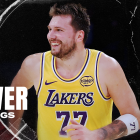
They were handed Luka Dončić on a silver platter two full transaction cycles ago, plus the last few days before the 2025 trade deadline, and they've yet to add a single long-term starter around him. It's far too early to tell whether they were right or wrong about Mark Williams medically, but they'd be a far better team today with him based on how he's played for Phoenix.
Most Laker acquisitions fall into one of two buckets. The first is semi-recently drafted top-20 picks who flamed out with their first or second teams. In the last five seasons they've signed 10: Malik Monk, Sekou Doumbouya, Troy Brown Jr., Lonnie Walker, Mo Bamba, Rui Hachimura, Harry Giles, Jaxson Hayes, Cam Reddish and Deandre Ayton. The other, broadly speaking, are big-name players past their primes. They added six former All-Stars in their 30s throughout the 2021-22 season. Patrick Beverley, Christian Wood, and this season, Marcus Smart, all fit the trend. The Lakers prize pedigree. That isn't to say it always fails. Smart is the only reliable defender on this year's team, for example.
But it feels pretty notable when you look at the players who make it out of Los Angeles. The Lakers are still hurting from their inexcusable decision to let undrafted success story Alex Caruso go in 2021. Scotty Pippen Jr. and Jay Huff were both in their two-way pipeline before breaking out in Memphis. Jordan Goodwin was essential to last year's team. He was waived to make room for Smart. Now he's thriving in Phoenix.
That points to the how poorly the Lakers manage their resources. They let good, young, and most importantly, cheap players out the door, yet they consistently miss on bigger additions. Their last two first-round picks were Jalen Hood-Schifino and Dalton Knecht. Both whiffs. Their last five mid-level exceptions have gone to Montrezl Harrell, Kendrick Nunn, Lonnie Walker, Gabe Vincent and, last season, was split between Ayton and Jake LaRavia. Yikes. Rob Pelinka traded a first-round pick for Dennis Schröder and let him go in free agency a year later. He traded one to get off of Russell Westbrook in 2023. Within two years, the only player left from that deal was Jarred Vanderbilt, who's currently on a bad contract.
For so much of league history, the Lakers could afford to make mistakes like this because they're the Lakers. The basketball gods just granted them another star and everything worked out. Well, they got Dončić last year and what has that done for them? It's not enough to stack big names anymore. You have to build a complete and coherent team.
By all accounts, new owner Mark Walter plans to model the Laker front office on the Dodgers, the other, more recently successful team that he owns. What exactly that means remains unclear. Yes, the Lakers do need to make substantial, infrastructural investments across the entire rest of the front office. Scouting. Analytics. Everything. But if Jeanie Buss is still the governor and Rob Pelinka is still the chief basketball decision maker, as he recently indicated he would be despite these changes, it's not clear just how much room the Lakers will really have to improve. The old "family business" model the Lakers have operated under for years isn't really compatible with the more data-driven Dodgers approach. So if these changes are consigned to the background, I'm frankly dubious that the overall vision here is going to get much better.

26. Phoenix Suns
July ranking: 27
Look, the first few years of the Mat Ishbia era still necessitate a bottom-five ranking. You can't fire three straight coaches, trade away all of your picks and stick yourself with $100 million in dead money and expect critical acclaim mere months afterward. This is going to be a process.
But for what it's worth, it seems like a lot of the dysfunction here has dissipated. The fourth time seems to have been the charm at coach. Jordan Ott should stick around for awhile. Brian Gregory, despite his unconventional background, has had a strong year as well. And while it may not affect the on-court product, I do think Ishbia deserves some credit as a fan-friendly owner. He made Suns games available to watch for free over the air in Phoenix, and their in-arena food options are very cheap by NBA standards. He was a bit overzealous in those first few years, but the Suns seem to have settled in.
There wasn't a Kevin Durant trade available that would have netted anywhere near as much as his acquisition cost, but emphasizing culture with Dillon Brooks has worked out this year. Collin Gillespie developing into a starting-caliber point guard is a huge win. Stealing Jordan Goodwin from the Lakers has done wonders. The Khaman Maluach pick at No. 10 hasn't borne fruit yet, but he was always going to be a project, and Mark Williams has been so good that it hasn't mattered.
There are still long-term questions here, and like the Raptors, they're going to need to do this for more than half of a season in order to really justify their build. Devin Booker's extension, in pure basketball terms, was an overpay. The deal takes him into his mid-30s when he's already taken a slight step back as a shotmaker and isn't getting by defenders as easily as he once did. Figuring out long-term deals for Williams, Goodwin and Gillespie will be tricky if staying below the tax is a priority. But this is a good team that has made the most of the bad circumstances it created for itself. All in all, that's about as much as Suns fans could've hoped for.
27. Dallas Mavericks
July ranking: 26
There isn't much in Dallas we can really judge. The man who traded Luka Dončić is gone, and a permanent replacement hasn't been hired. The Mavericks have only made one substantial move since firing Nico Harrison, and that's the Anthony Davis trade.
We could perhaps mine something out of that deal. The return was paltry. Nominally, Dallas received two first-round picks. One of them is probably going to be No. 29 or No. 30. The other is top-20 protected. The real value in the trade was financial. The Mavericks were straddling the second-apron line before trading Davis. Afterward, they managed to duck the tax entirely.
Was there really a reason to do so beyond money, though? The Davis contract, along with Kyrie Irving's, would have expired in 2028, setting the Mavericks up for cap space during Cooper Flagg's rookie contract regardless. They weren't in immediate danger of triggering the repeater tax, and even if they were, it was just money. It's too early to tell what, if anything, the Mavericks will use their newfound financial flexibility to do. If the options were a) keep Davis and try to win with him the next two years, b) prioritize asset return even if it meant taking bad money or c) the trade we actually got, the latter would have been my least-preferred option, though it's not as though either alternative path was especially secure. We don't know what other offers were out there. It was entirely fair to want to get out of the Davis business, both because of his durability concerns and for the sake of turning the page as an organization.
Patrick Dumont is still the governor. He signed off on the Dončić trade, which means he gets judged harshly until he proves he shouldn't be. But for now, the Mavericks are mostly a question mark. Let's see who they hire and go from there.
28. Chicago Bulls
July ranking: 29
The Bulls have now technically moved up in back-to-back rankings. They should not take that as a compliment. The last two teams have just distinguished themselves too much over the last year for Chicago to do any worse than 28th.
I'll give the Bulls this… they finally seem to have gotten the rebuilding memo. They gave away many of their desirable veterans at this year's deadline. Of course, they didn't manage to get a single first-round pick back for Nikola Vučević, Coby White or Ayo Dosunmu when any of them probably could have had they acted faster. They didn't get first-rounders back for DeMar DeRozan (the Spurs got a valuable Kings swap out of that one, though!) or Lonzo Ball either. They got a first-round pick back for Zach LaVine… except it was their own protected pick. They could have just tanked to keep it. But they were too slow, and that's true in more ways than one. The 2025 and 2026 draft classes were great. It's a shame they missed the tanking boat on both, because 2027 and 2028 are not expected to be as promising.
So, what did the Bulls get back in their teardown? Well, they're the Bulls, so we know what they got back: recent lottery picks who couldn't stick with their original teams. I'm fine with the basic idea of a second-draft swing on Rob Dillingham. I'm a bit more enthusiastic about taking one on Jaden Ivey. I'm not sure if they make sense on the same team, with Anfernee Simons and Collin Sexton also jumping aboard at the deadline and Josh Giddey in place as the primary creator. It seems like they just threw a bunch of talent together and are seeing what sticks.
Matas Buzelis is good. Giddey is at least a regular-season floor-raiser. Jalen Smith has settled in nicely as a spacing big off the bench. There is no defense to be found here, and I can't really figure out what the plan is beyond "play fast and figure it out." They just went through a mini teardown, so let's see how the offseason goes, but it's been quite some time since the Bulls had a clear, definable vision, so none of this is really out of the ordinary.
29. New Orleans Pelicans
July ranking: 30
Troy Weaver has an eye for talent. Despite all of the other issues here, that much is certain. He drafted most of Detroit's core. Jeremiah Fears has had an up-and-down rookie year, but has shown enough promise to justify a No. 7 overall pick. Derik Queen has flashed possible stardom. If you squint, you could draw comparisons to Memphis as a front office that drafts well but struggles in other elements of team-building. But those flaws are relatively minor for the Grizzlies. They're gaping in New Orleans.
If they felt Queen was worth an unprotected 2026 first-round pick with Milwaukee swap rights attached, they should have drafted him at No. 7. Trading that pick without some manner of protection is, aside from Dallas trading Dončić, the single most inexplicable decision a front office has made in recent memory. As a reminder… that wasn't even the only pick they traded to get Queen. Think of all the praise the Clippers got for acquiring Indiana's top-four protected first-round pick in the Ivica Zubac trade and remember New Orleans traded that pick back to the Pacers for No. 23 overall last June, bizarrely executing the deal before the Finals ended and absorbing enormous risk for no tangible gain.
And they did so to pair him with Zion Williamson… a player with a similar skill set and similar flaws. By all accounts, they do not plan to break up that tandem. How they plan to get stops, I have no idea. They're not doing that duo any favors with their spacing either. New Orleans ranks 26th in the NBA in 3-point attempt rate and 24th in 3-point percentage, not exactly a formula for two ball-handling bigs.
The Pelicans are both cheap and financially reckless. They've never paid the luxury tax, but absorbed an extra year of Jordan Poole's expensive contract just to get Saddiq Bey. Bey has been good for them, but he only has one cheap year left on his contract before he gets expensive. Those less expensive seasons are wasted on a team built around two rookies.
David Griffin wasn't a perfect GM, but he left the Pelicans with a pretty talented group of players. They could get a haul for Herb Jones or Trey Murphy. They've thus far resisted trade overtures. That'd make more sense if we had any clear idea how they planned to use those players to create a winner. They gave Jose Alvarado away for pennies. They bizarrely kept Willie Green into the season only to fire him after 12 games. That's emblematic of everything going on here. There's no clear plan or consideration for asset valuations. Either fire the coach and hire your preferred candidate over the summer or give him a real runway during the season. They wanted Queen so they got him, to hell with the cost. They wanted Bey, so they were willing to pay an extra $35 million to Poole to get him. Joe Dumars built a champion two decades ago. He hasn't gotten much right since, and that includes the moves he's overseen in New Orleans.

30. Sacramento Kings
July ranking: 28
The Pelicans and Kings have run away with the two bottom slots, but New Orleans has talent evaluation as a redeeming quality. I'm not sure what the Kings do well, if anything. That's as true on the court as it is off of it. They rank 28th in offense, 28th in defense and 28th in rebounding. They foul more than almost anyone and they even lose the turnover battle on average.
What's so startling about this is that, in the midst of one of the most egregious tank-offs in NBA history, the Kings weren't even trying to be this bad. They signed Dennis Schröder to a contract that worked out so poorly that they had to give up Keon Ellis, one of the few desirable players on the roster, just to dump it. The irony of that is that they could have used a team-option to make Ellis a restricted free agent and re-sign him under favorable terms last offseason, but didn't in order to keep his salary low enough to fit Schröder under the luxury tax line. They bungled this from every angle and wound up De'Andre Hunter, a contract Cleveland was eager to dump. Speaking of contracts teams were eager to dump, how's Zach LaVine working out for them?
They had the unanimous Coach of the Year in 2023. He didn't even last until the end of the calendar year of 2024. He's now thriving with the Knicks. Let's just say his replacement, Doug Christie, is not. At least he played for the 2002 Kings, though. Between Vlade Divac's disastrous GM tenure and Peja Stojakovic's time as his deputy, more than half of that team's starting lineup has now held vital roles within the organization. What's Chris Webber up to? Maybe he can fix this.
When this season ends, they'll have made the playoffs once in the last 20 years. Dylan Cardwell was a nice two-way signing. I'm really straining to find anything else positive here. It's a shame, too. The Kings have some of the NBA's best fans. They deserve better than this.